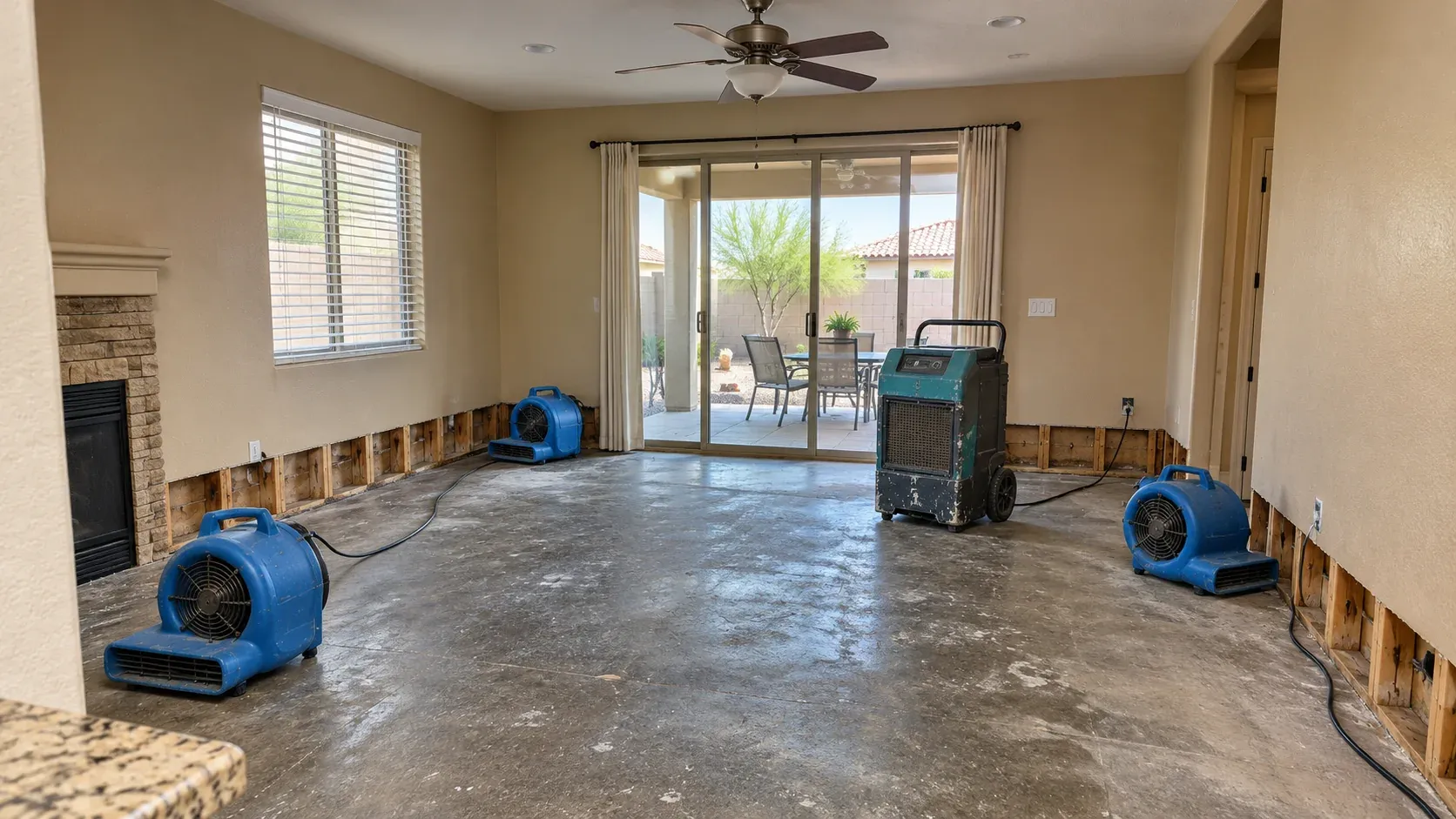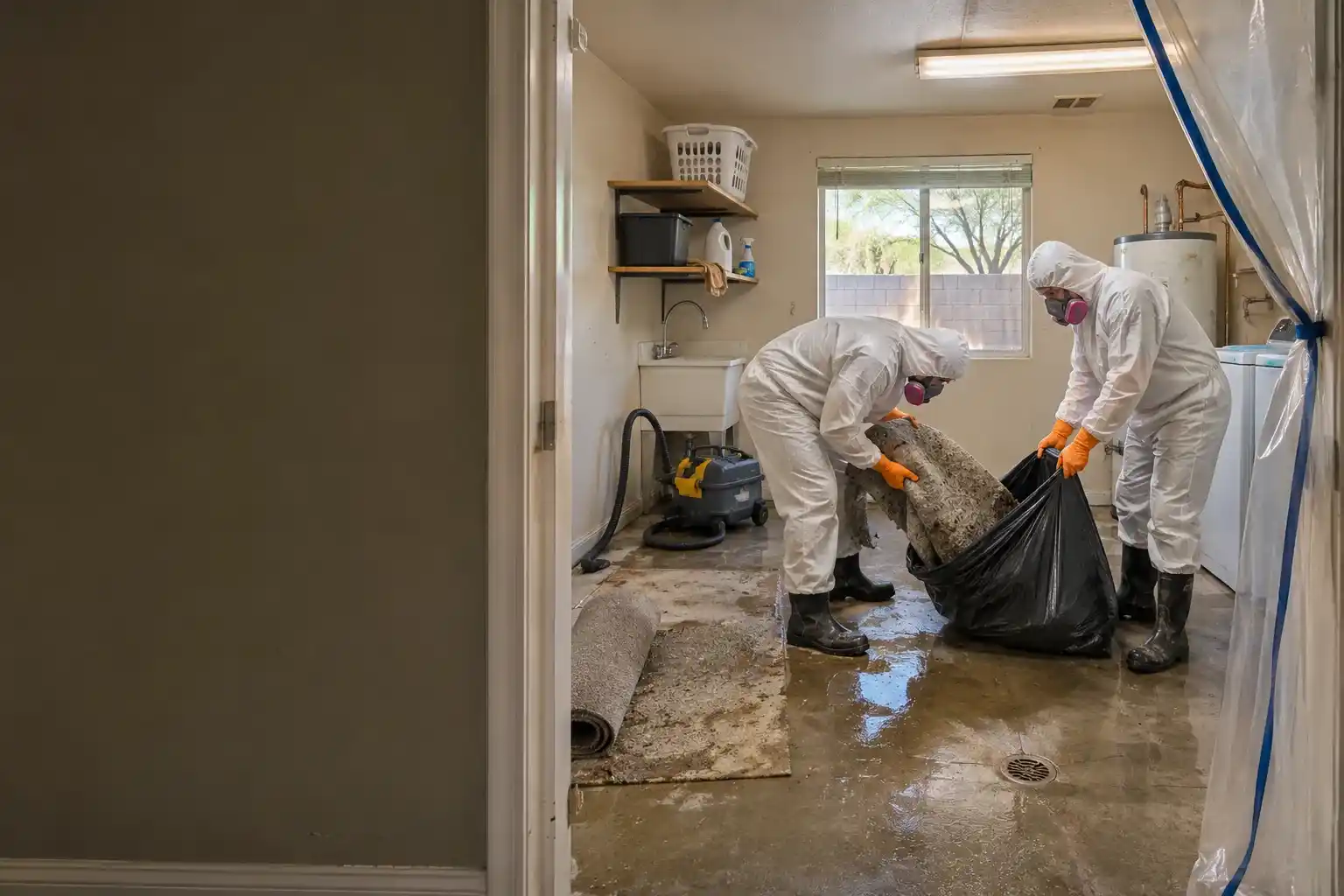
Service area · Fountain Hills, AZ
Water Damage Restoration in Fountain Hills, AZ
6 flood retarding dams protect Fountain Hills. What gets past them runs down a wash and into whatever is at the bottom.
Line open now
Get a call back
Tempe · Mesa · Chandler · Gilbert · Ahwatukee · Guadalupe + 13 more towns
01Good to know
What fails in Fountain Hills
Fountain Hills is a hillside town of about 23,800 people, with a median year built of 1994 and 35.4 percent of housing built in the 1990s. Two thirds is single family detached, 13 percent attached, and almost no mobile homes, which is unusual for the East Valley and changes the water damage profile: mostly conventional slab and frame houses on sloped lots.
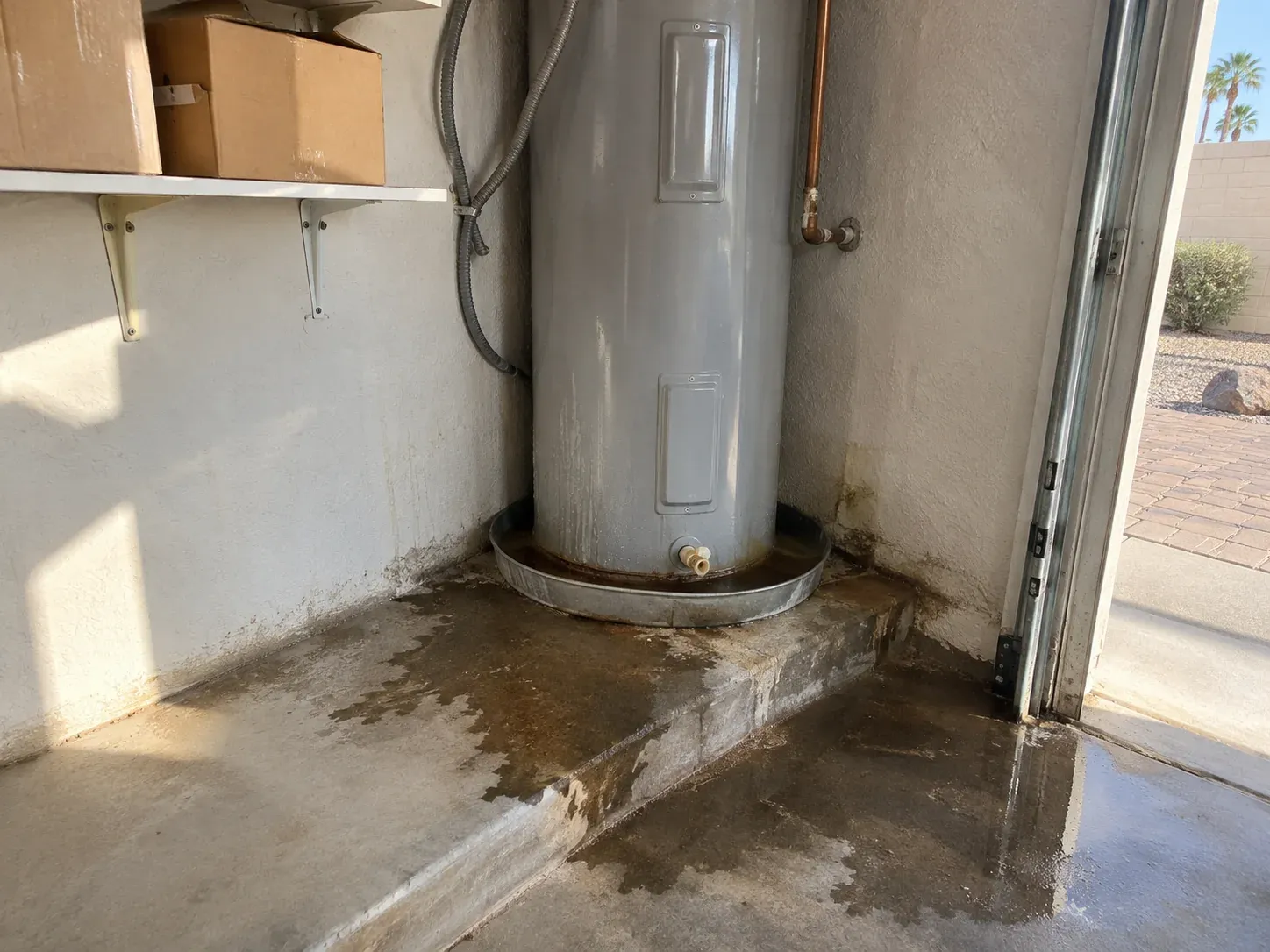
Water comes from EPCOR's Chaparral system, about 14,500 connections across Fountain Hills and parts of Scottsdale, drawn from CAP Colorado River water plus groundwater pumped from beneath the town. Hardness is approximately 16 grains per gallon, which is high enough that scale and water heater life are real factors here.
The local plumbing detail worth knowing: one of the town's wells is 735 feet deep and had an arsenic treatment plant added in 2013 that treats about half the flow and blends it. That is a reminder that the "city water" in a hillside town is a blend from several sources, and hardness varies with the blend.
02Local facts
Fountain Hills numbers
- 01
Median year built
1994
- 02
Residents 65 plus
40.7 percent
- 03
Water
EPCOR Chaparral, CAP plus local wells, about 16 gpg
- 04
Flood protection
six retarding structures built 1970 to 1976
- 05
Population
23,789 (ACS 2020-2024)
03How it works
How the drainage actually works
Six flood retarding structures were built between 1970 and 1976 in the western watershed, and the county runs flood detection gauges on the town's earthen dams. The washes, Ashbrook, Escalante and Colony among them, are regulatory floodways controlled by dams and culverts.
That system is built to hold back storm runoff. It is also why the exceptions matter: a storm that exceeds a dam's capacity, or a culvert blocked with debris, sends water down a path that residents have not seen wet in years. Escalante and Colony washes discharge onto the Fort McDowell reservation where runoff dissipates, which is the safety valve for that side of town.
For a house on a slope, the water that matters is often not the wash. It is the sheet flow across a driveway, a retaining wall that fails, or a patio that drains toward the house because the soil settled.
04Good to know
Hillside homes and hidden water
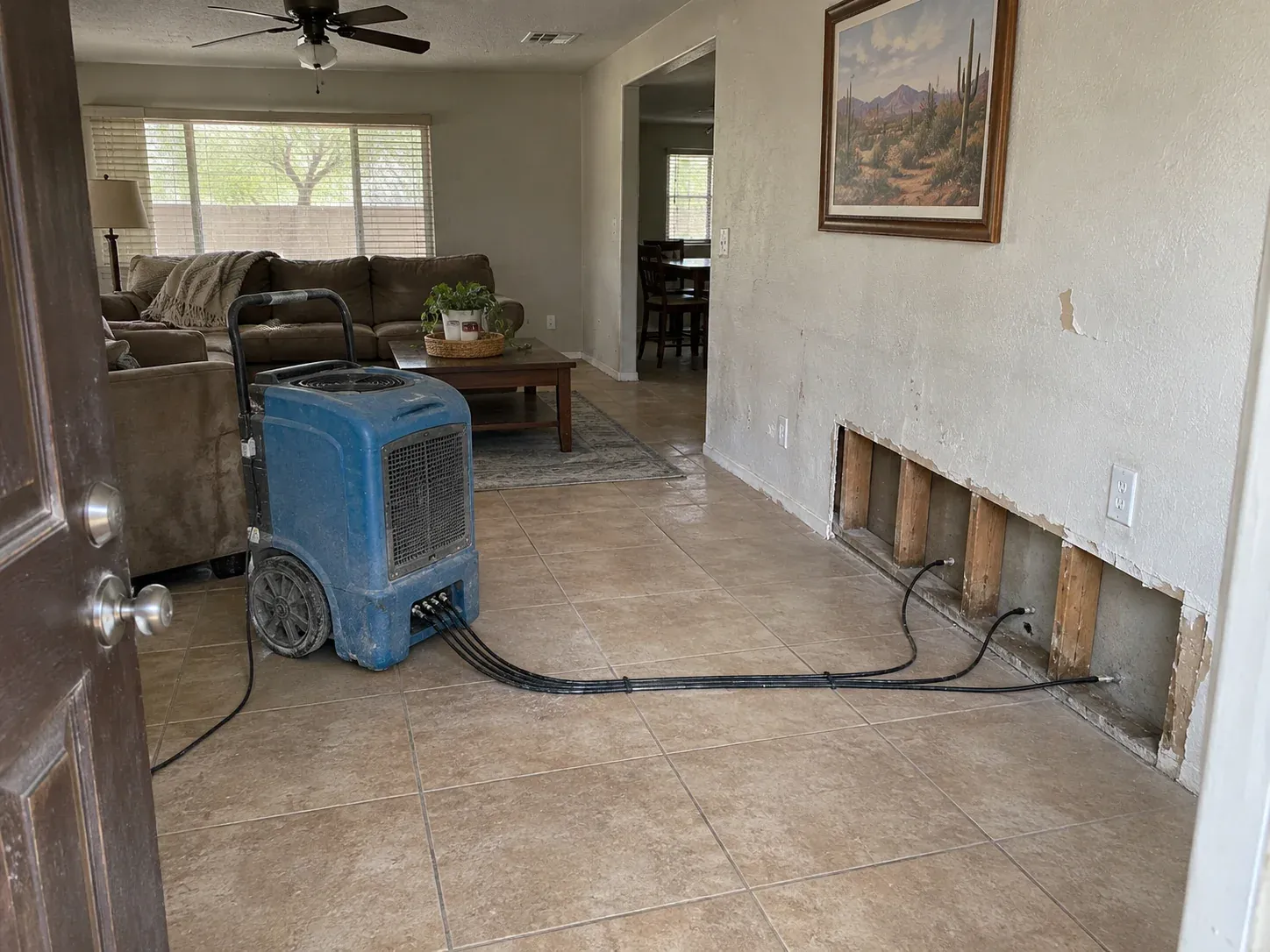
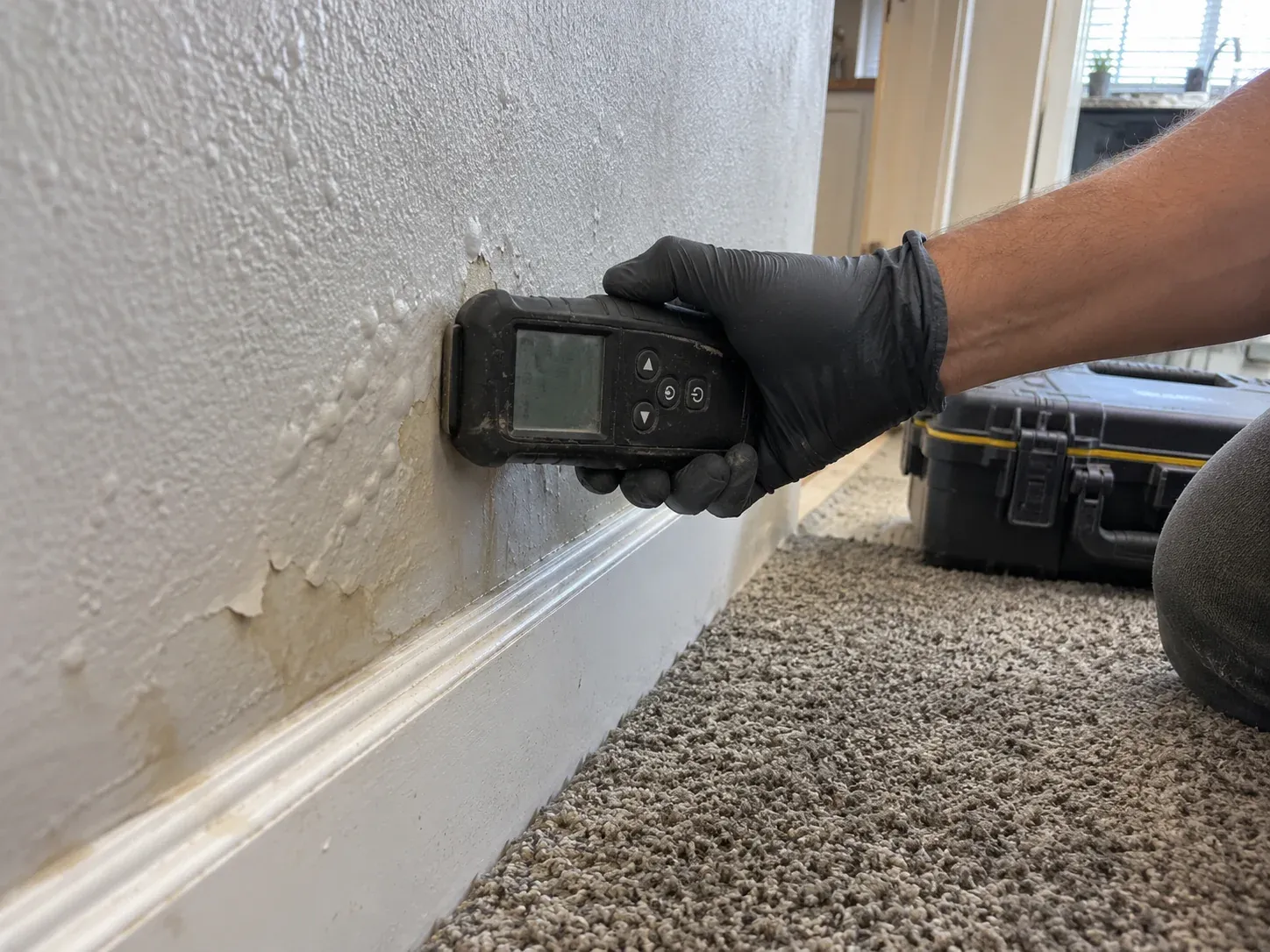
On a sloped lot, water enters at the uphill side and travels under the slab or along the footing. It finds the lowest room, which is often the one built into the hill. That room can read dry on the surface while a moisture meter shows wet material at the base of the back wall.
The same applies to retaining walls and planters: water behind a wall has to go somewhere, and if the weep holes are blocked it goes through the wall. If a downhill room smells musty after every rain, that is the mechanism, and drying the room without fixing the drainage is a yearly subscription.
05Services
Services in Fountain Hills
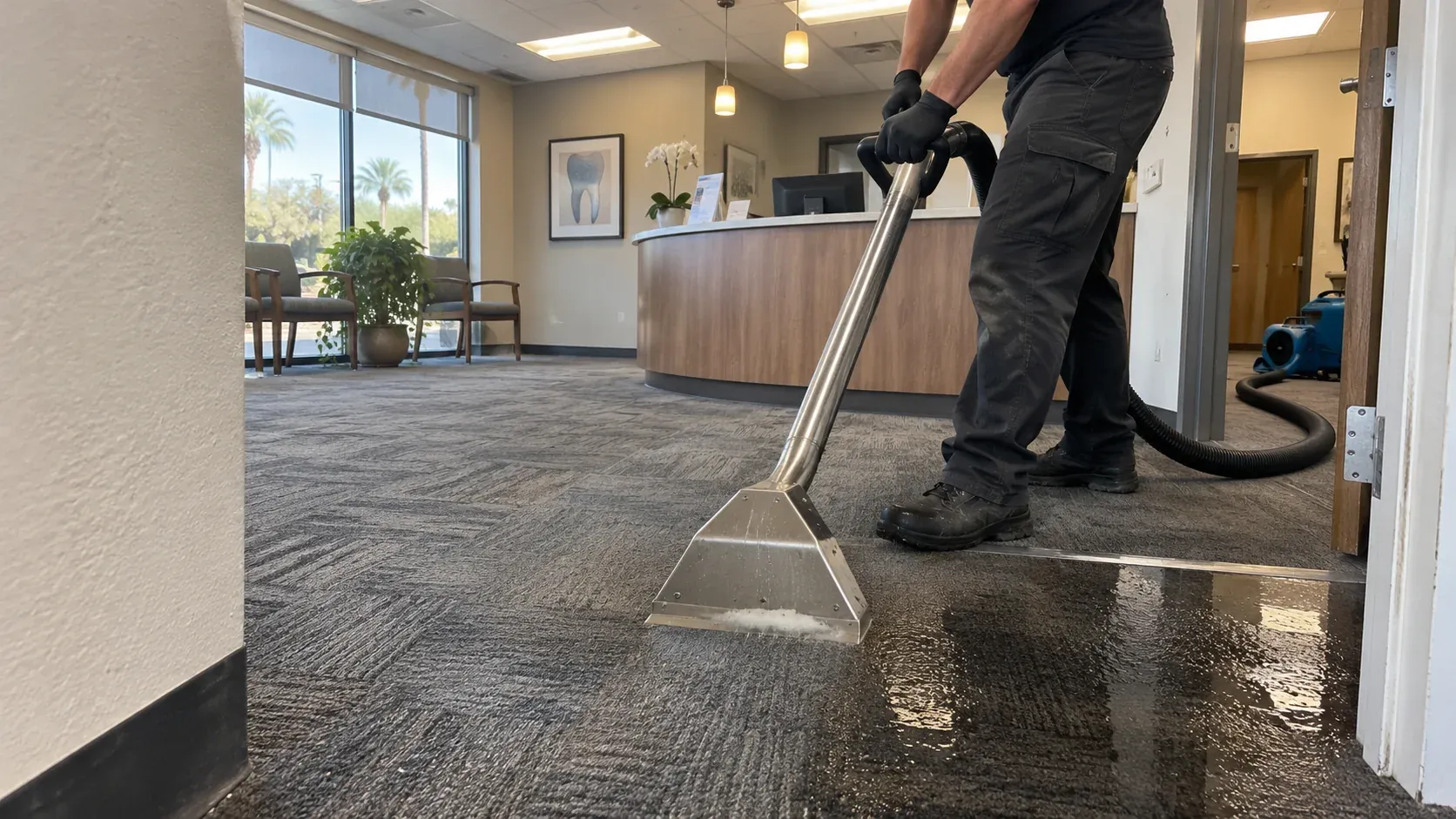
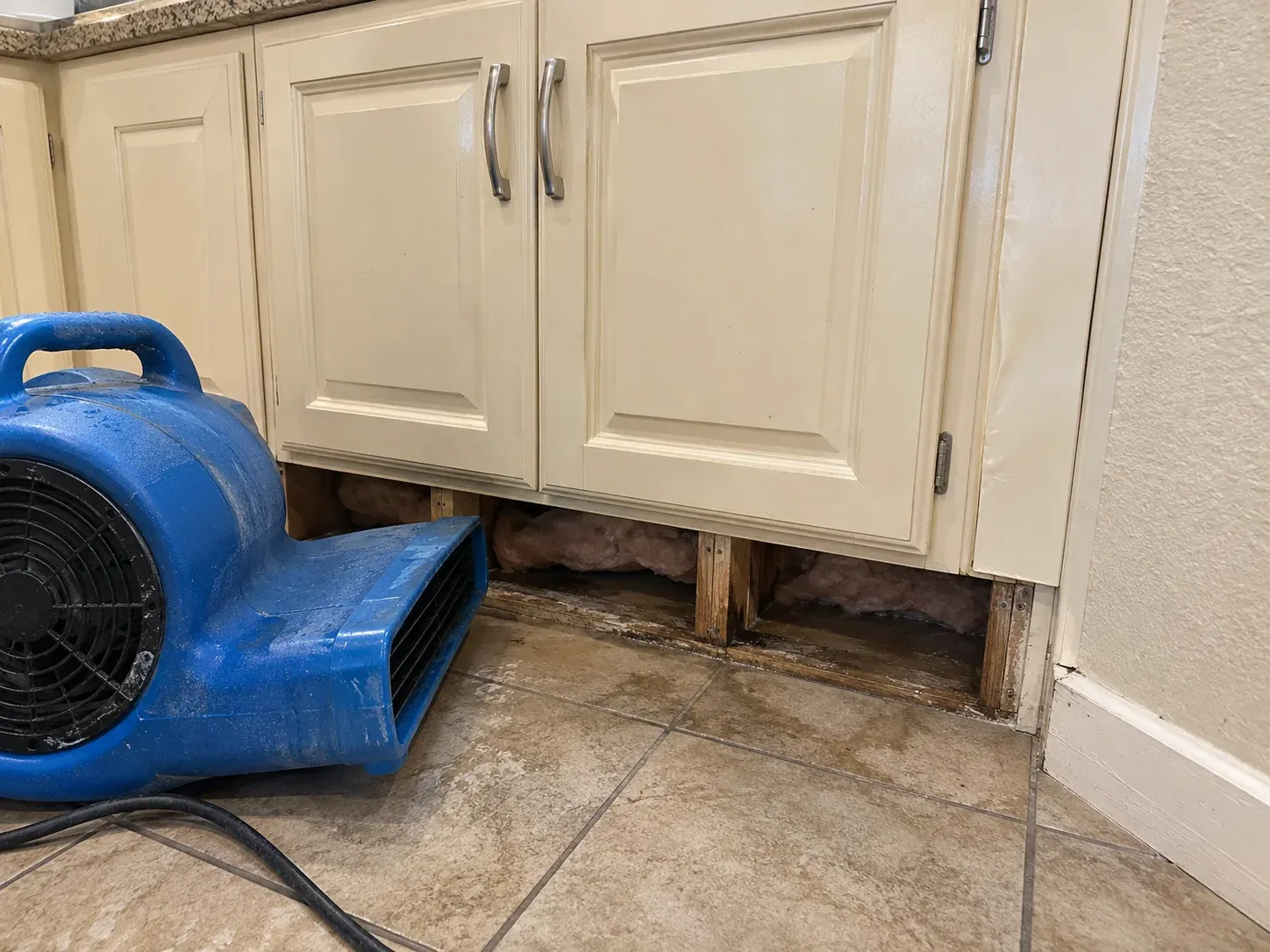
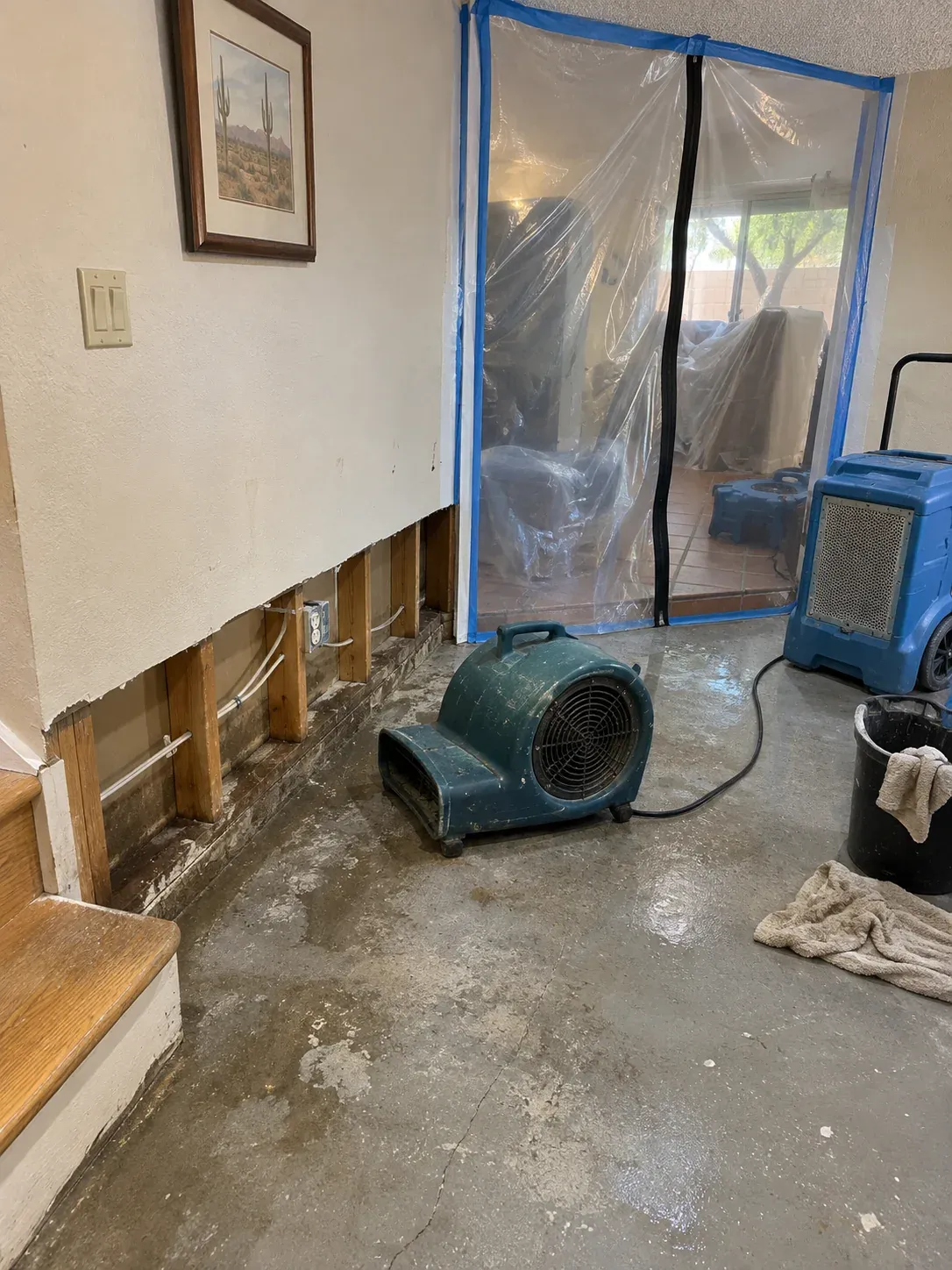
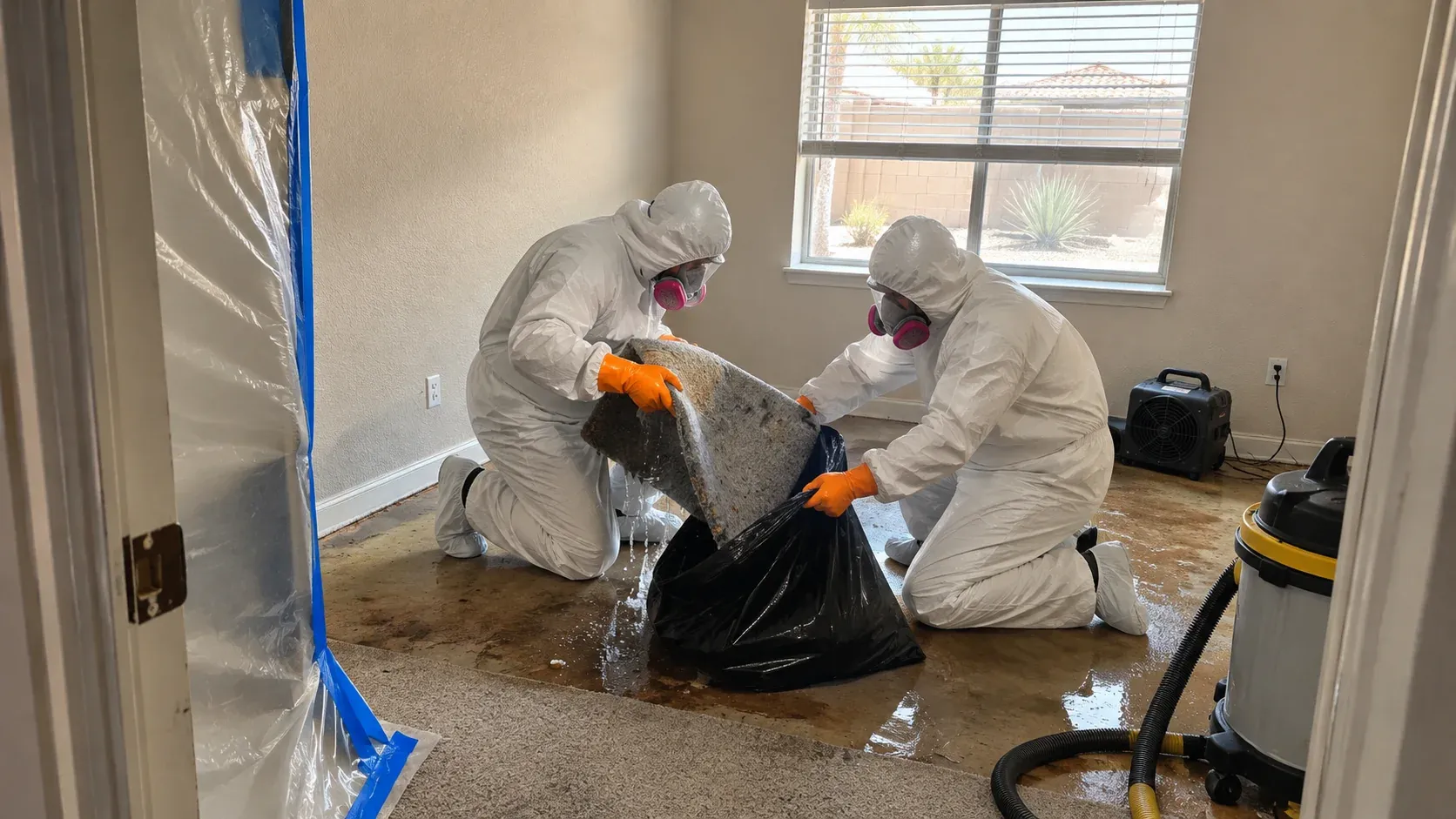
Water extraction
: standing water out of carpet, tile and woodLeak detection
: slab leaks and hidden supply lines foundMoisture detection and mapping
: what is still wet, shown in readingsStructural drying
: dried to a measured dry standardMold remediation
: contained, removed and checkedContents cleaning and restoration
: furniture, papers and photos packed outNot sure which one fits?
Send the form and describe what you see. You do not need to pick a service first.
Get a call back
06ZIP codes
The ZIP
85268, which is 99 percent Fountain Hills with a sliver of Scottsdale. Single ZIP, single water provider, clean boundary.
073 questions
Questions people ask about water damage in Fountain Hills
Still have a question?
Send the form and describe what you see. Someone from our team will call you back soon.
Get a call back01Do the dams mean I do not need to worry about flooding?
They reduce the risk, and they were built for a design storm. A larger event, or a blocked culvert, still sends water down a wash. The county's flood detection gauges exist because that is a live concern.
02Why does my downhill room smell after rain?
Often because water is entering at the uphill side and traveling along the footing. Drying the room without addressing the drainage means it happens again next storm.
03Is 16 gpg hard?
Yes. EPCOR's own scale calls anything above 10.5 grains per gallon very hard. At that level an annual water heater flush and a working softener help.
Near Fountain Hills