Water damage guide · Tempe, AZ
Tempe Water Damage Guide: The First Hours to a Dry House
Water in a Tempe house does not stay where it landed. This guide covers what happens in the first hours, the order of the work, what it costs and what to say when you call.
01Drying window
The first 3 hours decide the bill
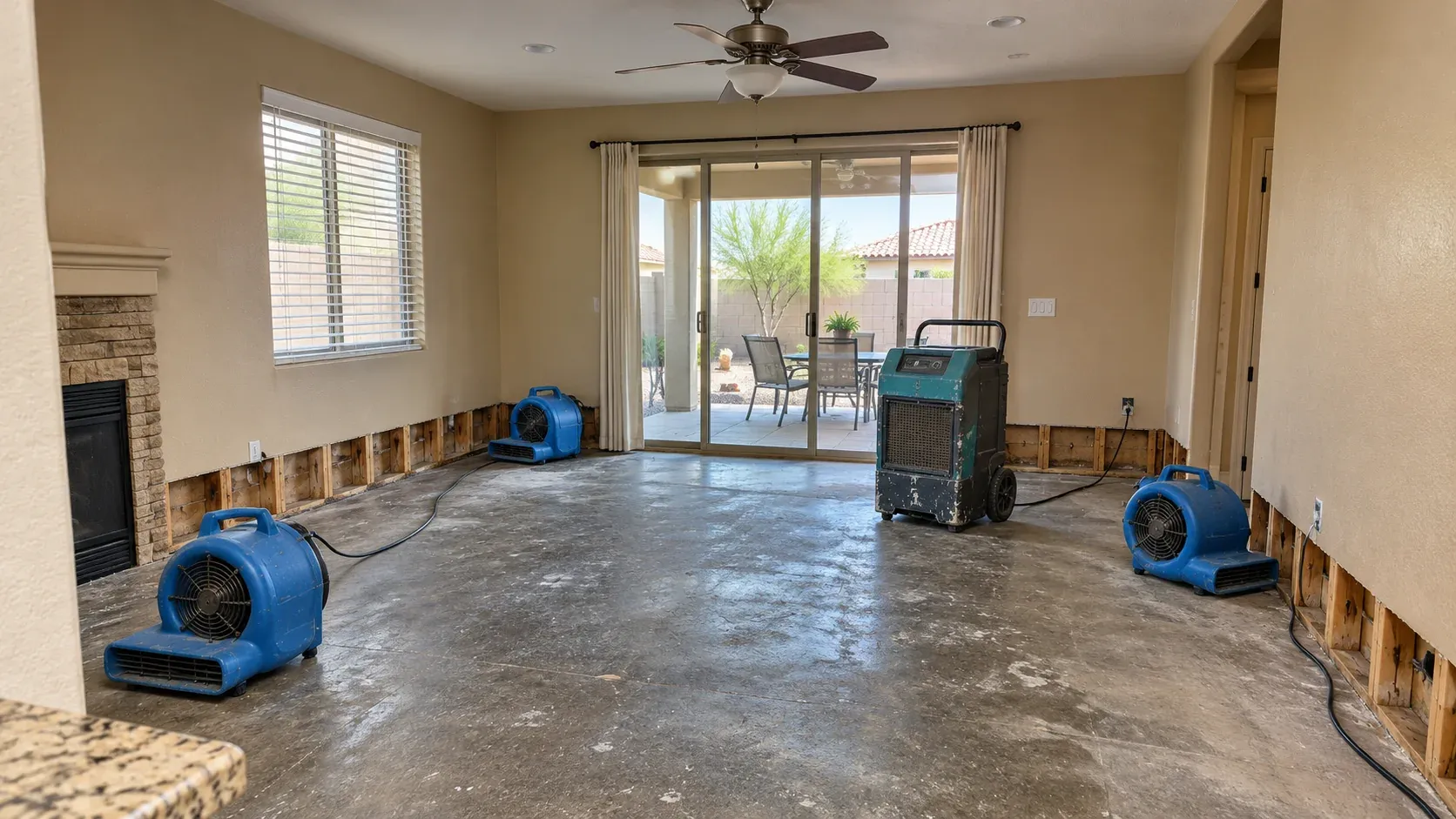
Water in a Tempe house does not stay where it landed. It runs along the slab, climbs stucco and drywall from the bottom up, and soaks into carpet padding that holds water like a sponge. What you do in the first hours is the difference between fans for three days and cut out the bottom two feet of a wall.
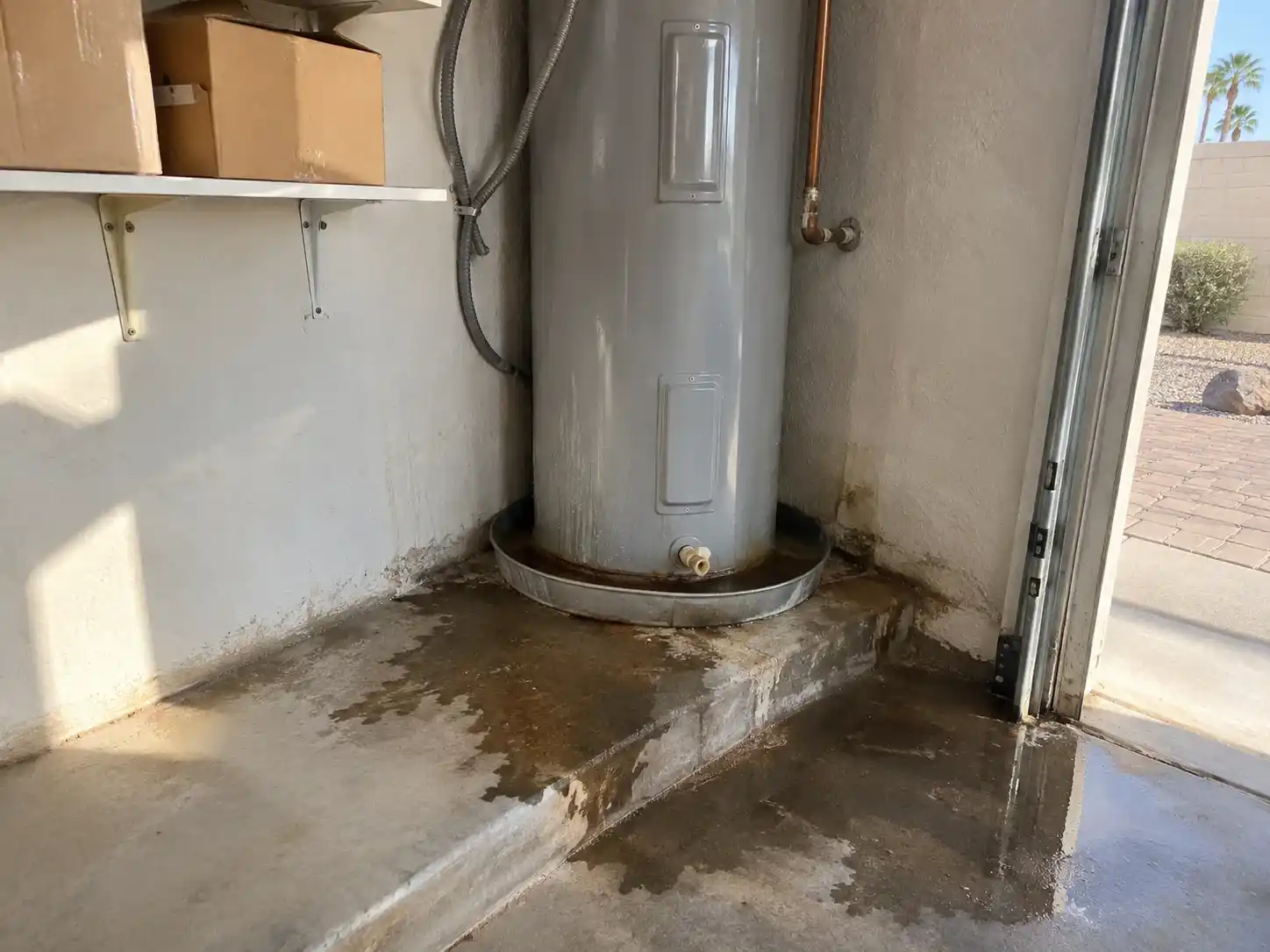
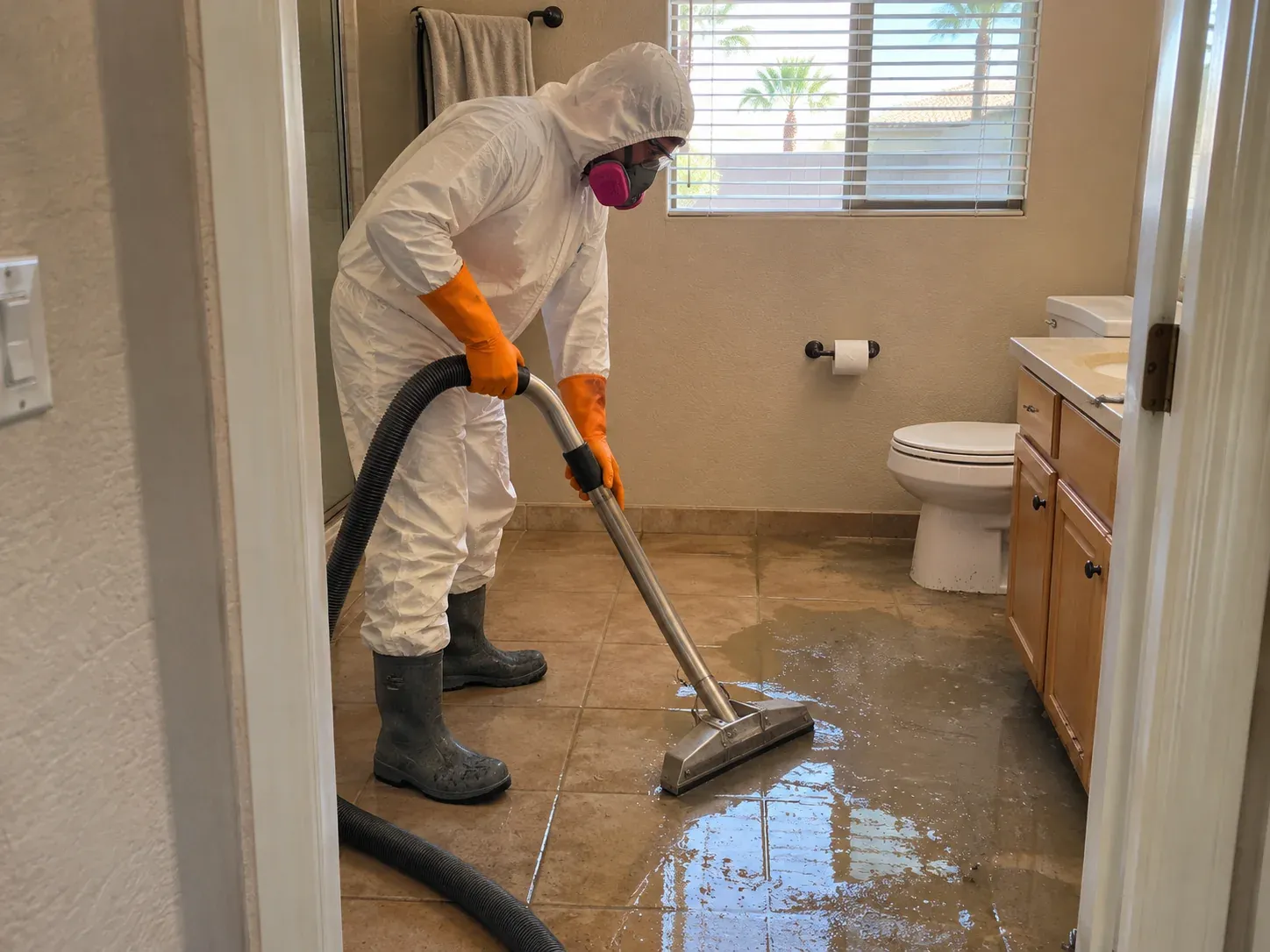
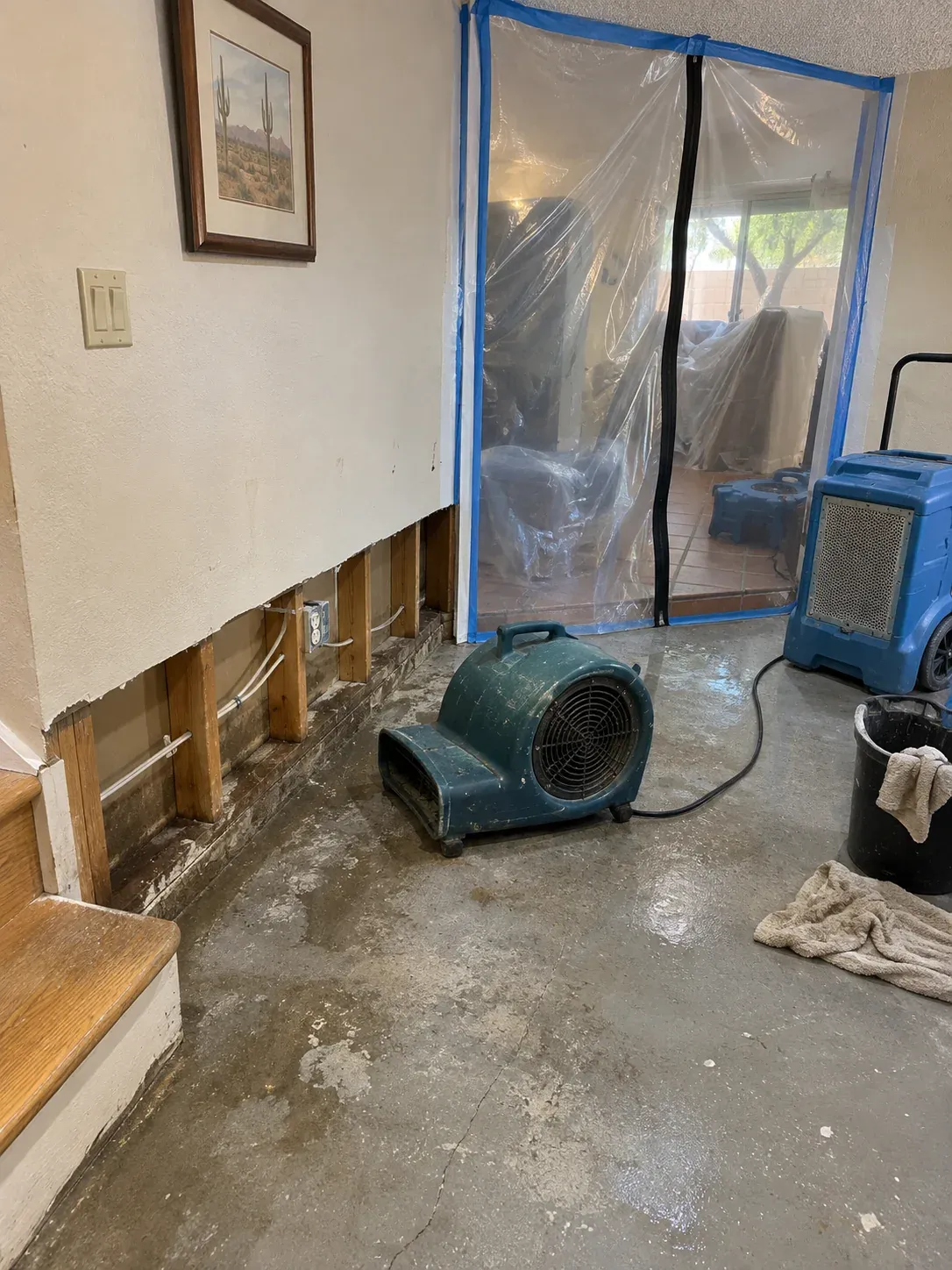
After the call, moisture readings get taken room by room before anyone quotes a price. If the water came from a supply line, a slab leak, a water heater, an AC condensate line or a monsoon push through a door, the work starts the same way: stop the source, get the standing water out, then dry what is wet and prove it with a meter.
Keep reading if you want the sequence and the prices first. Call if the floor is wet now.
Have these ready when you call: where the water is coming from if you know, whether the power to that room is off, your insurance policy number, and any photos you took before touching anything.
Photos taken before cleanup are among the most useful things you can hand an adjuster.
02Good to know
Three things about Tempe houses that change the job
1. Most of the floor plan sits on concrete
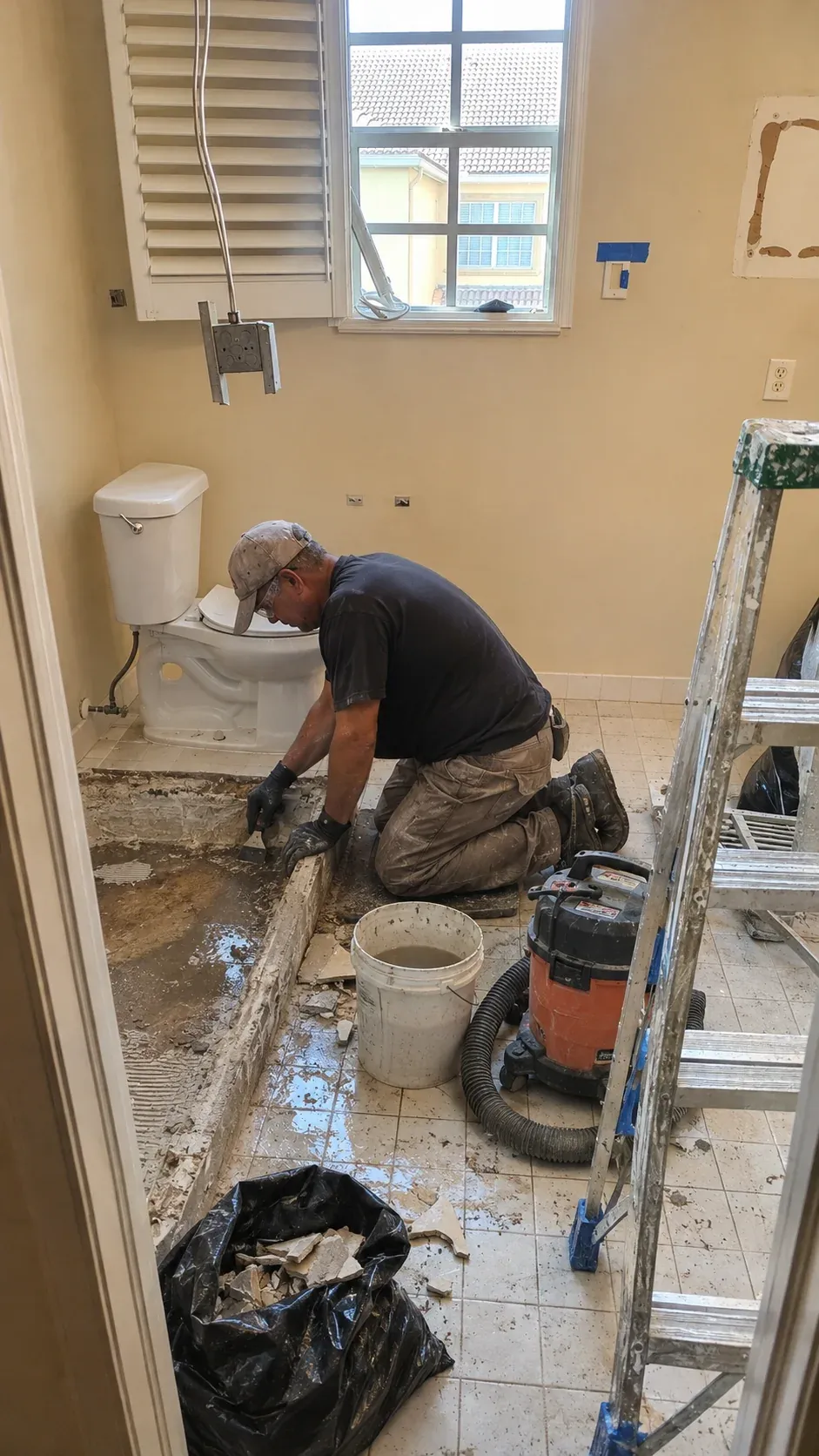
Slab-on-grade construction means a leak under the floor spreads sideways through the slab and wicks up into the flooring before it ever shows. You see a warm spot on tile or a baseboard that swells, not a puddle. That is why a leak in a Tempe house often gets discovered weeks late, and why detection comes before drying on those jobs.
2. The water is hard enough to scale the pipes
Tempe's water is hard, and the city publishes its hardness in its annual water quality report. The USGS notes that when hard water is heated, calcium carbonate scale can form, and that scale can clog pipes and shorten the life of a water heater.
3. The rain arrives in bursts, not in a season
Monsoon season in Tempe runs from June 15, and the city's own storm page warns that blocked storm drains make street and home flooding worse. On October 13, 2025 a microburst hit Tempe: city officials reported about 22,000 people without power at one point, more than 550 residences damaged, including apartment buildings and condos, at least 130 people displaced and about 70 small businesses damaged, and Tempe Fire Medical Rescue answered 180 emergency calls in three hours. Flat roofs, patio doors at grade, and carport storage take the water first.
In between storms, the damage is quieter. AC condensate lines run all summer. The federal ENERGY STAR program warns that a plugged condensate drain can cause water damage in the house. Phoenix Sky Harbor, next to Tempe, averages 111 days a year at or above 100 F (NWS Phoenix, 1991 to 2020 normals), so that drain runs for months.
- 01
24 to 48 hours
The EPA window to dry water-damaged areas and prevent mold
- 02
550+
Residences damaged, including apartments and condos, in the October 2025 Tempe microburst
- 03
42.3%
Owner-occupied housing in Tempe, so most homes here are rentals (Census, 2020-2024)
- 04
June 15
Official start of monsoon season in Tempe per the city and the National Weather Service
034 steps
From wet to dry, in order
What happens after the call, and what you are asked to sign off on at each stage.
Stop the water and make the space safe
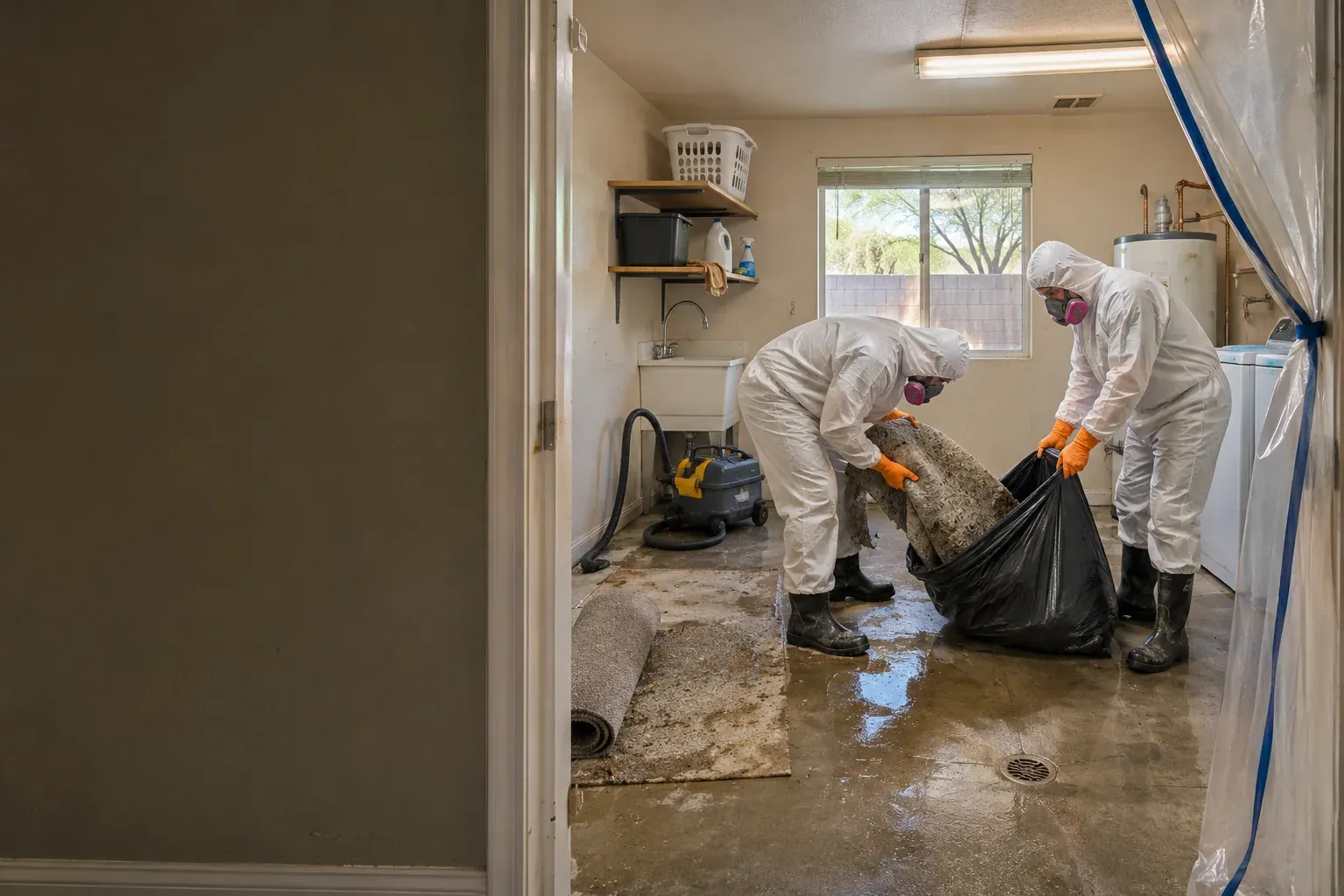
Main valve off if it is a supply line. Power off to wet rooms at the breaker. Anything sitting in standing water gets lifted off the floor, legs in foil or blocks.
Extract and inspect
Standing water out, then a walk-through with a moisture meter and thermal camera. What is wet, how wet, and where the water came from gets written down.
Dry and log it
Air movers and dehumidifiers placed, then readings every day until the material matches a dry standard. You get the numbers at the end, not just a thumbs up.
Check for mold, then close out
If the wet period ran past 48 hours, the wall cavity gets checked before it is closed. Then the scope, the photos and the readings go to you and to the adjuster.
04Costs
What it costs, by category
Published national ranges, not a quote for your house. The category of water is one of the biggest things that moves the number.
| Job | Published range | Source |
|---|---|---|
| Full water damage restoration, typical home | $1,200 to $5,000 | Fixr |
| National average, water damage restoration | $3,000 | Fixr |
| Category 1 water extraction, clean (per sq ft) | $3.75 to $4.25 | Fixr |
| Category 2 water extraction, gray (per sq ft) | $4.10 to $6.50 | Fixr |
| Category 3 water extraction, black or sewage (per sq ft) | $7 to $7.50 | Fixr |
| Mold remediation, typical | $1,500 to $9,000 | Fixr, 2025 |
| Mold remediation, per sq ft of affected area | $10 to $30 | Fixr, 2025 |
Source: Fixr (2025). Ranges are national, before any insurance adjustment.
The cost guide has the full breakdown, including what pushes a Tempe job to the top of the range and what an adjuster usually asks for.
054 steps
What to tell the person on the phone
Four details speed up everything.
The address and the cross streets
Exact locations save time on the call.
Where the water is coming from
Supply line, slab, water heater, AC, roof, or you do not know.
How long it has been wet
Hours or days changes the mold question.
Whether you are filing a claim
It changes the paperwork from the first visit.