Service 05 of 06 · Tempe, AZ
Mold Removal in Tempe, AZ
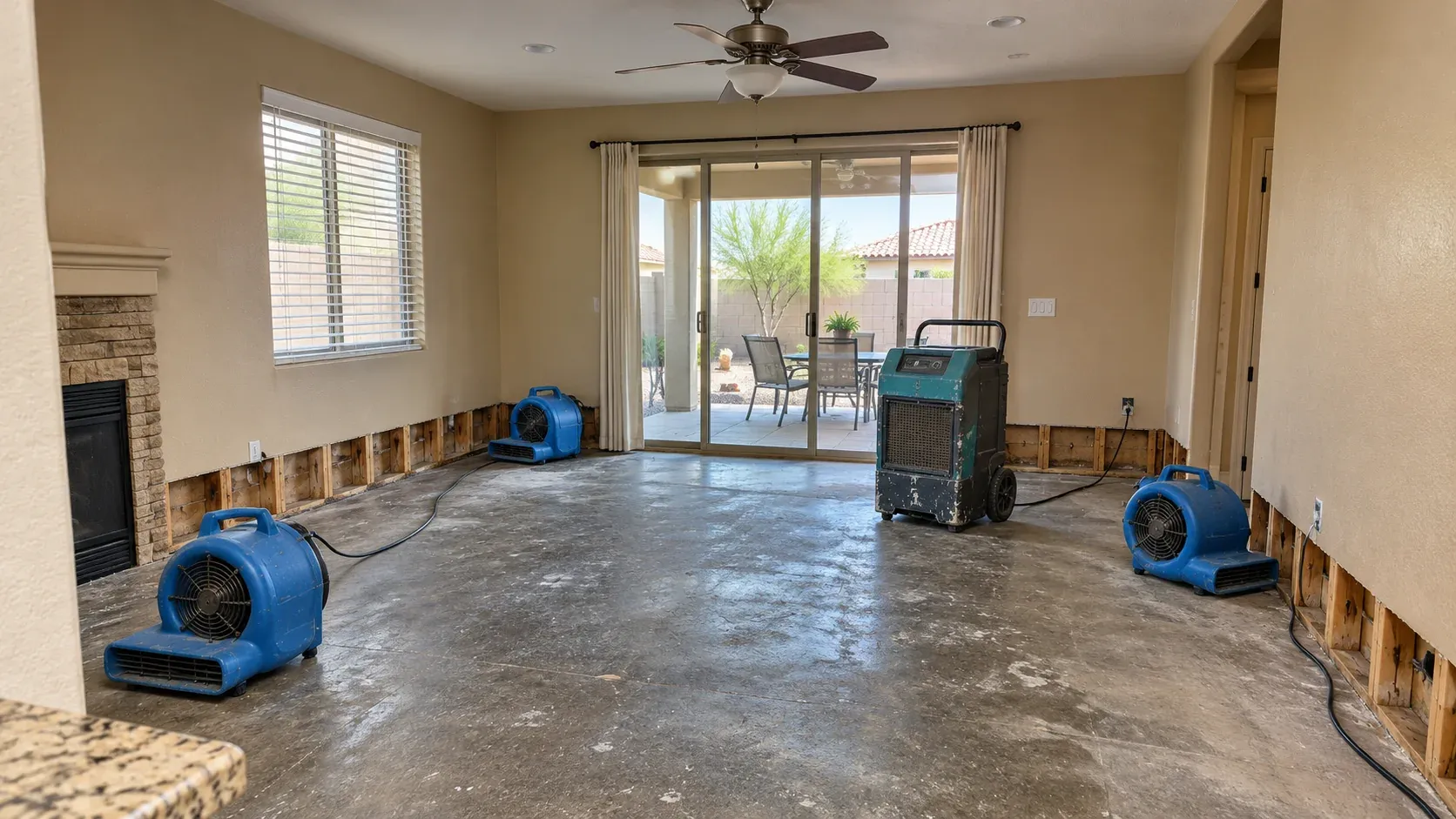
You have a musty smell or spots on a wall after a leak. Call day or night or send the form, and someone from our team will call you back soon. The moisture gets fixed first, then the mold.
Line open now
Get a call back
Tempe · Mesa · Chandler · Gilbert · Ahwatukee · Guadalupe + 13 more towns
01What you get
Mold contained, removed and checked
Mold is the second event in a water damage job, not the first. Where it came from, what comes out, and how the work is checked before the wall is closed.
- The moisture source found and fixed first, so the mold does not come back.
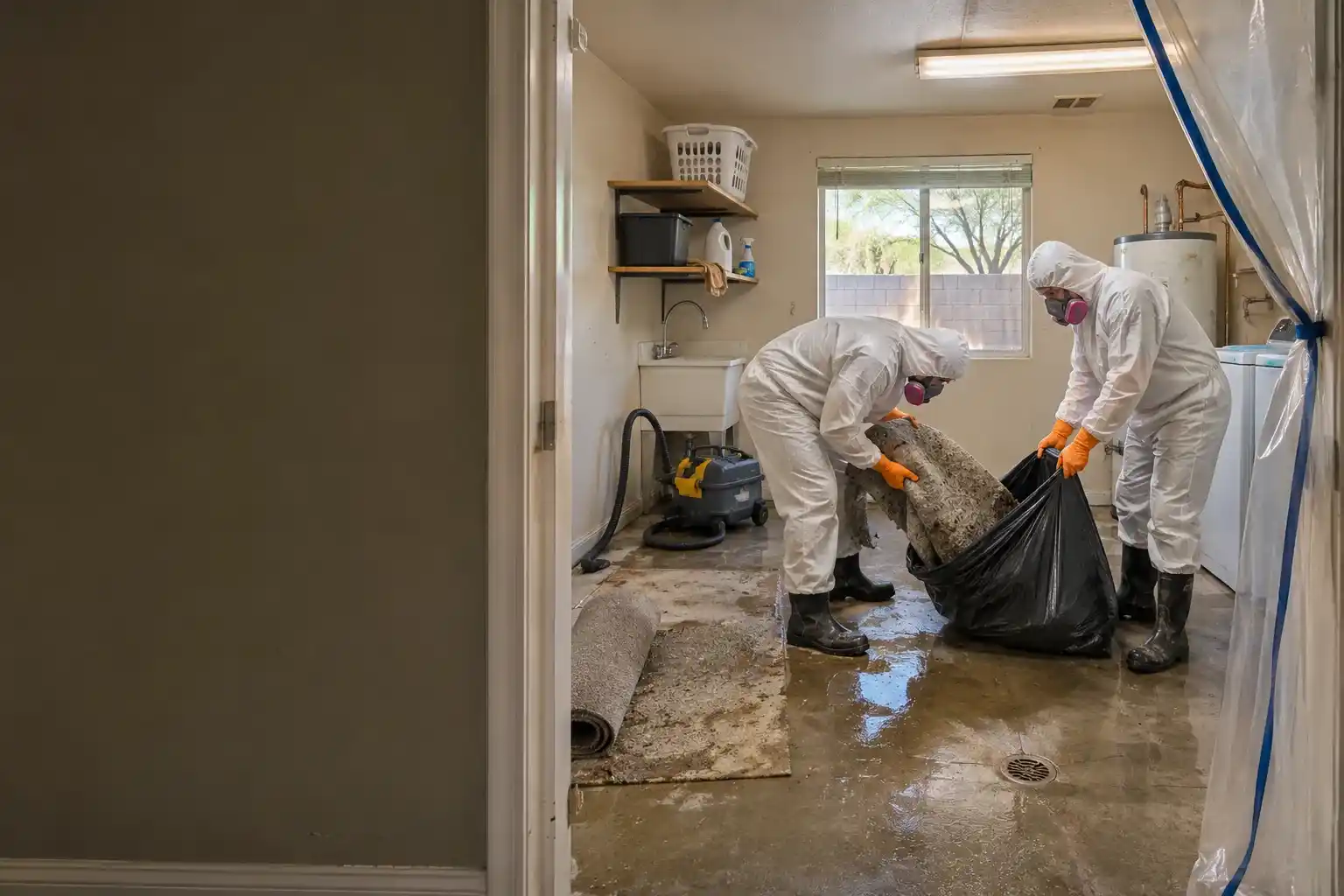
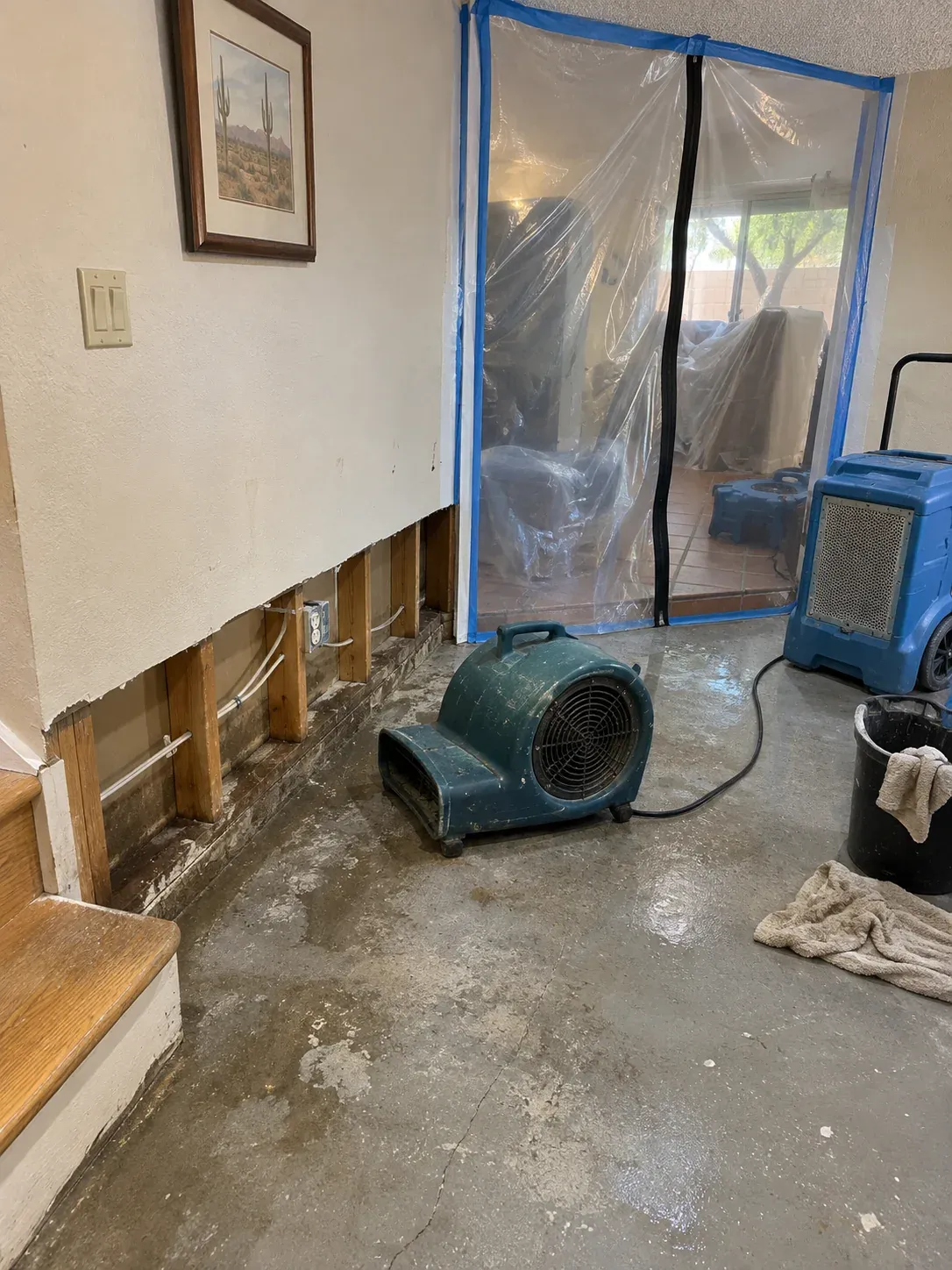
- Containment, so spores stay out of the rest of the house.
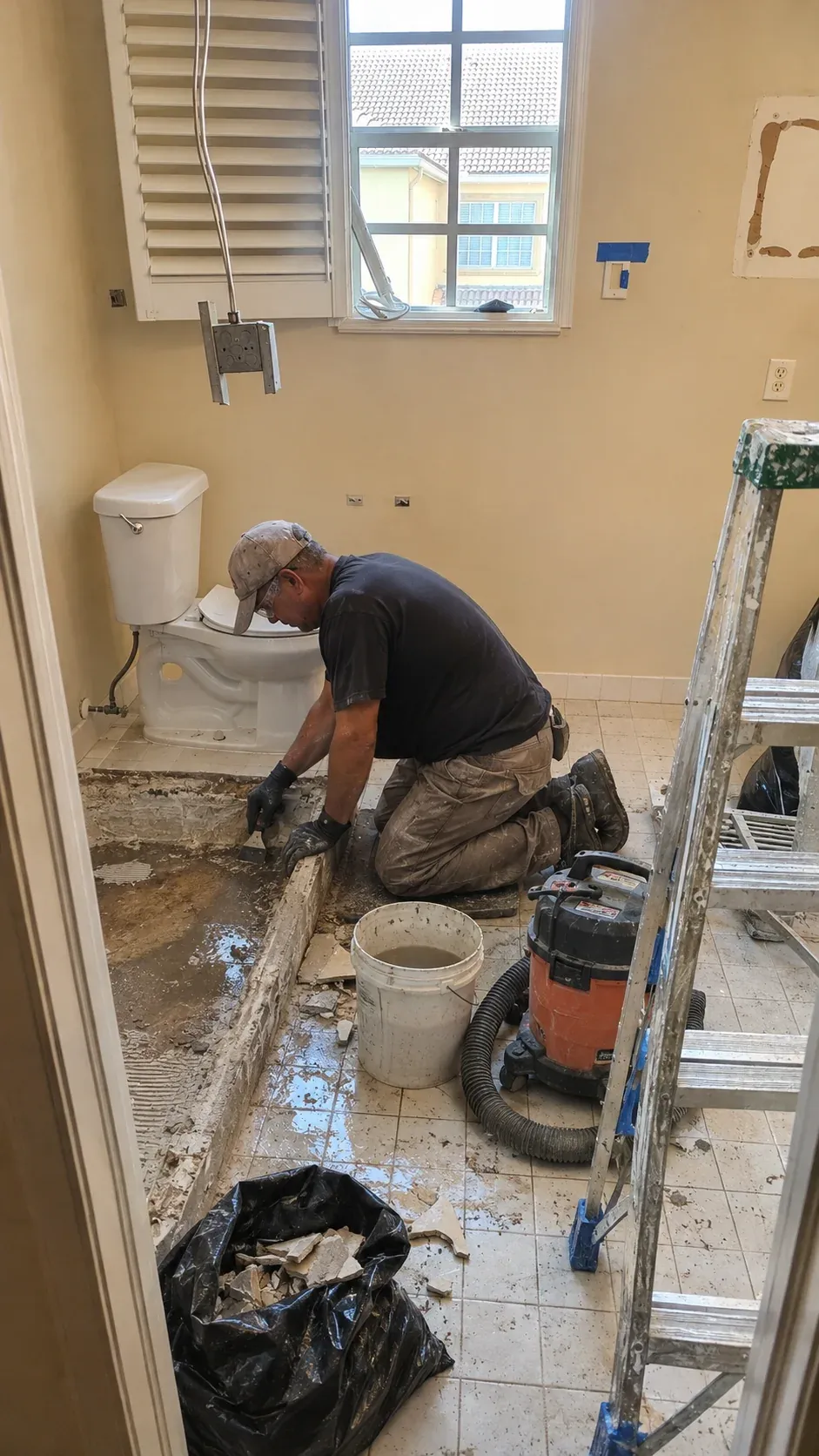
- Affected material removed and the area cleaned.
- A clearance check before the area is closed up.
02The signs
5 signs of mold after water damage
Any one of these is reason enough to call.
- 01A musty smell does not go away. Growth often starts where you cannot see it.
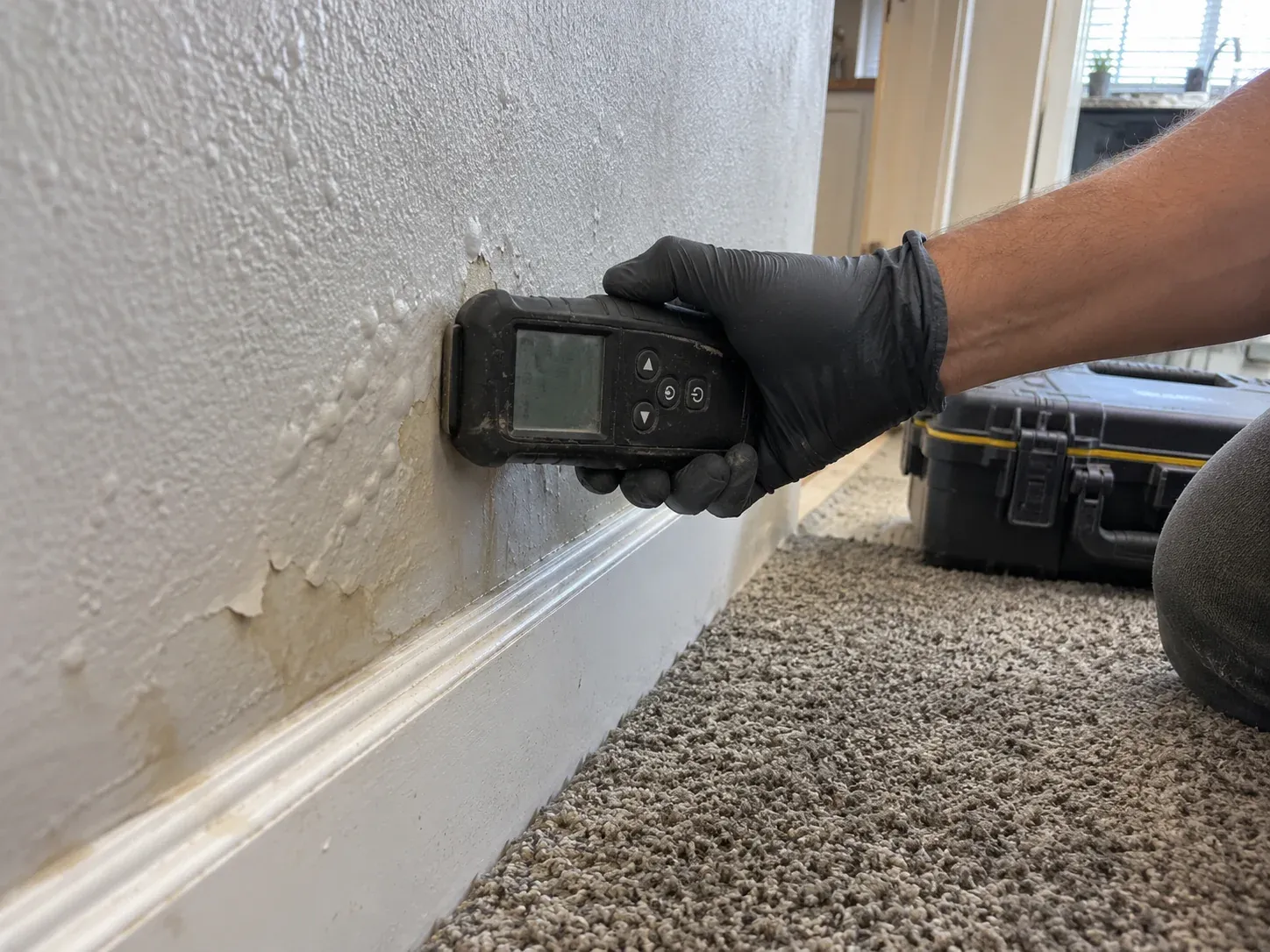
- 02Spots or staining on drywall, a baseboard or a ceiling. The material stayed wet too long.
- 03The area stayed wet for more than 2 days. That is when mold gets its start.
- 04Paint is bubbling or peeling near an old leak. Moisture is still behind it.
- 05A leak was dried without readings. Nobody knows if the wall cavity ever dried.
03How it works
What happens after you call
Your call starts a fixed sequence.
- 1Call or send the form, day or night.Say where the water is, whether it is still running and how long it has been there.
- 2Someone from our team calls you back.We go over what is wet and what has to happen first.
- 3Containment, removal and a clearance check.The source is fixed, the area is sealed off, affected material comes out, and the area is checked before it is closed.
04Costs
What mold remediation costs
| Job | Published range |
|---|---|
| Typical residential remediation | $1,500 to $9,000 |
| National average | $3,500 |
| Per sq ft of affected area | $10 to $30 |
| Bathroom, small area | $500 to $1,500 |
| Ceiling | $1,000 to $9,000 |
| Crawl space | $500 to $2,000 |
Source: Fixr, 2025. National figures. Your price depends on the square footage of affected area and how accessible it is. Independent air sampling is usually a separate fee.
05Mold
Mold is what happens after the water
Mold needs 3 things: moisture, food, and time. In a Tempe house that has been wet, the food is drywall paper, wood framing, carpet backing and dust. The time can be short: the EPA says to dry water-damaged areas and items within 24 to 48 hours to prevent mold growth.
That short window is why the drying part of a water damage job matters so much. Mold after water damage is often not a mysterious contamination event. It is a wall that stayed wet for a week after a slab leak, or a condo that sat empty through August with the AC off and a slow supply line leak behind the kitchen cabinet.
Remediation has 2 goals: remove the mold that is there, and remove the moisture condition that let it grow. Skip the second one and it comes back on the new drywall.
06Warning signs
Signs it is past drying alone
- Visible growth on drywall, baseboard, or the back of a cabinet
- A musty smell that returns after cleaning
- Material that stayed wet longer than 48 hours
- Water that came from a sewage backup or storm water
- Bubbling paint or soft drywall above the water line
- Anyone in the house with symptoms that started after the leak
07How it works
What remediation actually involves
Containment
Plastic sheeting and zipper doors around the work area, with the space put under negative pressure so air flows in rather than out. This is the step that keeps spores out of the rest of the house while material is being disturbed.
Removal
Porous material that is growing mold comes out: drywall, insulation, carpet, pad, ceiling tile, cabinet backs. It goes into sealed bags and out of the house. Framing and other surfaces that can be cleaned get HEPA vacuumed and scrubbed. The EPA says porous materials that become moldy may have to be thrown away, because the mold can be difficult or impossible to remove completely.
HEPA filtration
Air scrubbers run during the work and after, pulling air through HEPA filters. This is how the airborne count comes down while material is being handled.
Clearance
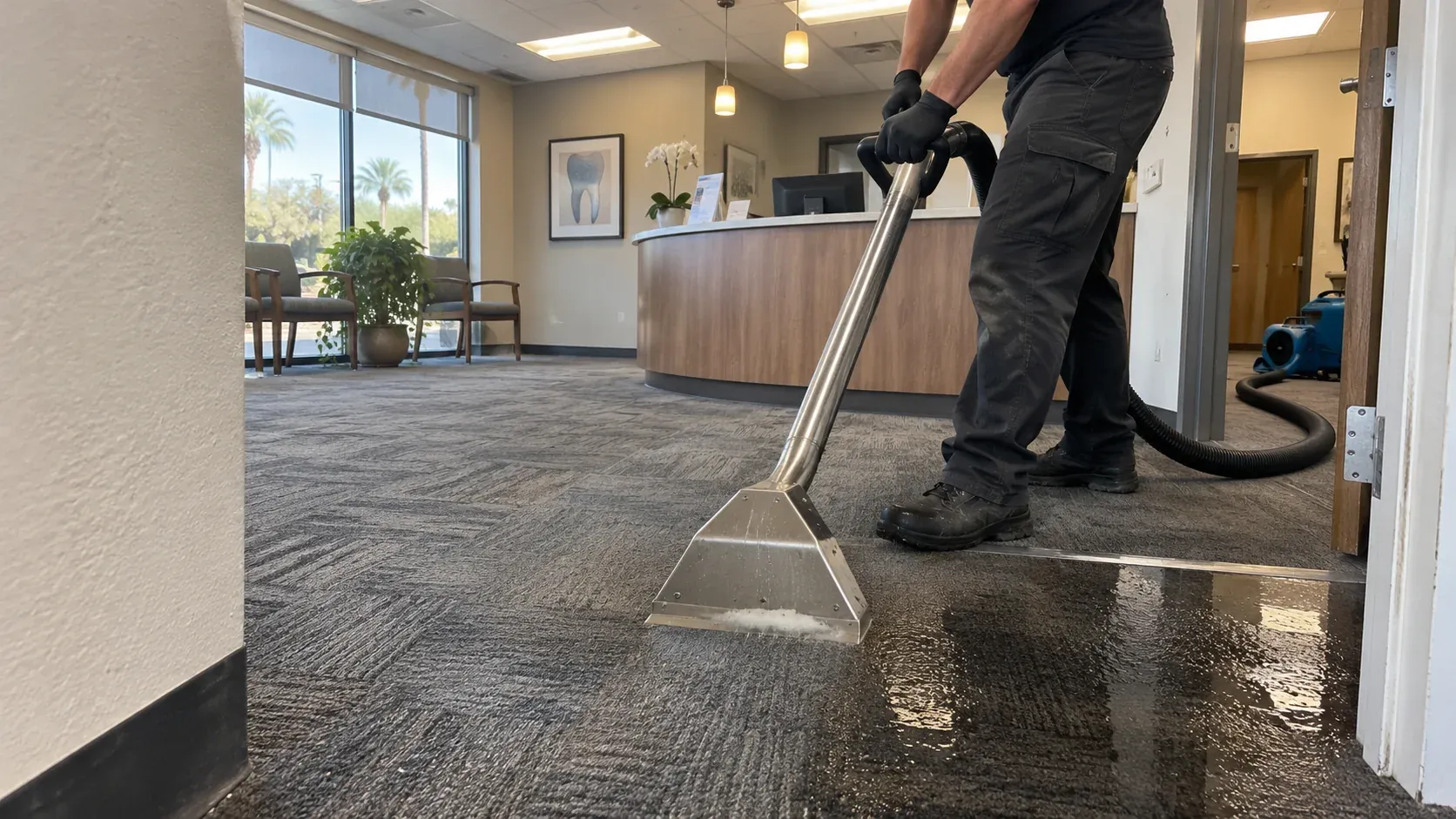
Before the cavity is closed, the work area gets checked. Depending on the job that means a visual inspection inside the containment, moisture readings confirming the framing is dry, and sometimes an air sample taken by a third party. A sample taken by an independent third party carries no conflict of interest, and it costs extra.
08Costs
Testing: when it is worth paying for
If you can see growth, you do not need a test to know it is there. Test when you need to know what it is, when a landlord or an insurer is disputing it, when the smell is there but nothing is visible, or when you want an independent clearance after the work.
A test that identifies the genus is not a diagnosis of anyone's health. Health questions belong with a doctor.
09Good to know
The things that do not work
- 01
Bleach on drywall or wood
It kills the surface, not the growth inside the paper, and it adds moisture to the material.
- 02
Paint or primer over it
Encapsulating wet or active growth traps the moisture and the problem.
- 03
Fogging the room and calling it done
A fogger does not remove the material the mold is growing on.
- 04
Running a fan on a moldy wall
It can spread spores through the room, which is what containment exists to prevent.
10Local risk
Why closed-up houses in Tempe grow mold fast
A closed-up house with the AC off and relative humidity above 60 percent can turn into a greenhouse for mold. The EPA advises keeping indoor humidity below 60 percent, ideally between 30 and 50 percent. Snowbird units that sit empty over the summer are a common case: a slow leak under the kitchen sink can run for weeks in a sealed house, and the first person through the door in the fall may find the cabinets swollen and mold behind them.
Monsoon season adds the other case. Water comes in at a patio door during a microburst, gets mopped up, and the wall base and the carpet pad stay wet. Weeks later the baseboard smell can start.
114 questions
Questions people ask about mold remediation in Tempe
Still have a question?
Send the form and describe what you see. Someone from our team will call you back soon.
Get a call back01Can I just paint over mold?
No. Paint over active growth traps moisture and the growth continues behind it. The material has to be removed or the moisture condition corrected first.
02Does remediation fix the water problem?
Not on its own. The leak has to be repaired, usually by a plumber, and the structure has to be dry before new material goes in. Remediation removes growth, and plumbing repair is a separate trade.
03Do I need to move out during the work?
Often not, if the containment is real and the work area is one room. Larger jobs, or anyone in the house with a health concern, is a conversation to have with the contractor and a doctor.
04How long does it take?
A single room with containment can take a few days including drying time. Whole-house or ductwork involvement can run longer and cost more.