Tempe guide · 4 min read
What to Do After a Burst Pipe in Tempe, AZ
Water is running and you have one hand free. This is the sequence, shortest version first, then the reasoning.
015 steps
The 60 second version
Shut off the main water valve.
Turn off the breaker to any room with water on the floor.
Open a low tap to drain the lines.
Photograph the water before you touch anything.
Call.
That is the whole thing. Everything below is why, and what to do with the next few hours.
02Good to know
1. Shut the water off, and know where the valve is before you need it
Many Tempe houses have a main shutoff at the property line in a concrete box, sometimes at the alley, sometimes at the front wall. Some have a second valve at the house. If you rent, the property manager should be able to tell you where it is, and if you own, find it this week rather than during the emergency.
A gate valve that has not been turned in 20 years can seize. Turn it slowly, and if it will not move, do not force it with a pipe wrench on the handle: that snaps the stem and now the water cannot be shut off at all. Call the city water department in that case. Tempe's 24/7 water emergency line is 480-350-2837.
If the burst is on a fixture supply, the small valve under the sink or behind the toilet shuts that line only, which is often enough to stop the flood while the rest of the house keeps water.
03Good to know
2. Kill the power to the wet rooms
This is the step people skip and it is the one that gets someone hurt. Water on a tile floor plus a live outlet at baseboard height is a shock path. Breaker off, at the panel, for every room with water in it. If the panel itself is in a wet area, do not go near it, call an electrician and get out of the room.
Do not unplug anything by the cord while standing in water. Do not run an extension cord into a wet room to power a fan.
04Monsoon
3. Drain the lines and stop the flow
Once the main is shut, open the lowest faucet in the house and a tap upstairs if there is one. That bleeds pressure out of the system so the burst point stops spraying. A garden hose connection at the lowest point works too.
05Good to know
4. Photograph before you move anything
Wide shots of each room, close shots of the water line on the baseboard, the burst point, and any damaged item you care about. This is not for social media. It is the evidence an adjuster works from, and it is much harder to reconstruct after the carpet is out.
If the water is deep enough to matter, mark the high point on the wall with a pencil before it drains. That mark is worth more than a memory.
06Good to know
5. Get the water out of the way, then get it dry
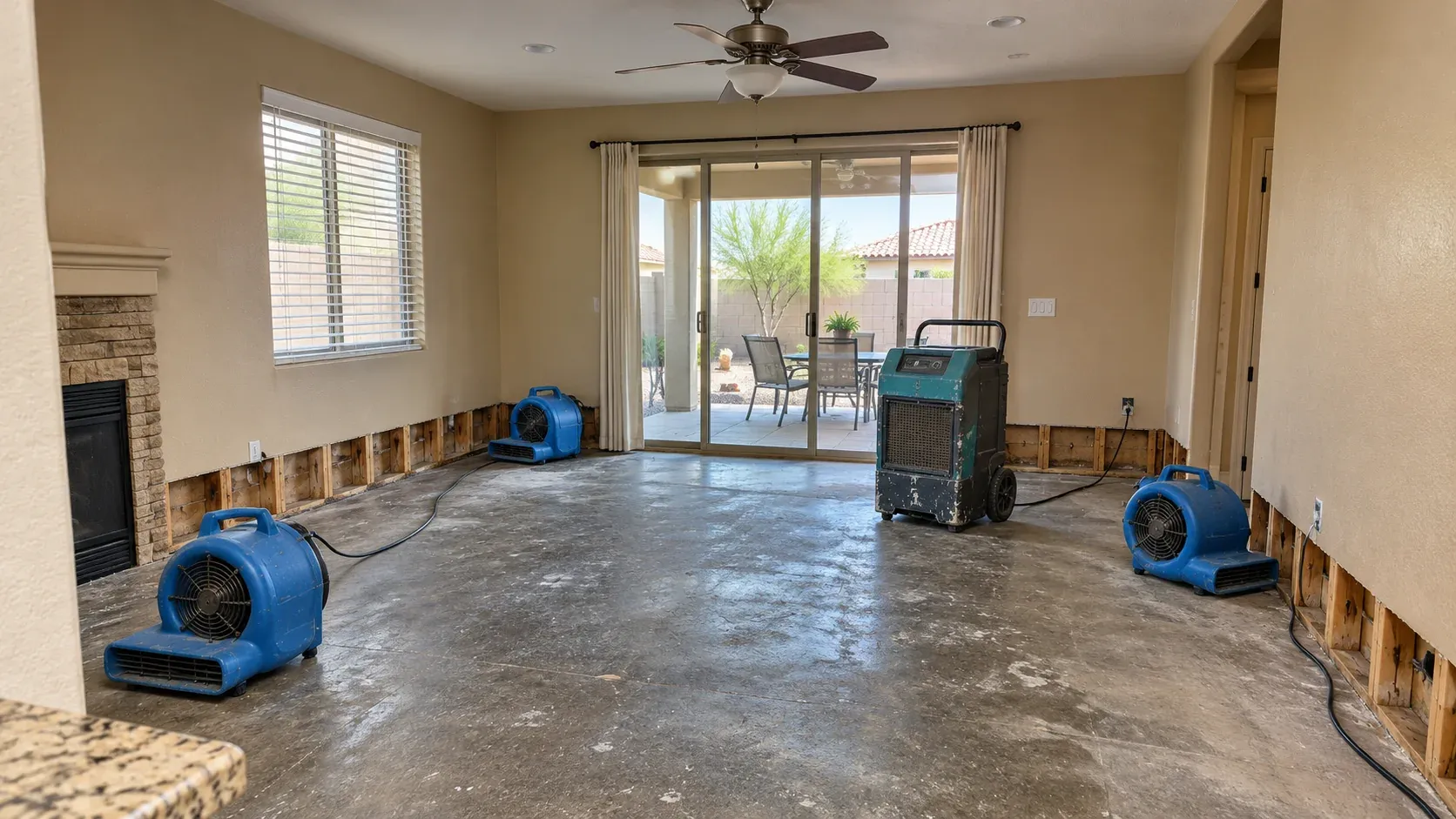
Towels and a wet vac buy time on a small spill. On a burst supply line, the volume is usually past that: a half-inch line at normal house pressure can put out hundreds of gallons in an hour. Extraction equipment is what gets ahead of it.
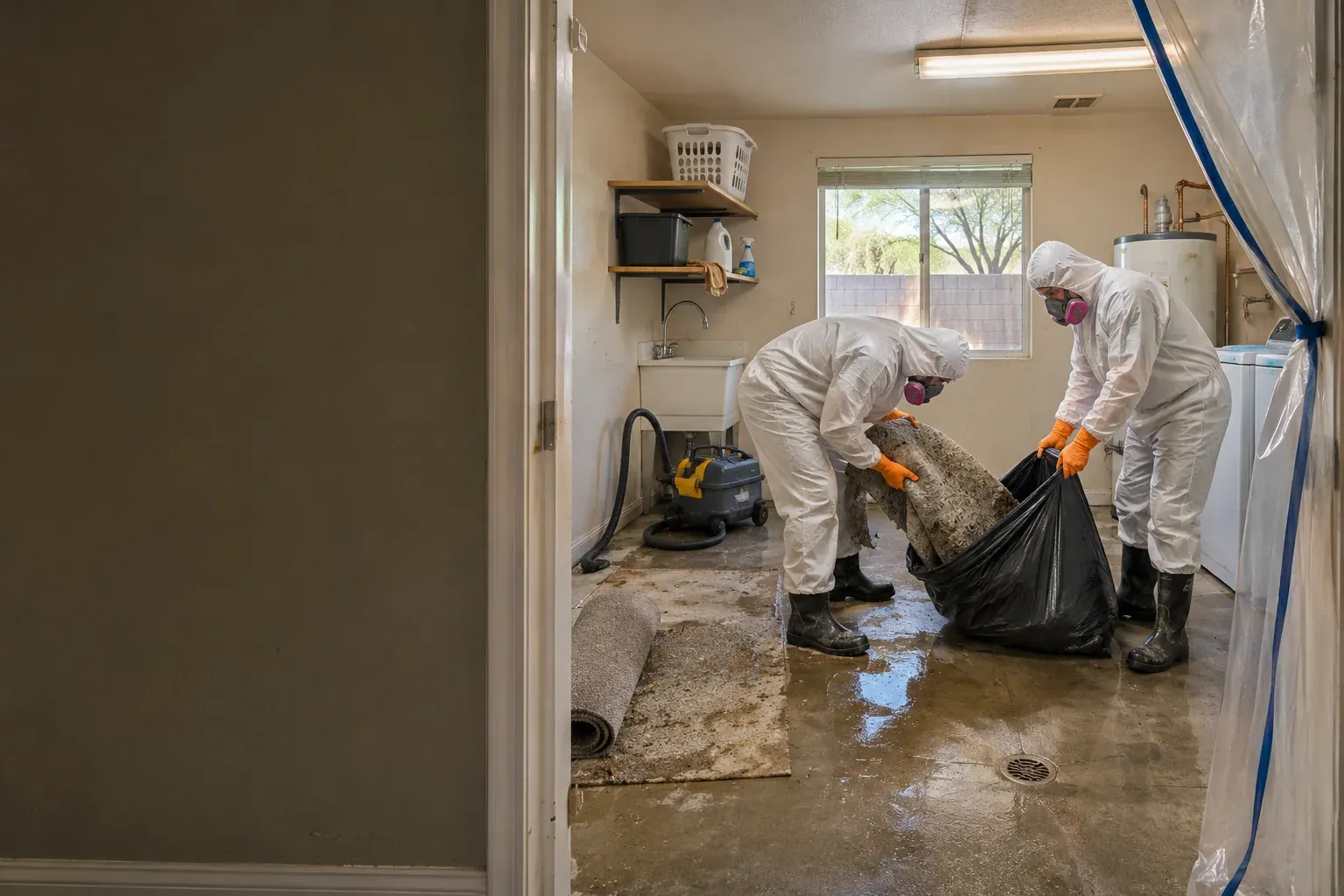
The part that matters most in the hours after: the water that went under the flooring and into the wall base. A mop does not reach either. If the room has carpet, the pad is already holding water and has to come out. If the room has tile over slab, the water is under the tile at the grout lines. Both are drying jobs, and both are cheaper the same day than the day after.
07Drying window
The next 24 hours
- 01
Call your insurer or agent
Ask what they need and whether they want an adjuster on site before anything is thrown away. Do not throw away material until you know.
- 02
Keep wet items separated
Wet books, clothes and papers in a pile can grow mold within a day or two. Spread them, or leave them for a pack out.
- 03
Do not run the AC fan to dry the house
It can pull moisture into the ducts and spread it through rooms that were dry.
- 04
Do not turn on electronics that got wet
Not even to check.
- 05
Ask for the moisture readings
The first visit should end with numbers on paper, in every room the water reached.
08Local risk
Why Tempe pipes burst the way they do
Tempe's water is hard, and the USGS notes that heated hard water forms calcium carbonate scale, and that scale building up over time can clog pipes.
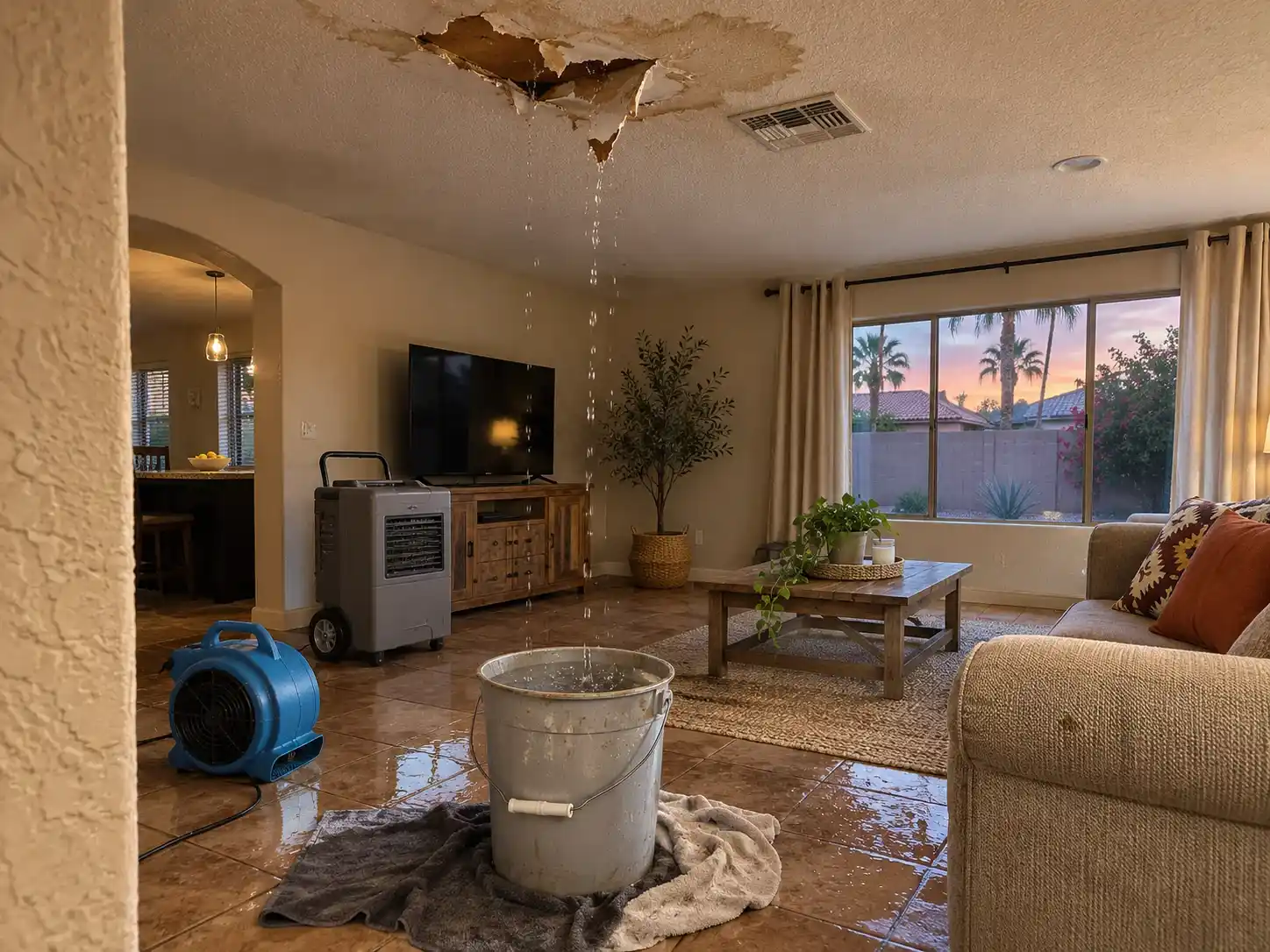
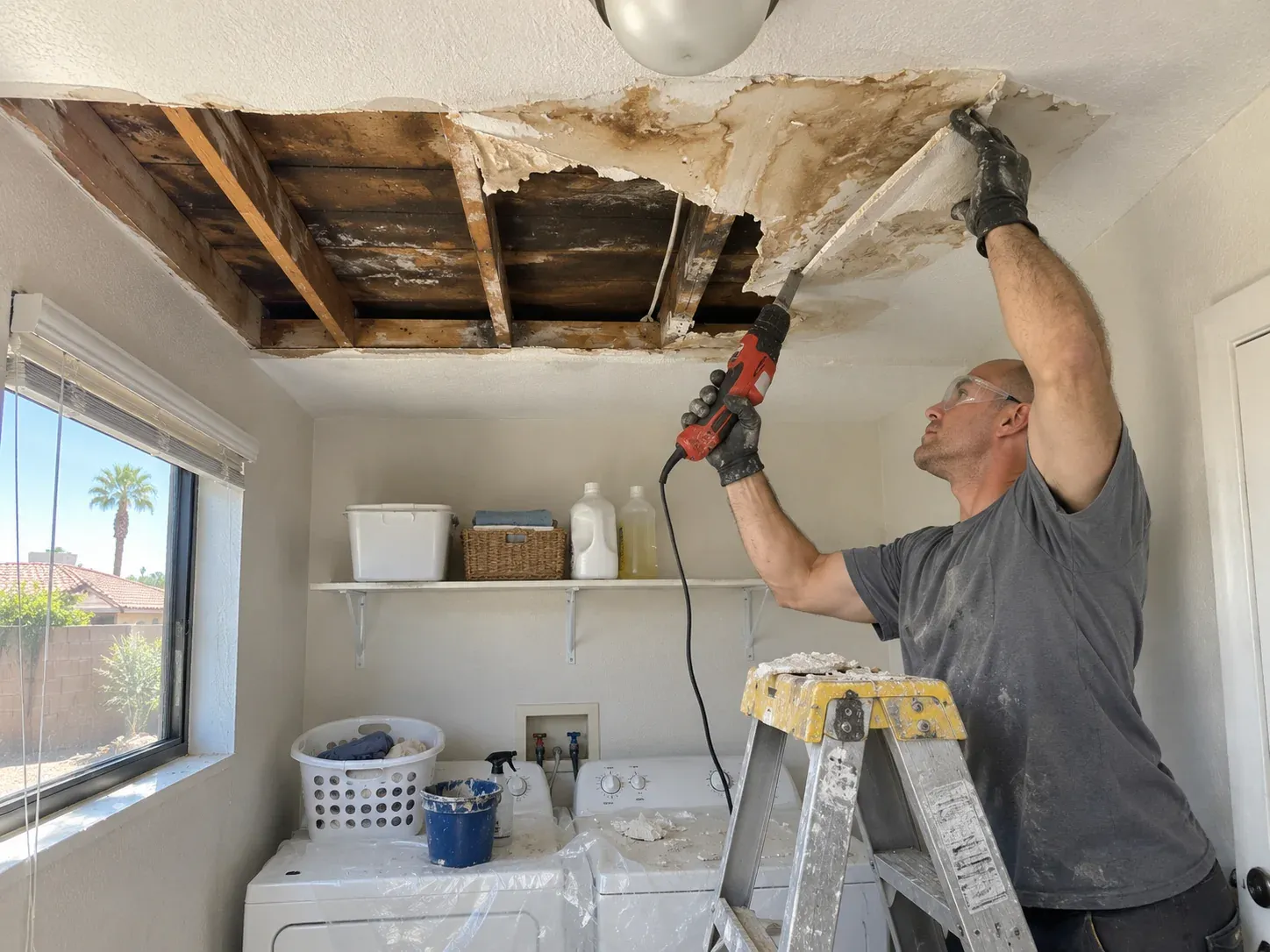
Many of the burst lines in this city are not dramatic failures on a cold night. They are pinholes that finally let go, usually in a wall behind a cabinet, in the ceiling over a hallway, or under a slab where the pipe has been running hot for 30 years. That is also why they get noticed late: the first sign is often a stain, not a spray.
Two cheap habits that help prevent many of these: flush the water heater once a year, and check the supply lines behind the washing machine and under every sink. Braided stainless lines can fail at the crimp, and a washing machine hose that is bulging is a burst pipe waiting for a Tuesday.
094 questions
Questions people ask in the first ten minutes
Still have a question?
Send the form and describe what you see. Someone from our team will call you back soon.
Get a call back01Where is the main water shutoff in a Tempe house?
Often in a concrete box at the property line, sometimes at the alley or the front wall, with a second valve at the house on some builds.
02Can I stay in the house after a burst pipe?
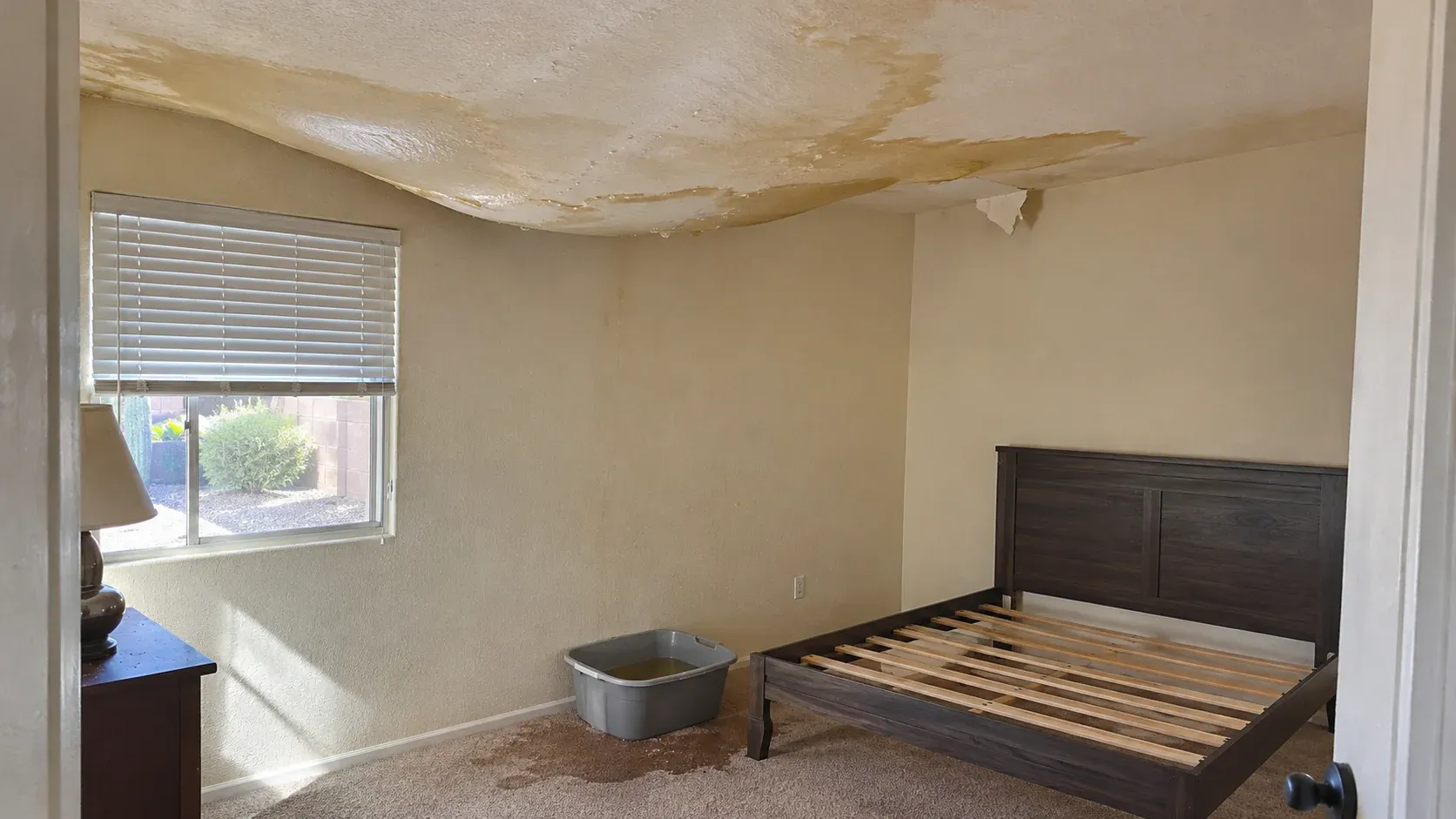
Usually yes once the water is off and the power to wet rooms is off. If the ceiling is sagging, stay out of that room until it is checked.
03Does a burst pipe mean mold?
Not if it is dried. Past about 48 hours with wet drywall or framing, mold becomes a real possibility and the wall cavity should be checked.
04Will the water bill be enormous?
A half-inch line at normal pressure can move hundreds of gallons in an hour. Read the meter the same day and photograph it, both for the bill and for the claim.