Service 04 of 06 · Tempe, AZ
Structural Drying in Tempe, AZ
You have walls and floors that look dry but can still be wet inside. Call day or night or send the form, and someone from our team will call you back soon. Drying runs until the readings say dry.
Line open now
Get a call back
Tempe · Mesa · Chandler · Gilbert · Ahwatukee · Guadalupe + 13 more towns
01What you get
Dried to a number, not to a feeling
The part of the job that takes days. Done right, it ends with numbers that match a dry standard. Done wrong, it ends when the carpet feels dry.
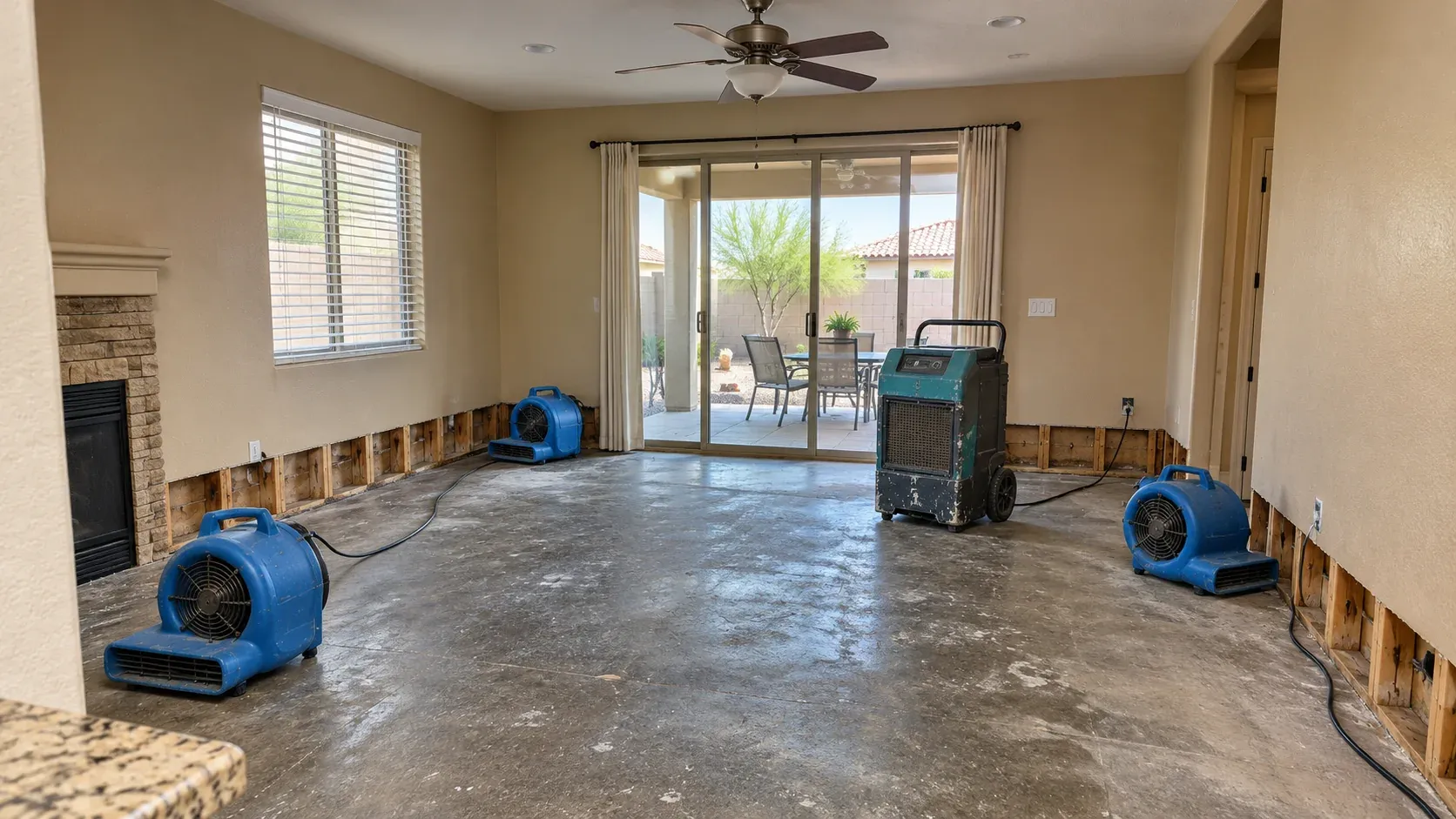
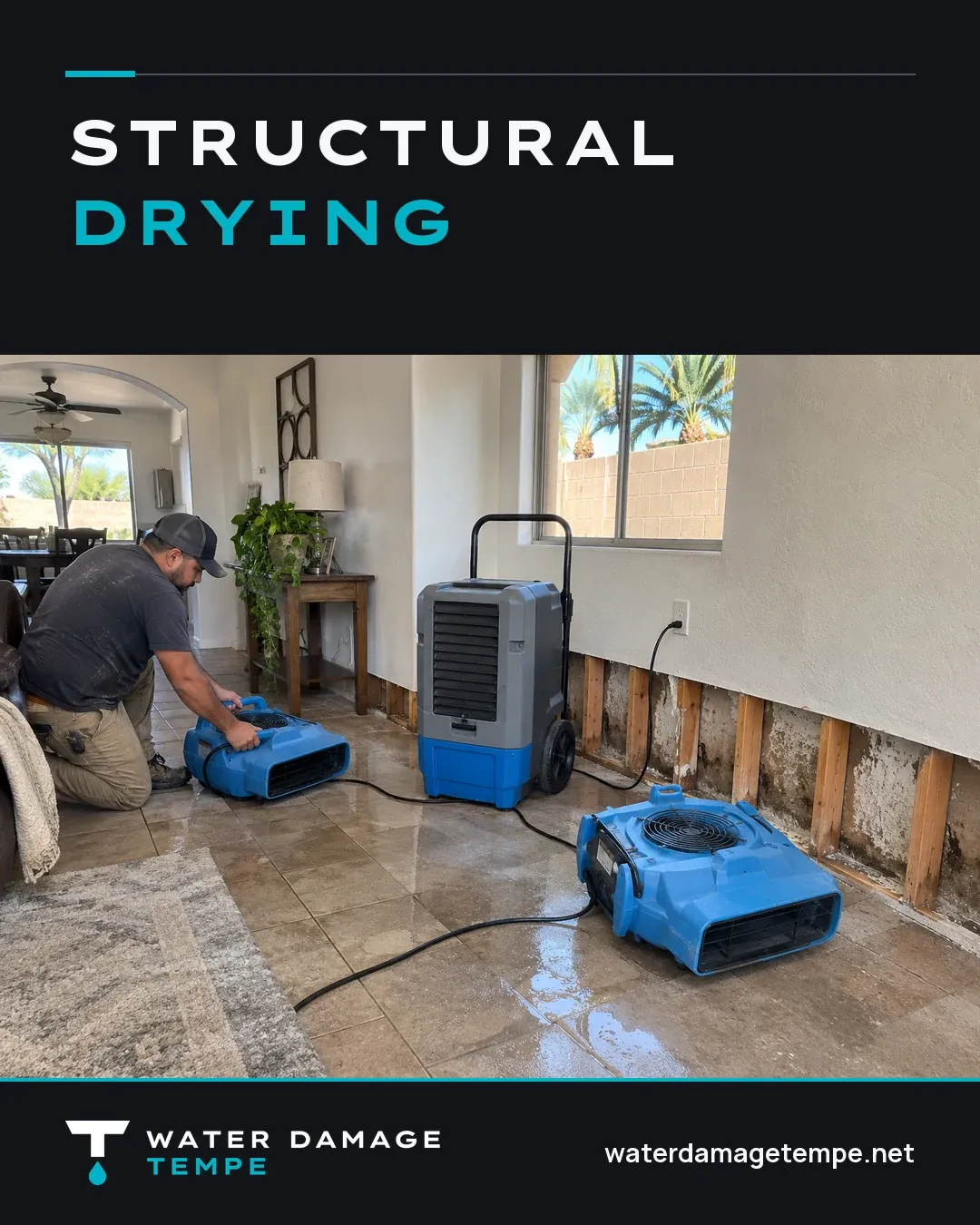
- Air movers and dehumidifiers sized to the room.
- Readings on the same points every day, so the trend shows.
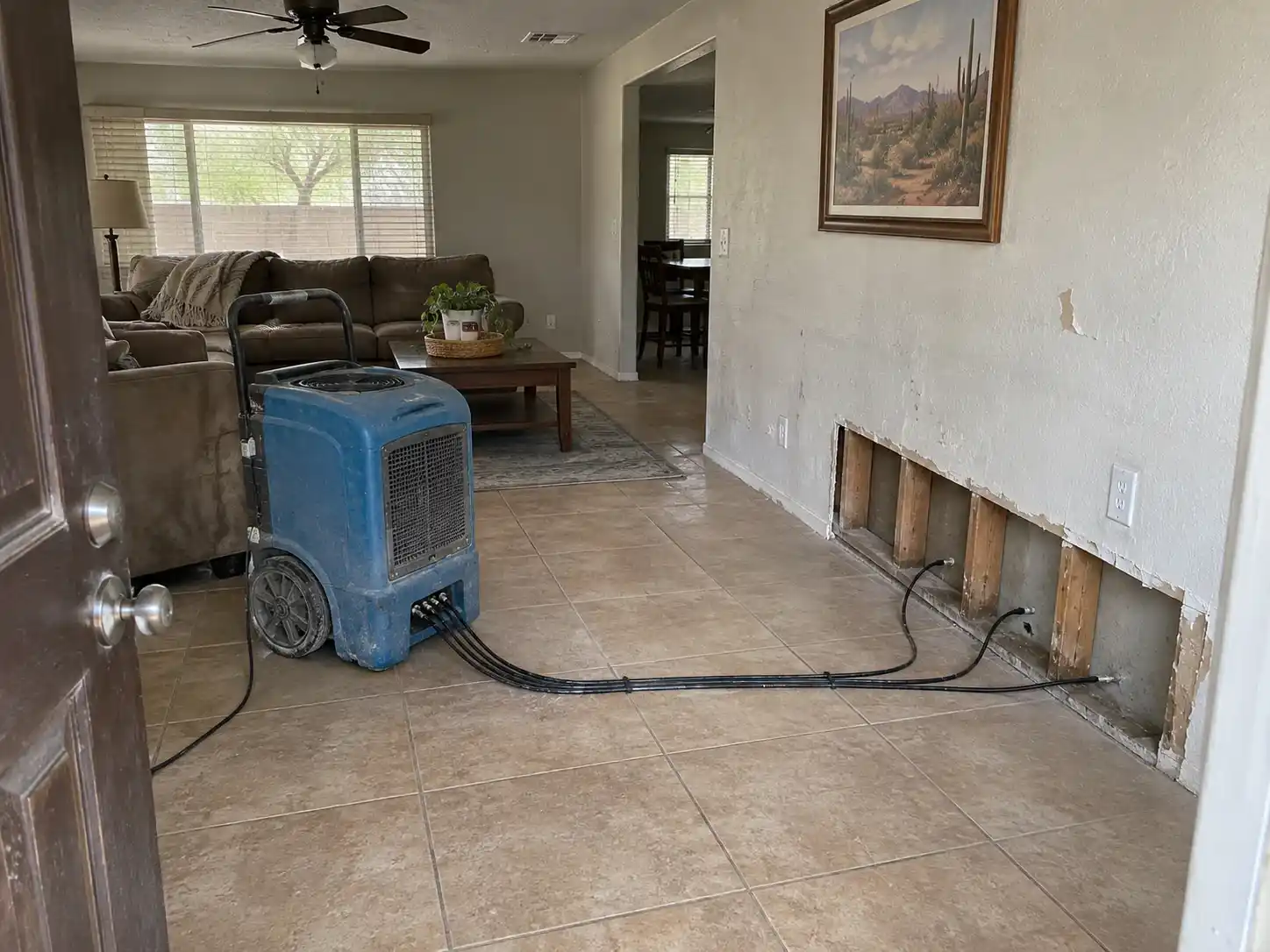
- Baseboards pulled or a small access opening when a wall cavity needs air.
- The job closes when the material matches the dry standard.
02The signs
5 signs your house needs structural drying
Any one of these is reason enough to call.
- 01The water is out, but the room still feels damp. Water left inside the material keeps the air wet.
- 02The carpet is dry on top and wet underneath. Pad and backing hold water long after the surface dries.
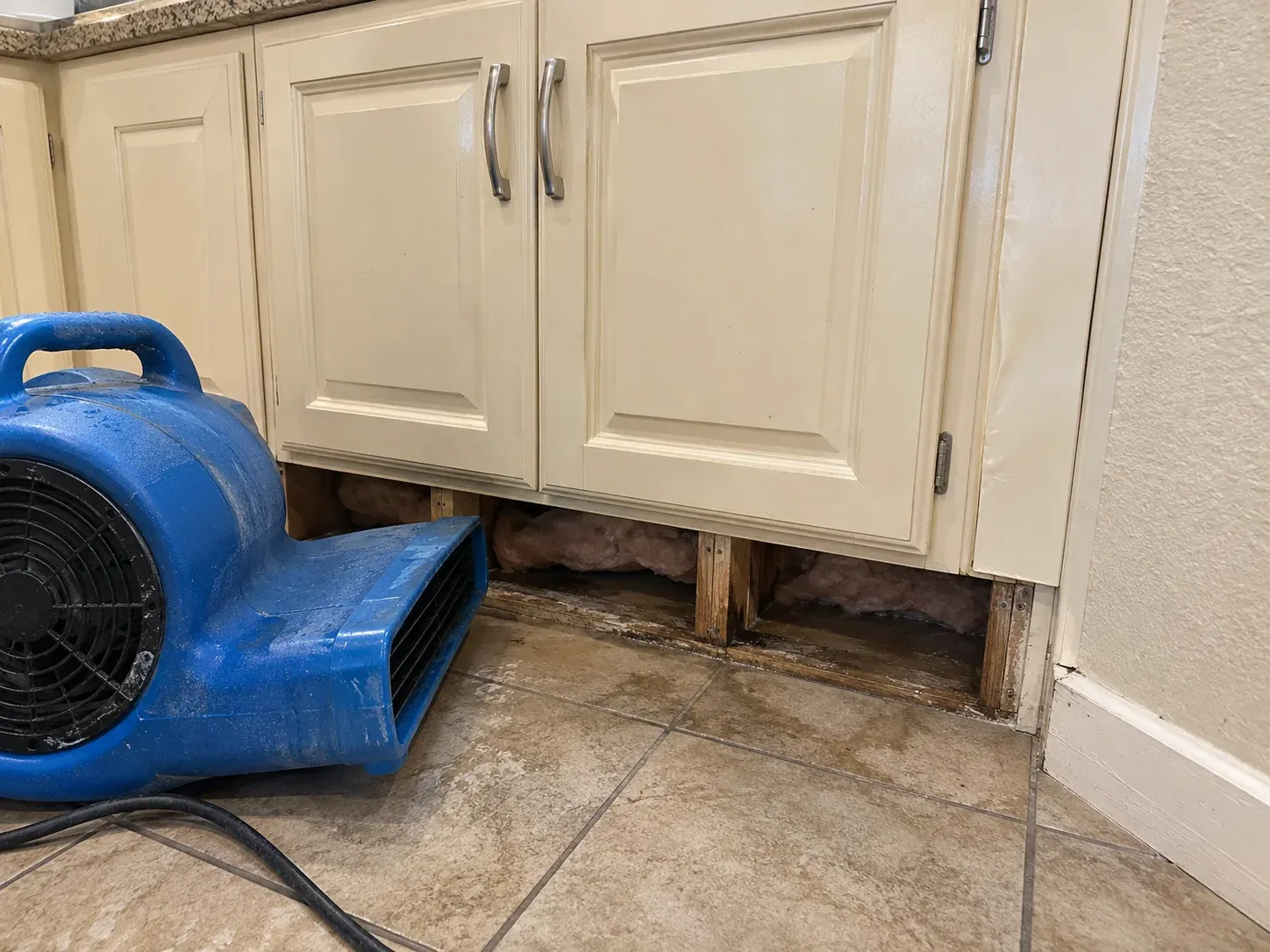
- 03Drywall below the water line is soft. The wall cavity behind it needs air moving through it.
- 04The AC is fighting humidity after a leak. The house is still giving off water.
- 05Equipment came out after a day because it looked dry. Dry is a reading, not a look.
03How it works
What happens after you call
Your call starts a fixed sequence.
- 1Call or send the form, day or night.Say where the water is, whether it is still running and how long it has been there.
- 2Someone from our team calls you back.We go over what is wet and what has to happen first.
- 3Drying runs until the readings hold.Air movers and dehumidifiers go where the readings say, and the job closes when every point is dry.
04Costs
What drying costs
Drying is often priced as part of the whole water damage job rather than as a separate line, so the whole-job range is the useful number.
| Item | Published range |
|---|---|
| Full water damage restoration, national range | $1,200 to $5,000 |
| Full water damage restoration, national average | $3,000 |
| Water extraction before drying, per sq ft | $3.75 to $7.50 |
Source: Fixr, 2025. National figures.
A hardware store dehumidifier rental costs less per day, but it comes without moisture readings or a drying log.
05Good to know
Dry is a measurement, not a feeling
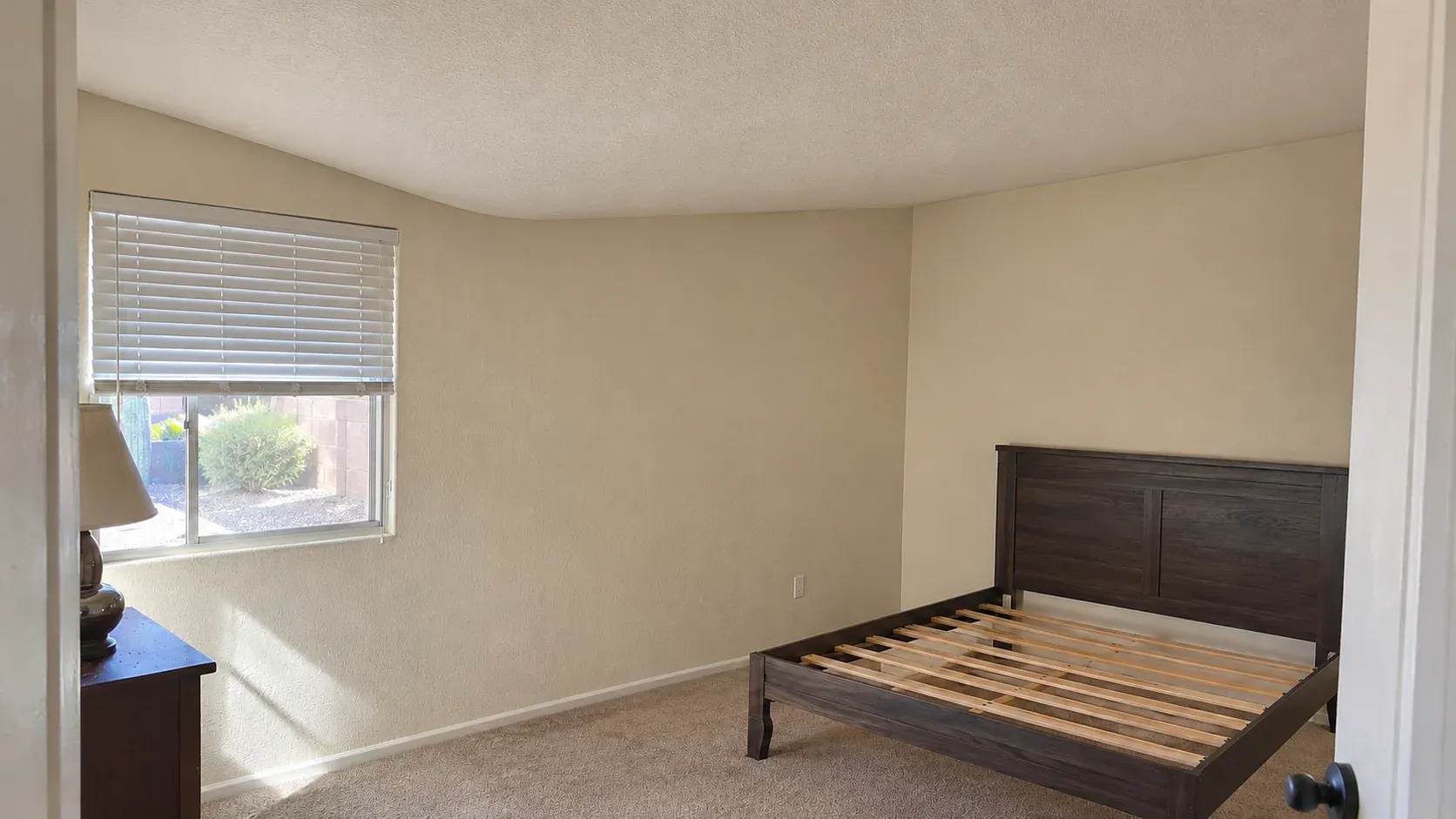
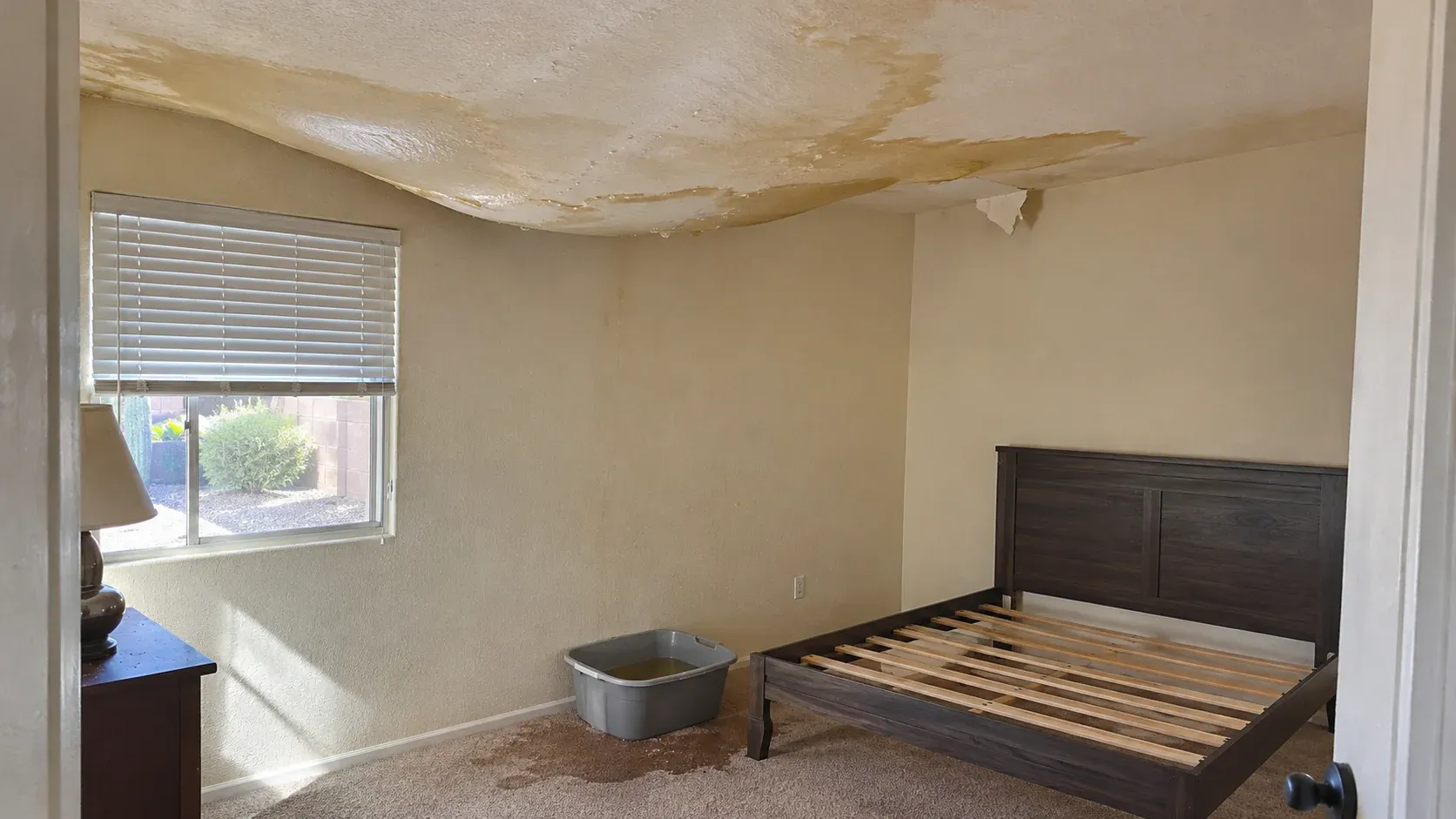
Extraction is the quick part. Drying takes days, and it is the part where shortcuts hide. A room can feel dry, look dry, and still have a wet wall cavity. Close it up and mold can start within days. That is a common way a water damage job comes back.
Structural drying is airflow plus dehumidification plus time, and then proof. Air movers evaporate water off the surfaces. A dehumidifier pulls that vapor out of the air so it does not settle back into the material. The proof is a meter reading on the same spot, taken the same way, day after day, until it matches what dry material reads in that house.
Without a stated dry standard and a daily log, the drying is a guess.
06Local risk
Why drying is harder here in July
Tempe has 2 drying seasons, and one of them works against you.
- Monsoon air carries moisture. A dehumidifier has to remove what came in through the door before it can remove what is in the wall.
- Houses get closed up and the AC set high, which traps humidity inside.
- Snowbird units sit empty for months, so a leak can run until someone opens the door.
- In winter, drying tends to go faster. In August, the equipment may run longer.
07Good to know
What the equipment does
Air movers
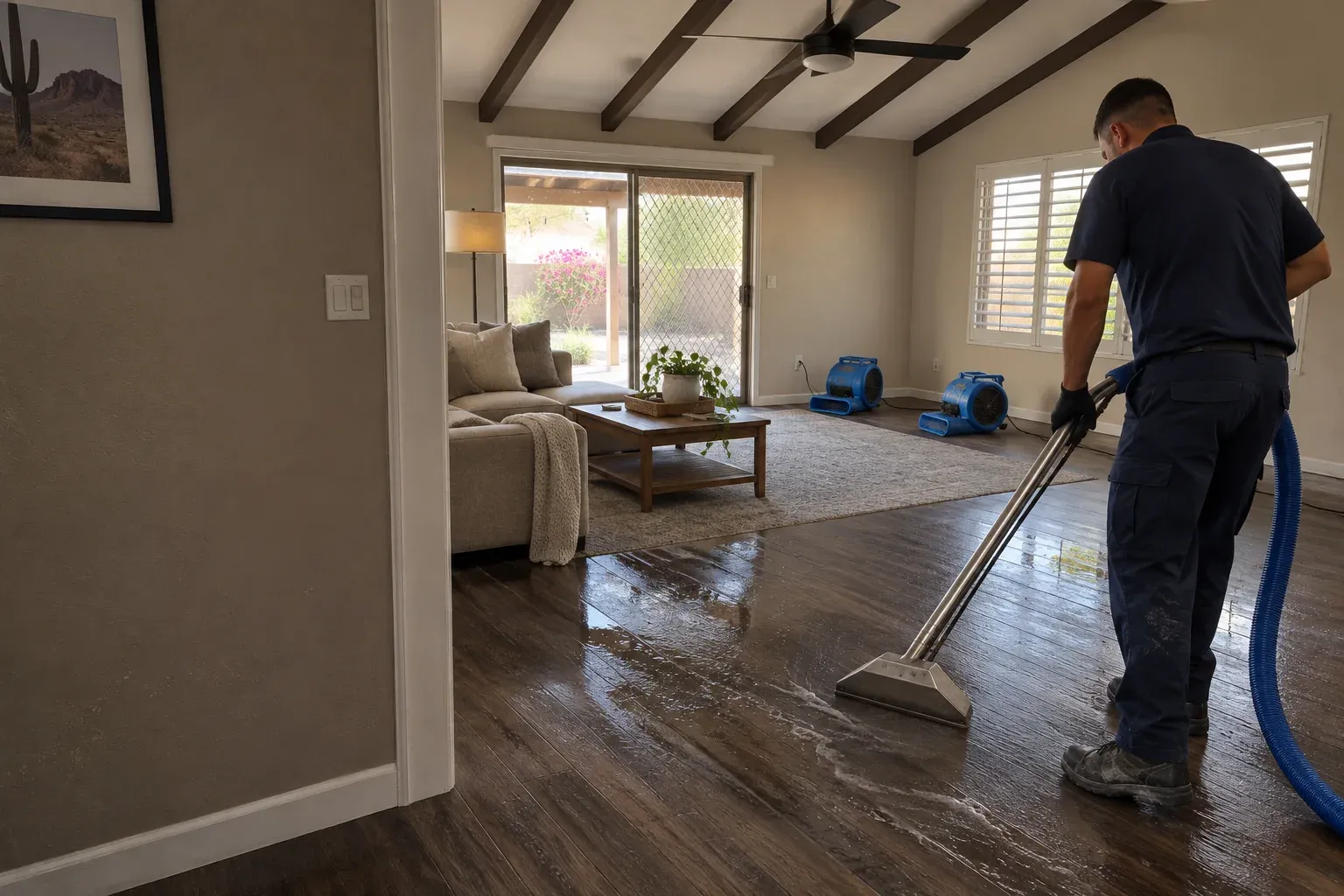
High-velocity fans aimed along the surface, not at it. The air skims the wet material, replaces saturated air at the surface with drier air, and speeds evaporation. Placement matters more than count: a fan pointed at the middle of a wall does less than one angled along the baseboard where the water actually is.
Dehumidifiers
Low grain refrigerant units pull moisture out of the air and drain it away. A small household unit is often not enough for a wet bedroom. Sizing is by cubic footage and by how wet the material is.
Drying mats and floor systems
For hardwood and some engineered floors, a mat seals to the floor and pulls air across the surface, drying from the top down without cupping the boards. For tile over slab, the drying happens at the seams and the grout, which is slower than it looks.
Air scrubbers
When the water sat long enough that mold is possible, a HEPA scrubber runs alongside the drying equipment to catch spores instead of blowing them through the house.
08Materials
Wet carpet and pad
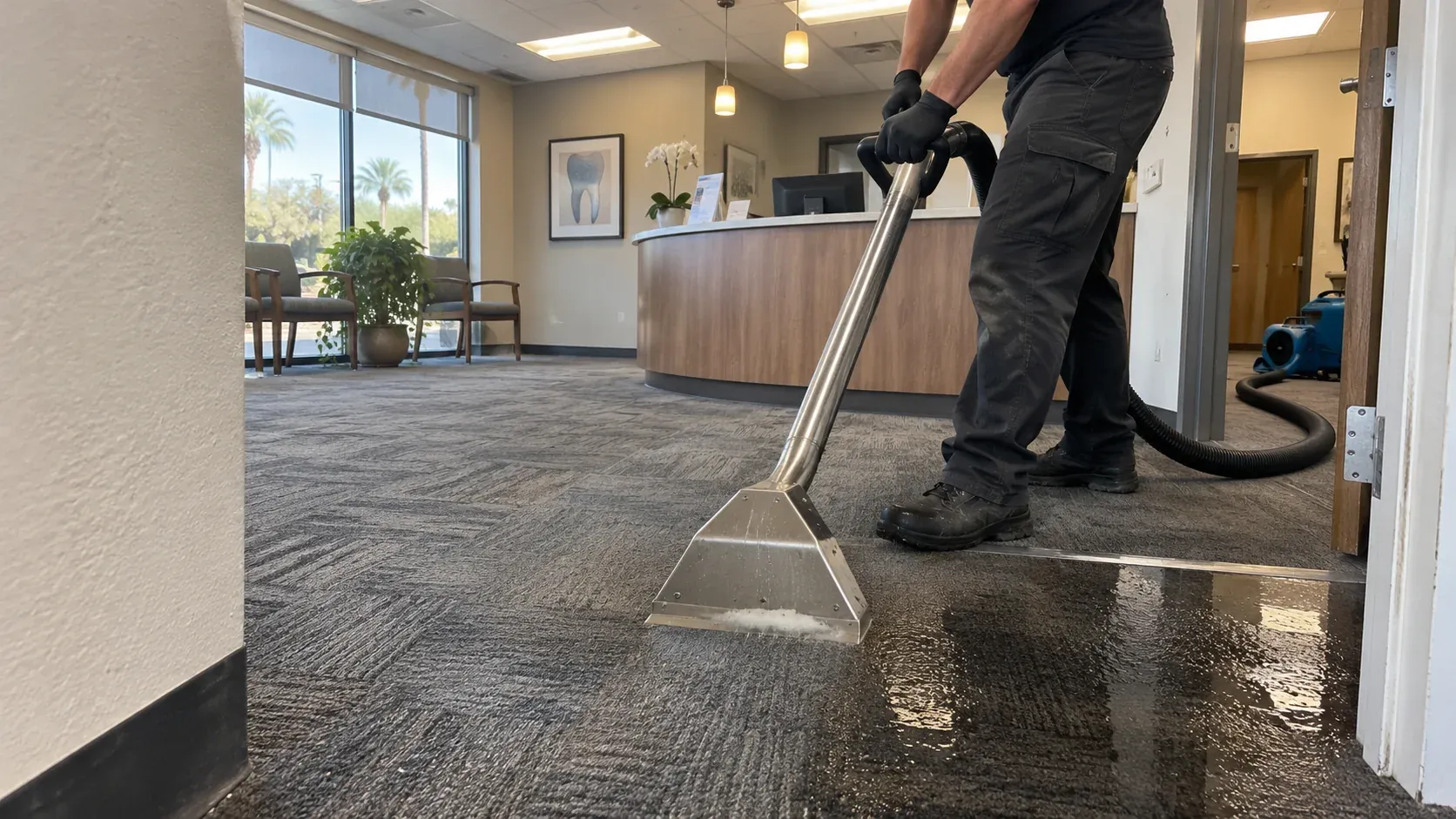
Carpet is a common casualty in a Tempe water damage job and often misunderstood. The carpet itself can often be saved. The pad usually should not be. Pad is a sponge that holds water against the tack strip and the subfloor, and it does not dry in place once it is saturated.
The usual approach: extract the carpet, lift it off the tack strip, remove and discard the pad, dry the subfloor, then dry the carpet with air moving across both faces. If the water was category 2 or 3, or the carpet has been wet for more than a couple of days, or the backing has delaminated, replacement is usually the answer.
Water damaged carpet that dries with a smell was often not dry when it was laid back down. That smell usually comes from the pad and the subfloor, not the carpet fiber.
09Drying window
How long it takes, and how you know it is done
Residential drying often runs 3 to 5 days. A single room can be faster. A whole floor after a monsoon event, or a house with tile over slab and wet drywall, can run longer. The number is not the goal. The reading is.
A proper drying log records the date, the room, the material, the meter reading and the target for that material. It should also record the temperature and relative humidity in the drying chamber, because drying in 80 percent humidity is not drying. The equipment comes out when the readings reach the dry standard for each material.
The log is also the document an adjuster wants, and it is the record that the job was finished rather than stopped.
10Good to know
Where drying ends
Drying comes after extraction and before repair. The leak gets fixed by a plumber, and drywall, paint and flooring go back in after the readings are dry. Those are quoted separately.
Mold that already grew needs mold remediation. If growth is visible or the material has been wet past 48 hours, remediation comes before or alongside drying.
114 questions
Questions people ask about structural drying in Tempe
Still have a question?
Send the form and describe what you see. Someone from our team will call you back soon.
Get a call back01Can I stay in the house while it dries?
Usually yes for one or two rooms. The equipment is loud and the house gets warm, and a dehumidifier dumps heat into the room. If the wet area is the bedroom or the only bathroom, staying somewhere else for a few nights is easier.
02Why does drying take days when the room looks dry?
Because the wall cavity, the subfloor and the tile bed dry slower than the visible surface. The reading decides, not the look.
03Who pays for the electricity the equipment uses?
The homeowner does, and it is worth asking the adjuster whether it can be itemized in the claim. It is a real cost over several days of continuous running.
04What if the equipment is pulled while it is still wet?
Then mold can follow, and the visible damage can appear weeks later in a place that no longer looks related to the leak. That is why the log matters.