11 questions, short answers
Water Damage Questions and Answers in Tempe, AZ
Short answers to the questions that come up after a leak in Tempe and the East Valley.
01Good to know
Will it dry on its own if I just leave the windows open?
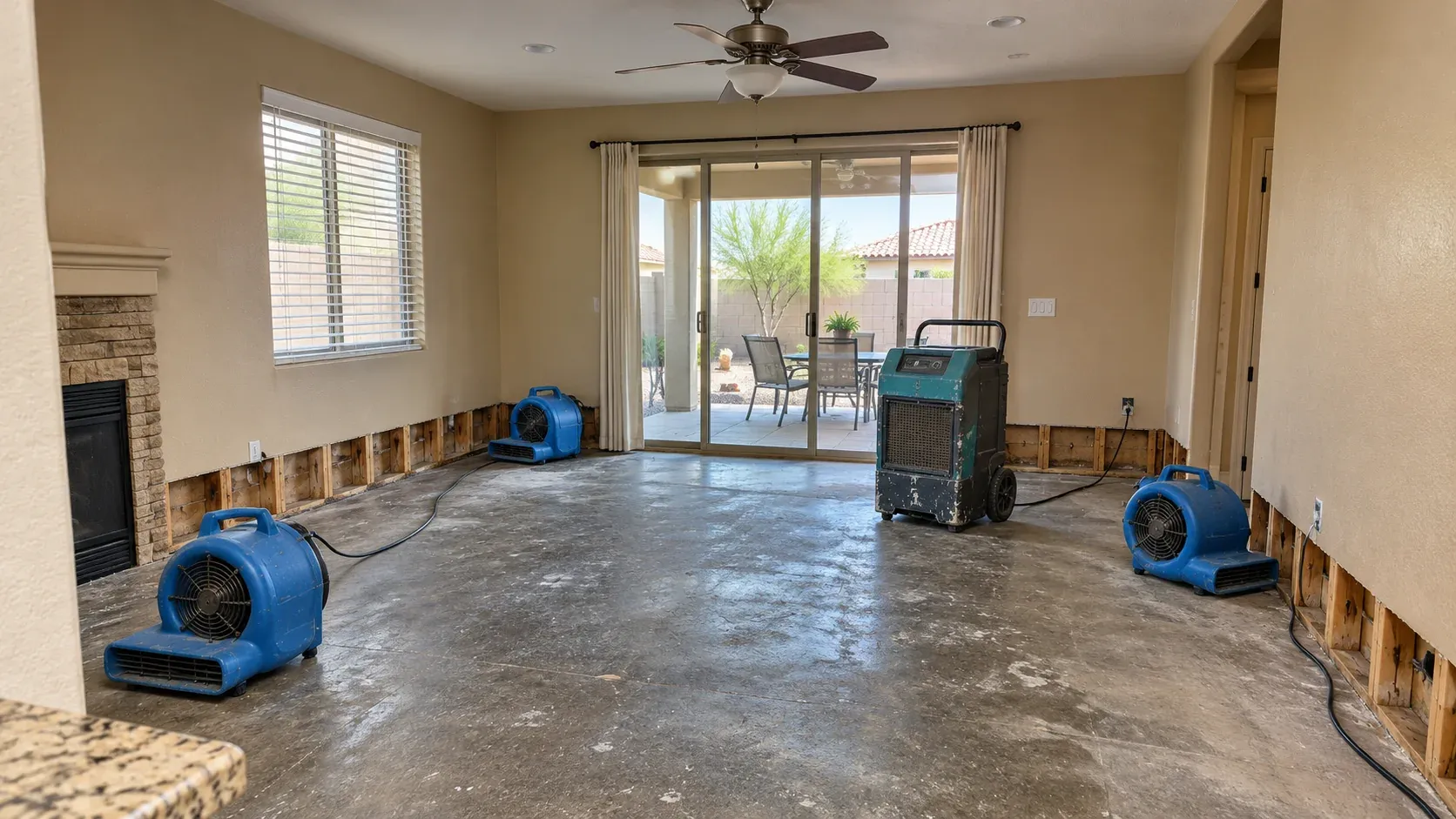
In January, maybe, if the spill was small and the humidity outside is low. In July, no. During monsoon season the outside air is the same moisture that is already in the house, and leaving a door open just moves it around. In a closed house with the AC running, the AC does remove some moisture, but it does not move air across a wet wall or pull water out of a carpet pad.
The test is a meter, not a feeling. If you do not have one, the safe assumption is that anything under the surface is still wet.
02Materials
The baseboard is soft but the carpet is dry. Is that bad?
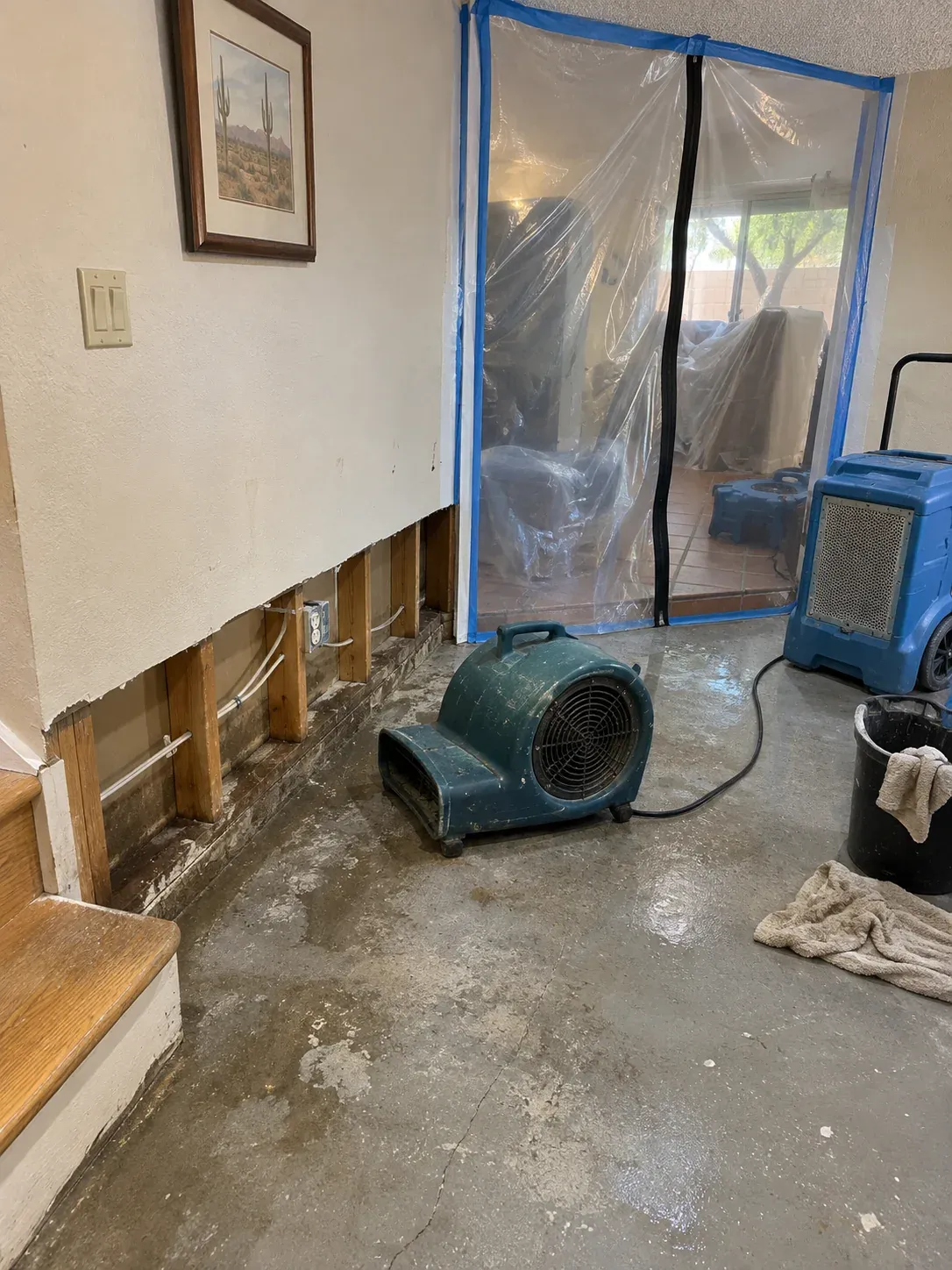
Yes, and it is a common hidden issue in a slab house. Water ran under the carpet, hit the drywall and the baseboard, and the carpet got extracted or dried while the wall base stayed wet. Soft baseboard means the paper facing of the drywall behind it is wet or already growing something. That is a moisture reading, then probably two feet of drywall out.
03Mold
Is the smell mold?
Usually it is wet material, and mold is either present or on the way. A musty smell in one room that comes back after cleaning means one spot that never dried. It is worth finding before you paint anything.
04Materials
Do I have to replace the carpet?
The pad, almost always. The carpet itself, sometimes. Clean water, caught in a day, lifted and dried with air underneath: often saved. Sewage, storm water, or a week of soaking: replaced. Delaminated backing or a smell that returns after it dries: replaced.
05Property types
My landlord says to just put towels down. What are my options?
Document everything and put the request in writing, by text or email, with photos and a timestamp. In Arizona, a landlord has a duty to keep the premises in a fit and habitable condition (ARS 33-1324), and standing water and mold can become habitability issues. If the response is towels, you have a written record of the report and the response, which is what matters if it gets worse or if you need to break a lease.
Do not withhold rent without checking the statutes or talking to a tenant advocate. Get the report in writing first.
06Good to know
Should I call a plumber or a restoration company first?
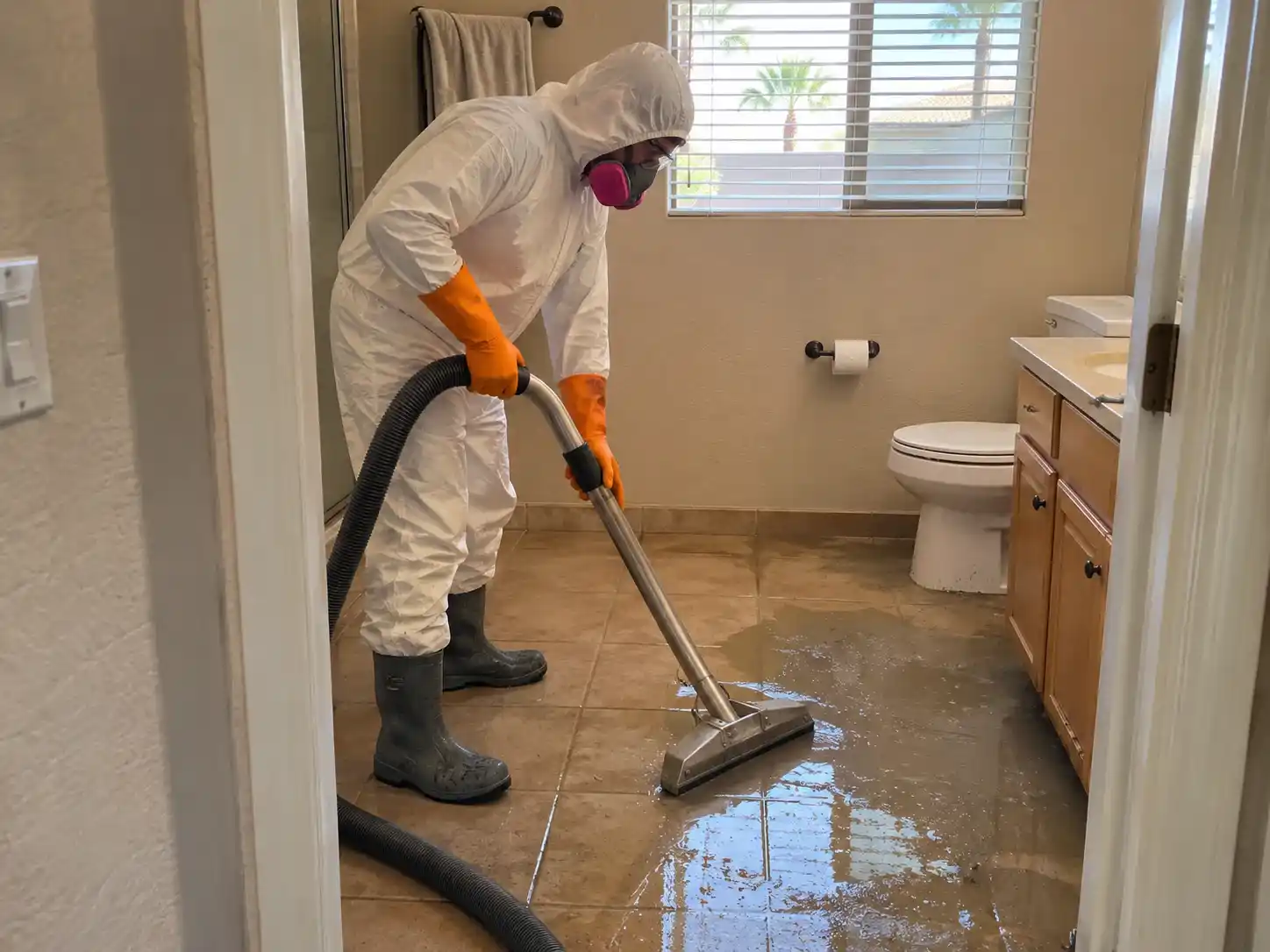
If water is running, shut it off and call the restoration line, because the water on the floor is the emergency. If the leak is found and stopped but nothing is wet, a plumber first. If it is wet and the source is unknown, a detection visit answers both questions and tells the plumber where to cut.
07How it works
How do I know the bill matches the work?
Ask for the category of the water, the moisture readings, and the equipment list with days. Then compare the scope to the room. No readings at all means nobody knows if the job is done.
08Good to know
What if the water came from the neighbor's unit?
Their policy and the HOA's policy are in play, and yours may be too. Document the source, photograph the water coming in, and notify your own insurer even if you do not intend to claim: many policies require prompt notice, and the subrogation process is how your insurer recovers from theirs. Keep your own receipts for anything you pay for.
09Good to know
The ceiling has a bulge. Do I pop it?
Not by standing under it. A bulging ceiling holds water and it can come down. Clear the room, put a bucket down, and if it has to be drained, do it with a small hole from a ladder at the edge, with eye protection, after the power to that room is off. If the bulge is large, wait for help and keep people out of the room.
10Insurance
Is it worth claiming if the damage is small?
Compare the deductible and the possible premium impact against the repair cost. A claim is a business decision, not a moral one. What is not optional is documenting it either way, so a small leak that turns into a mold problem later has a paper trail.
11Drying window
How long before mold starts in Tempe?
Common guidance is 24 to 48 hours for many indoor molds once material stays wet in a closed space, which is exactly why the drying part of a water damage job is measured and logged.