Service area · San Tan Valley, AZ
Water Damage Restoration in San Tan Valley, AZ
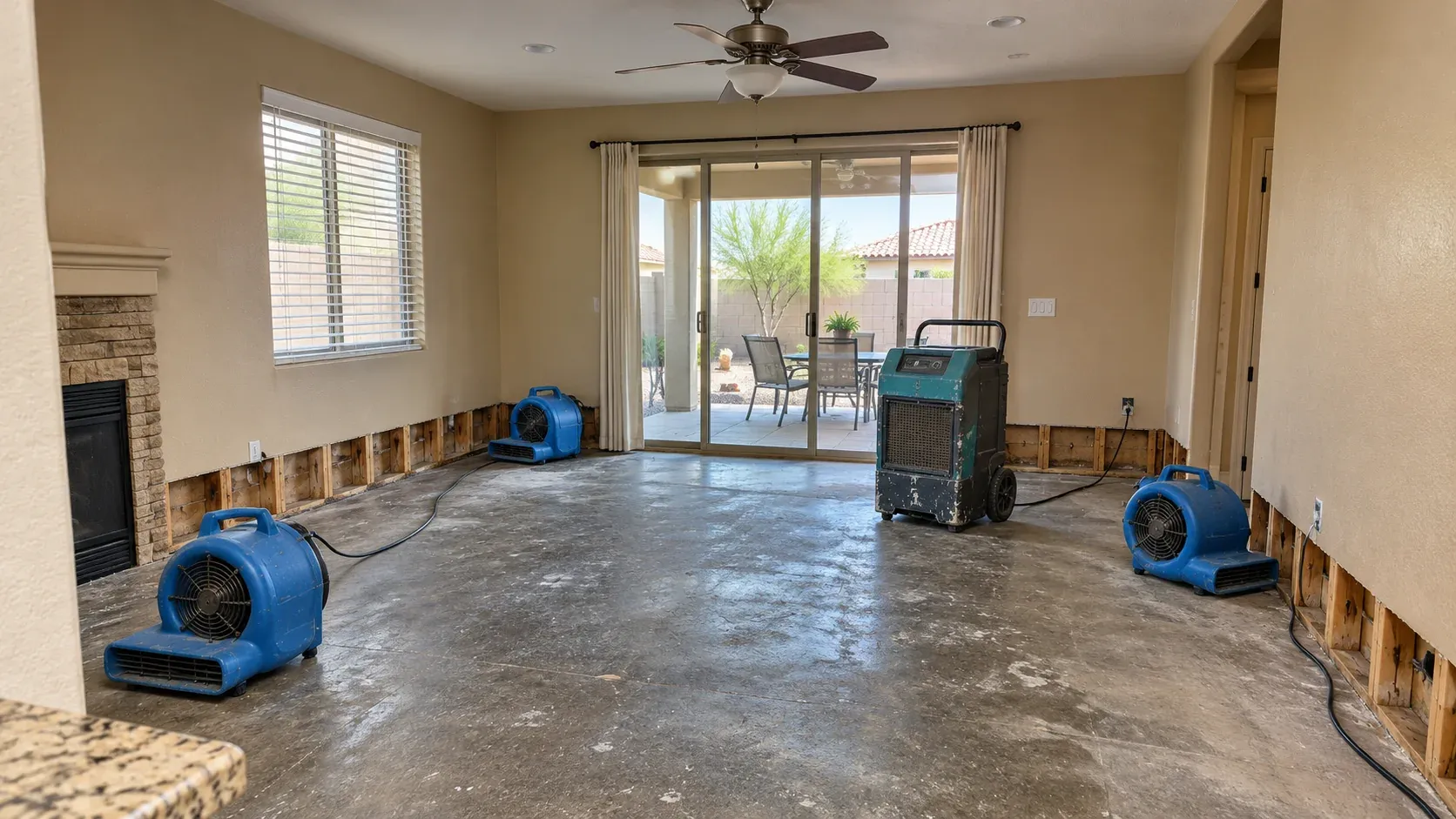
In San Tan Valley, more than 95 percent of homes are single family detached, most were built in one decade, the water is groundwater, and the drainage was not built as one system.
Line open now
Get a call back
Tempe · Mesa · Chandler · Gilbert · Ahwatukee · Guadalupe + 13 more towns
01Good to know
What fails in San Tan Valley
San Tan Valley is not a city. It is unincorporated Pinal County, about 109,000 people, and 60.5 percent of its 37,001 housing units went up in a single decade, the 2000s. The median year built is 2007. That gives the area a very specific profile: many similar houses with similar appliances and fittings, so the same failures can show up on a similar schedule.
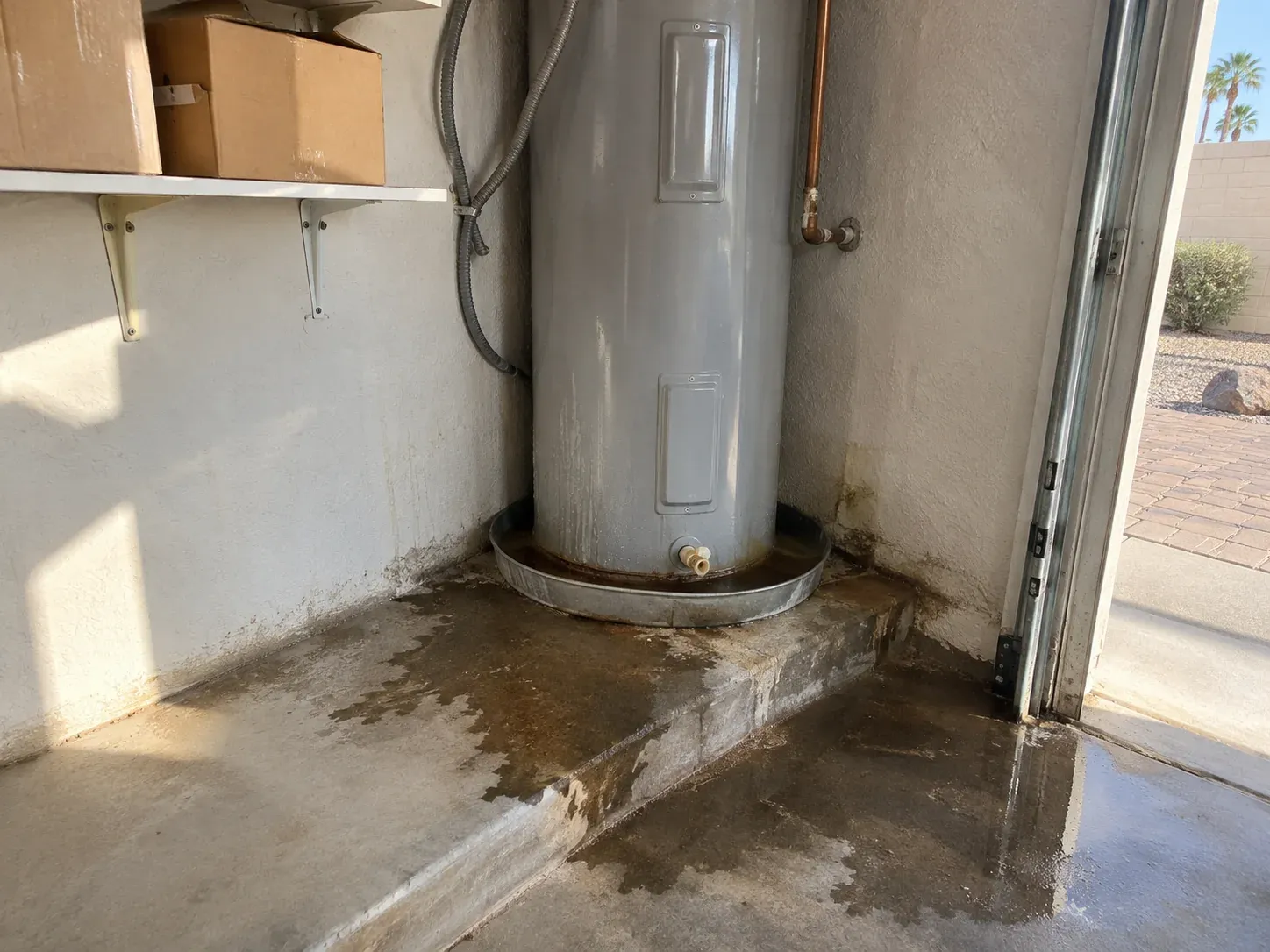
Water is groundwater from EPCOR's San Tan system, and it is hard. The 2025 water quality report lists hardness at 15 to 18 grains per gallon, which EPCOR's own scale rates very hard (above 10.5 grains per gallon). Scale builds up in a water heater here over the years.
The flood story is unusual. The county's drainage master plan found 222 structures that would have water up to 6 inches deep against them in a 100 year storm, and 66 in a 10 year, 24 hour storm. It also noted that Queen Creek Wash is the only federally mapped floodplain in the study area, which means every other flood hazard in the plan carries no FEMA designation and no federal flood insurance requirement.
02Local facts
San Tan Valley numbers
- 01
Median year built
2007
- 02
Built 2000 to 2009
60.5 percent
- 03
Single family detached
95.7 percent
- 04
Water hardness
15 to 18 gpg, groundwater only
- 05
Population
109,189 (ACS 2020-2024)
03Monsoon
Drainage that does not connect
The county's inventory counted 267 culverts and 74.5 miles of channel in the study area, and found gaps where the drainage does not connect. In one area, water leaves a channel outlet and crosses a large piece of state trust land before it reaches the next drainage feature.
That is why a homeowner here can watch water cross a property that has no mapped floodplain and no obvious wash. The path exists even where no federal flood map shows it. If you have seen water take the same path twice, you have found the path.
04Good to know
Septic, and what changes
Pinal County's own planning documents describe the split: the utility serves the majority of the planned and developed subdivisions, and the remaining rural areas are on private septic systems. That matters for water damage in one specific way. A saturated leach field after a storm, or a backup from a full tank, is a different emergency from a wet floor, and it is a health issue before it is a property issue.
If the water came up through a floor drain and it smells, stop, ventilate, keep people out of the room, and treat everything it touched as contaminated. That is category 3 water whether or not a storm was involved.
05Services
Services in San Tan Valley
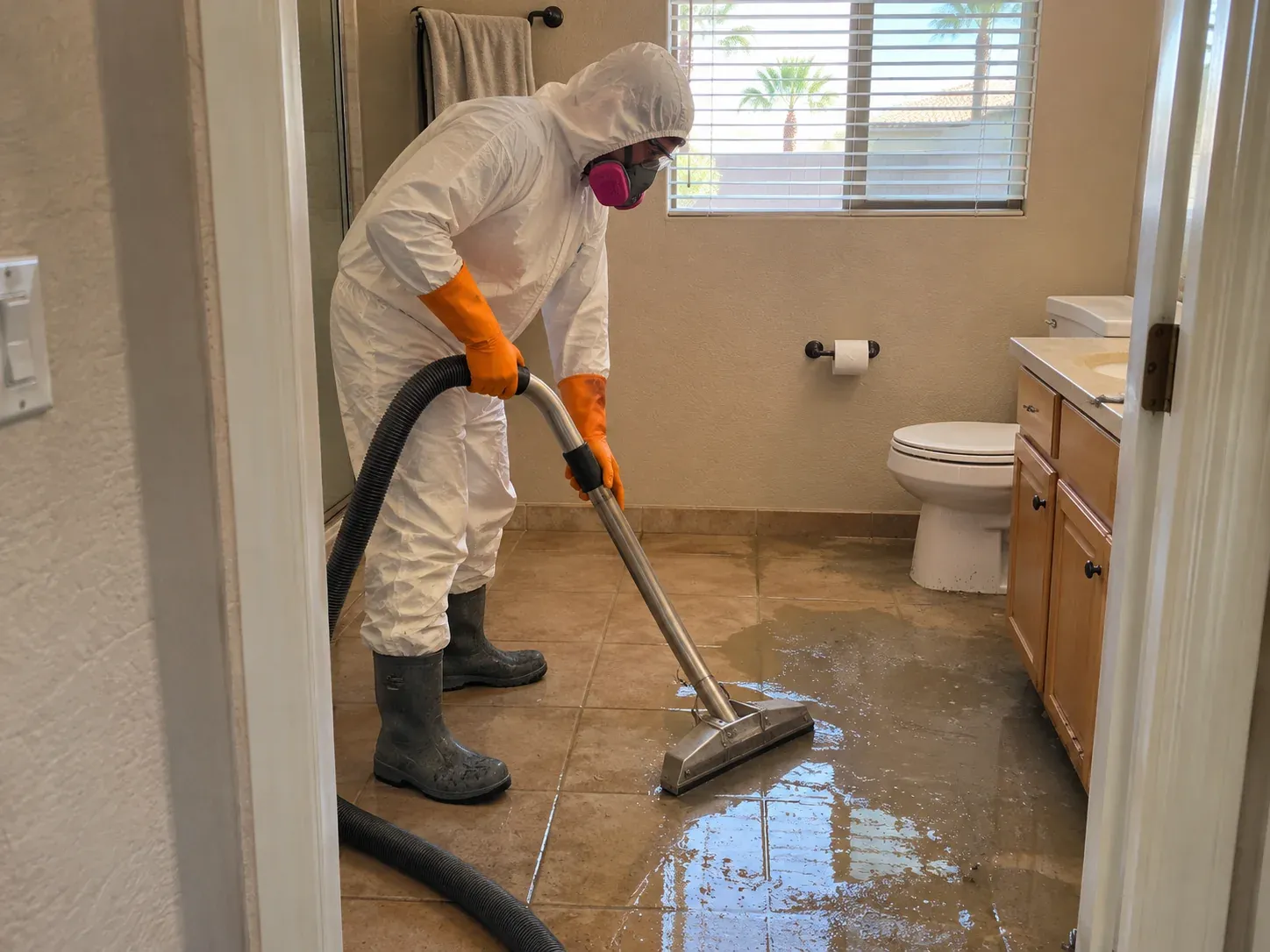
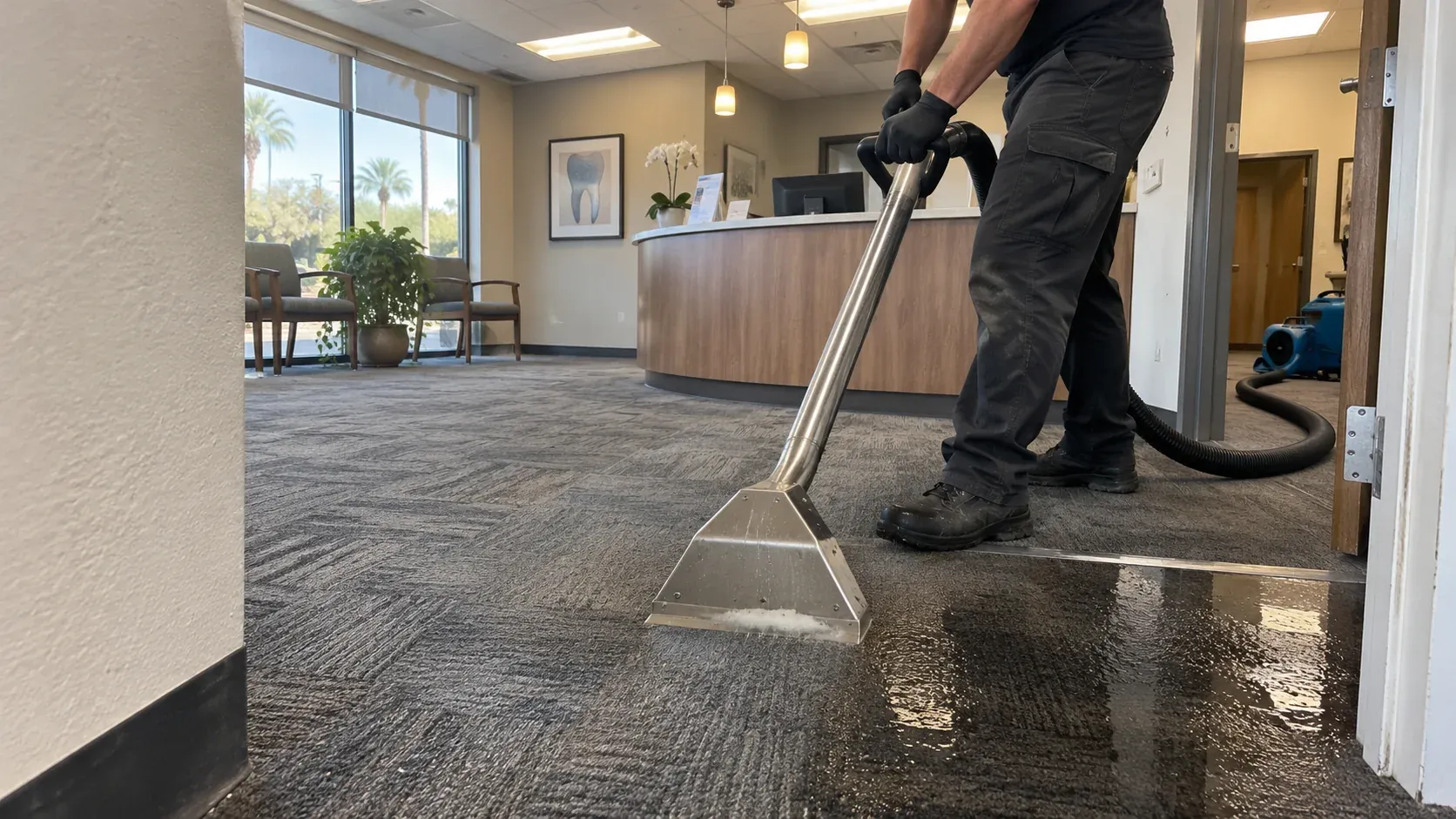
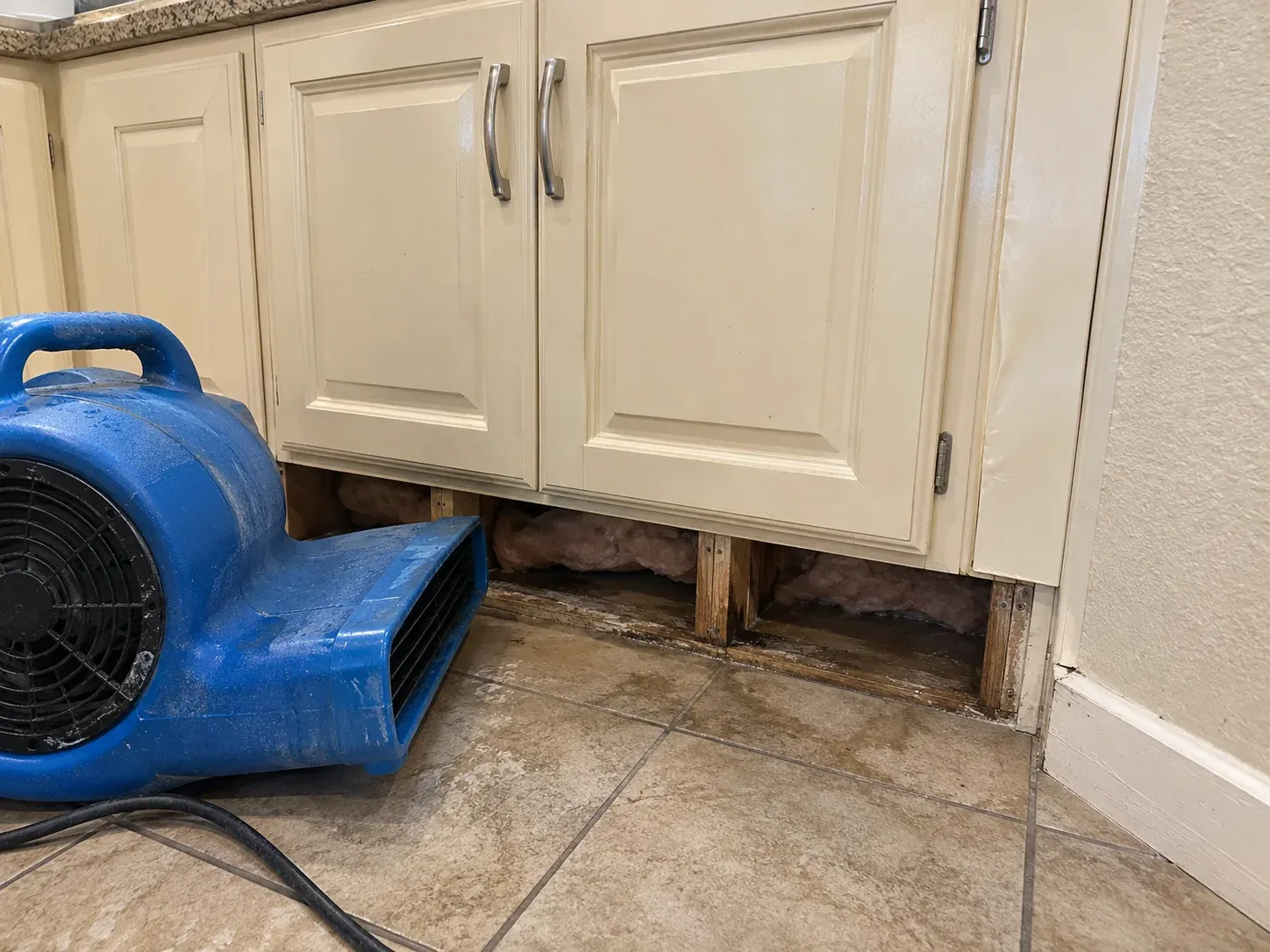
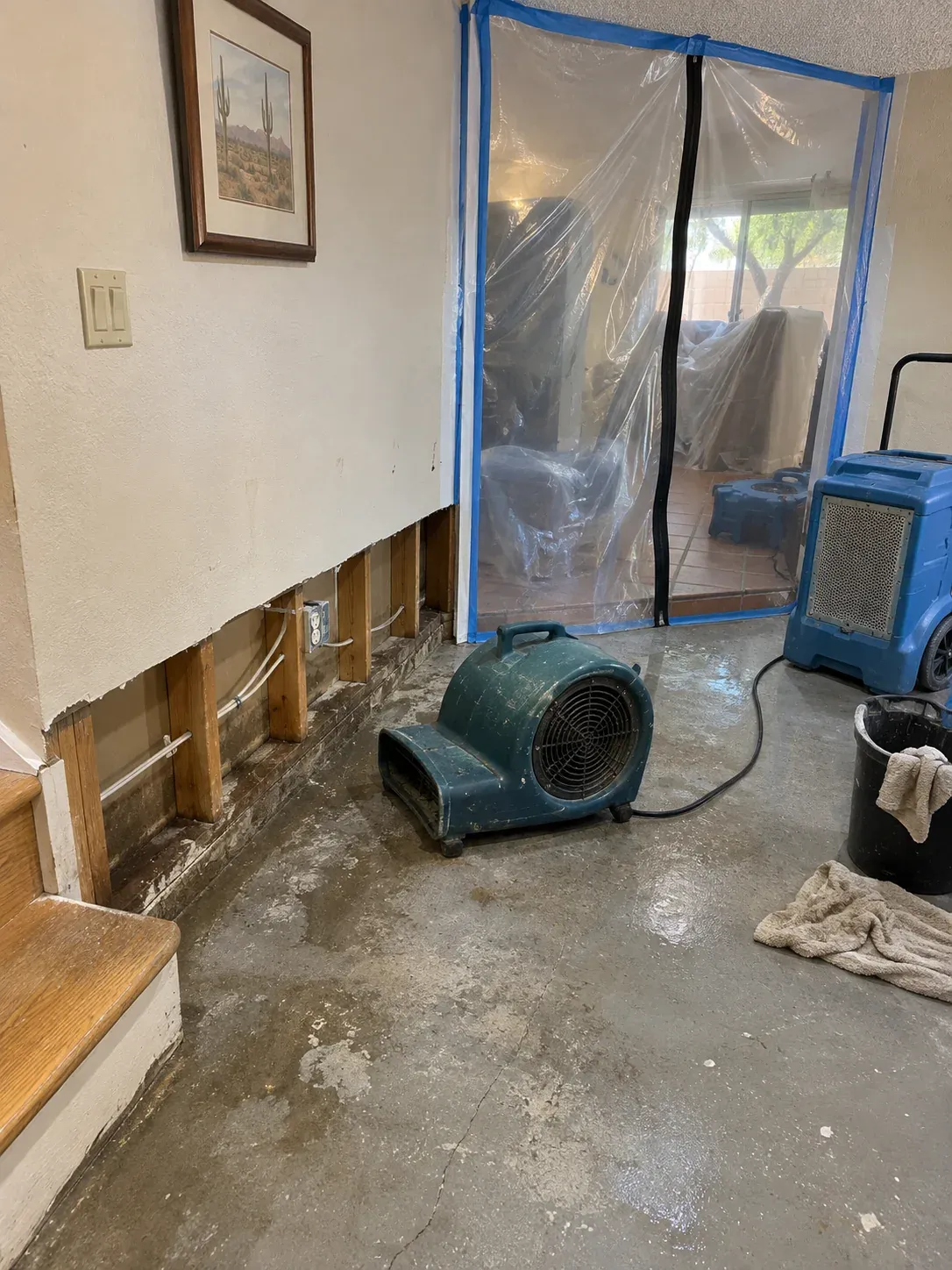
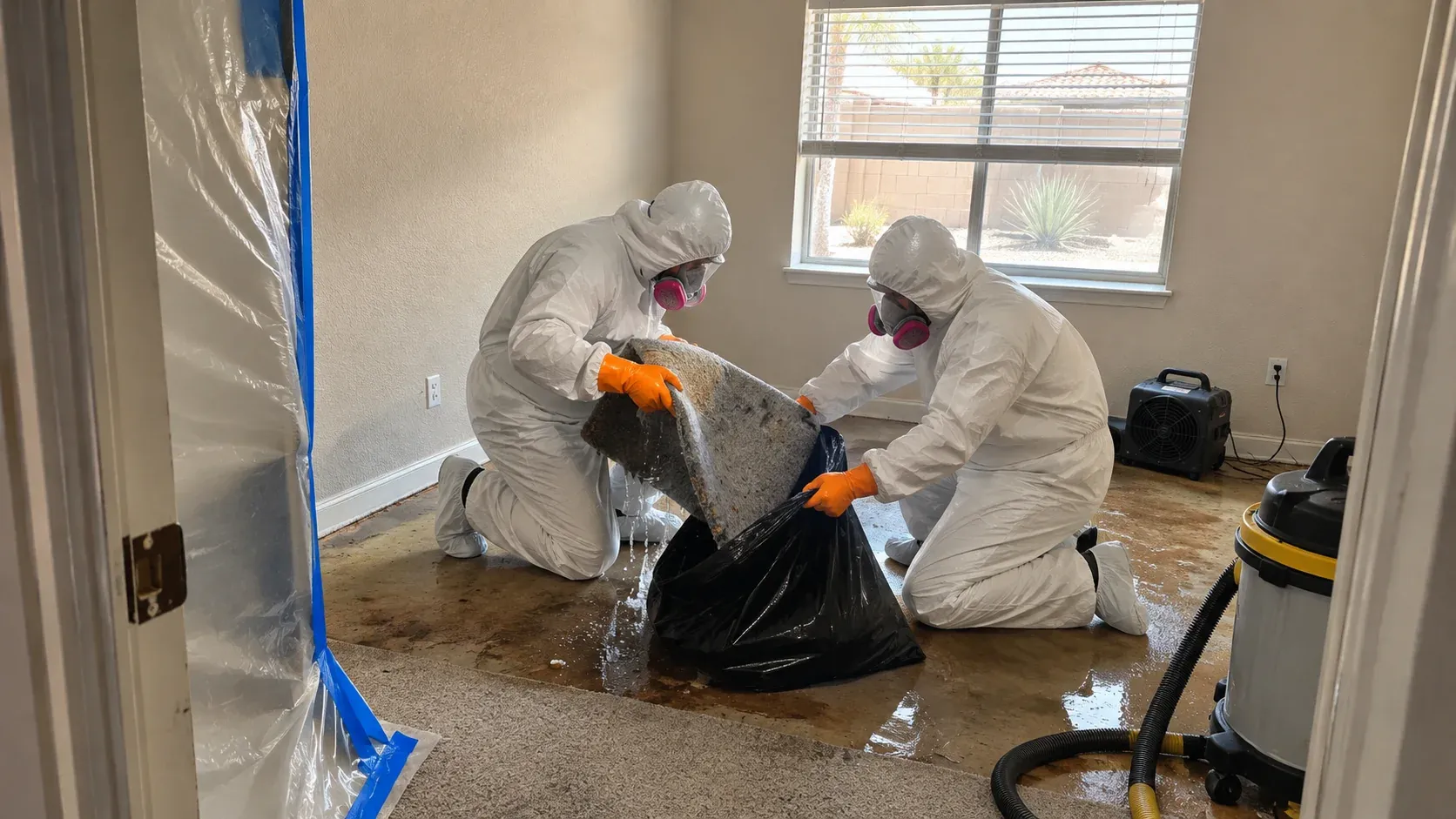
Water extraction
: standing water out of carpet, tile and woodLeak detection
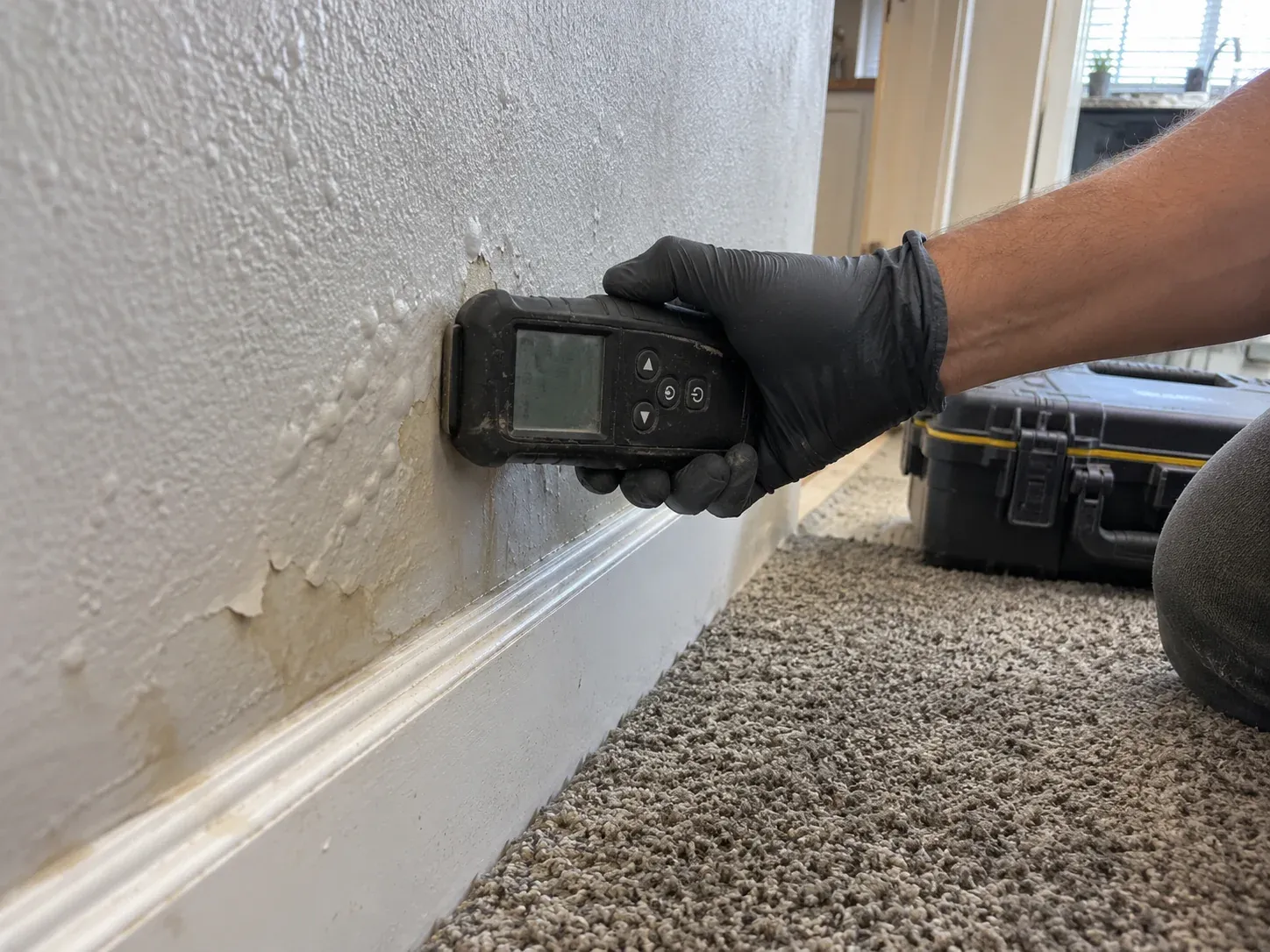
: slab leaks and hidden supply lines foundMoisture detection and mapping
: what is still wet, shown in readingsStructural drying
: dried to a measured dry standardMold remediation
: contained, removed and checkedContents cleaning and restoration
: furniture, papers and photos packed outNot sure which one fits?
Send the form and describe what you see. You do not need to pick a service first.
Get a call back
06ZIP codes
ZIP codes
85143 is the core San Tan Valley ZIP. 85140 and 85142 both cross into the area, so give the street address rather than the ZIP when you call.
073 questions
Questions people ask about water damage in San Tan Valley
Still have a question?
Send the form and describe what you see. Someone from our team will call you back soon.
Get a call back01My water is very hard. Does that cause leaks?
It shortens the life of water heaters and fixtures and narrows pipes over decades, yes. At 15 to 18 grains per gallon, an annual flush is the cheapest maintenance in the house.
02The county says I am not in a floodplain. Why did my yard flood?
Because most of the modeled flood hazard here is not federally mapped. The absence of a designation is not the absence of a flow path.
03What about sewage backups?
Sewage backups are treated as the worst category: porous material out, surfaces cleaned and disinfected, then dried. A backup and a burst pipe are not the same job.