Service 03 of 06 · Tempe, AZ
Moisture Detection in Tempe, AZ
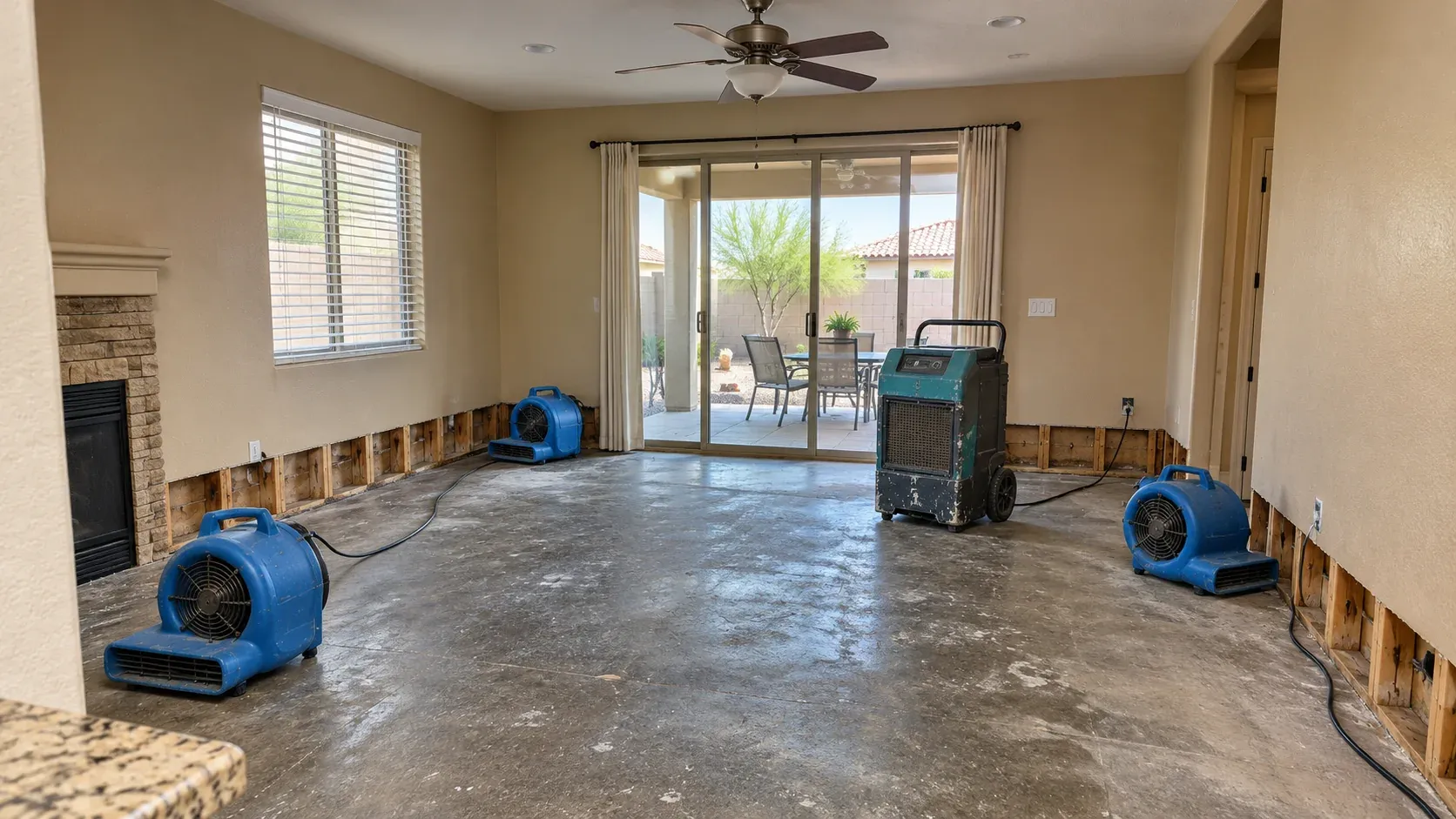
You have a stain, a soft baseboard or a musty smell, and no water you can see. Call day or night or send the form, and someone from our team will call you back soon. Readings show what is still wet.
Line open now
Get a call back
Tempe · Mesa · Chandler · Gilbert · Ahwatukee · Guadalupe + 13 more towns
01What you get
Readings that show what is still wet
A written map of what is wet, how wet, and where the wet stops. It is the difference between drying a room and drying the part of the room that was actually wet.
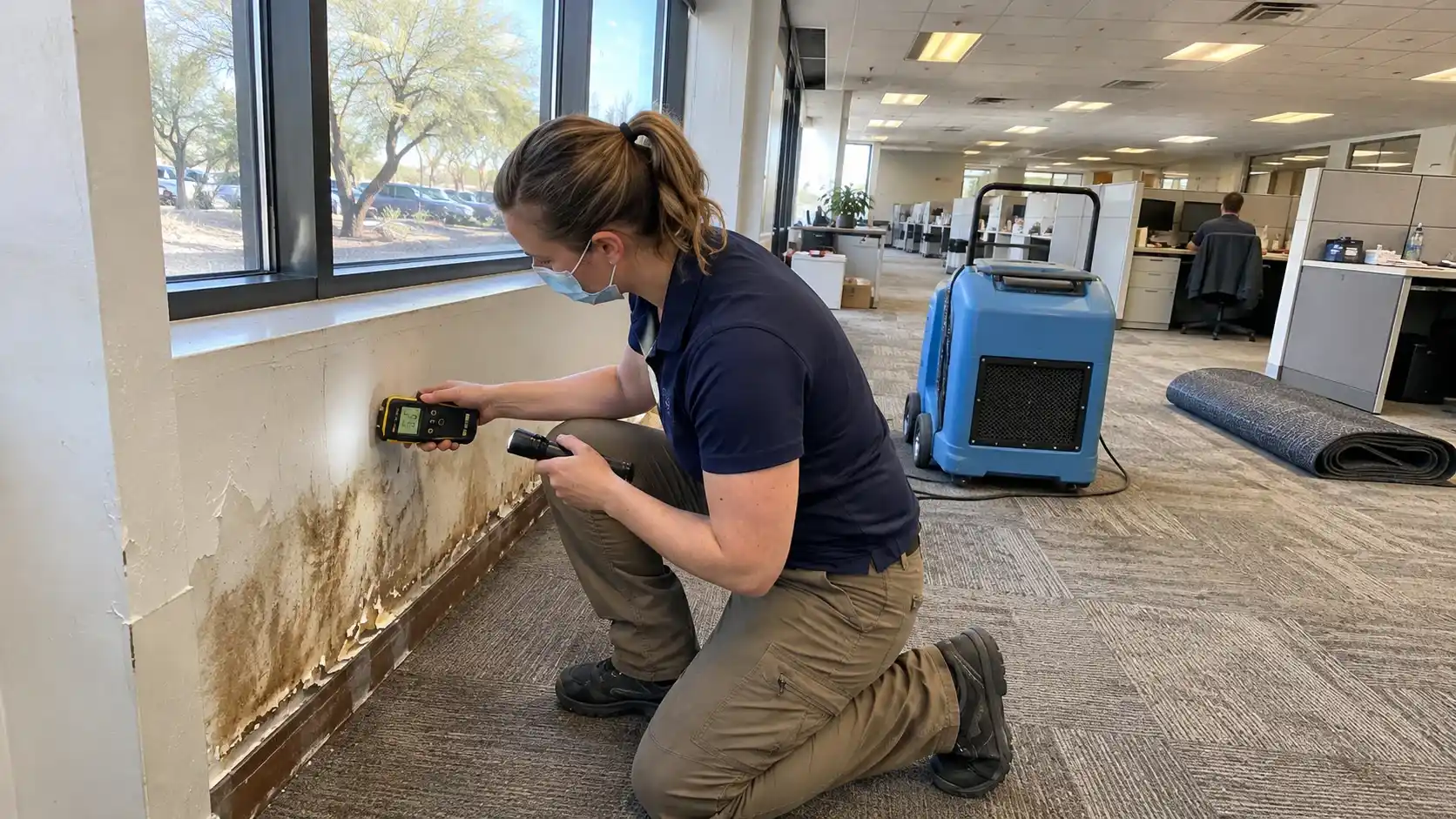
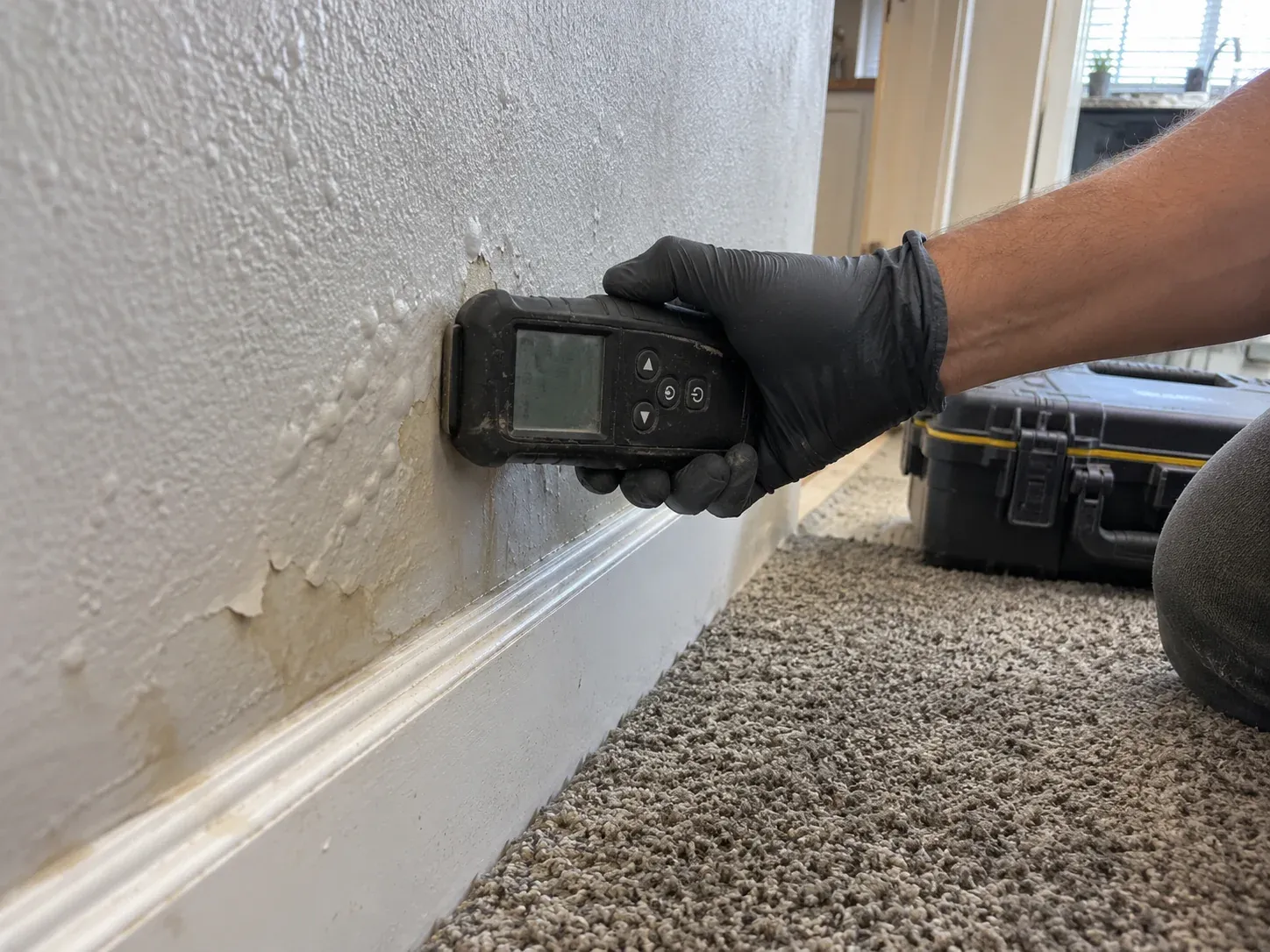
- Pin and pinless meter readings on walls, floors and cabinets.
- Thermal imaging to find wet areas behind drywall and under tile.
- A moisture map with every reading written down.
- A dry target set from a dry spot in your own house.
02The signs
5 signs you need a moisture check
Any one of these is reason enough to call.
- 01A stain on the wall or ceiling came back. The water behind it was never dried.
- 02A baseboard is soft or swollen. The wall cavity behind it is likely still wet.
- 03There is a musty smell and no water you can see. Moisture is sitting somewhere closed.
- 04The water was cleaned up, but the room still feels damp. Surfaces dry long before the material does.
- 05You want proof it is dry before a wall is closed. A reading settles it.
03How it works
What happens after you call
Your call starts a fixed sequence.
- 1Call or send the form, day or night.Say where the water is, whether it is still running and how long it has been there.
- 2Someone from our team calls you back.We go over what is wet and what has to happen first.
- 3The moisture map, then the plan.Every wet point gets a reading, and drying or repairs start from that map.
04Good to know
Your hand is not a moisture meter
Drywall that feels dry can still be wet inside the cavity. Carpet that feels damp can have a dry surface and a soaked backing. A concrete slab usually feels cool, so a wet patch on tile reads as normal until the tile comes loose or the grout goes dark.
Moisture detection replaces the hand test with numbers. A pin meter reads the surface of wood, drywall and framing. A pinless meter scans through tile, vinyl and stucco without a hole. Thermal imaging shows the temperature difference that wet material creates, which is how a wet ceiling or a slab leak gets found before it shows.
The output that matters is a map: which rooms, which materials, what reading, and where the wet ends. Everything after that, the drying plan, the demolition list and the insurance scope, is built on it.
05Good to know
What a useful report says
A number without a location and a material does not tell you much.
- Room by room, with the material named
- Reading at the start, and the dry standard being worked to
- Photos of the thermal image where one was used
- Where the wet area stops, not just where it is
- The same readings again at the end of drying
06Good to know
How the readings are taken
Pin meters
Two probes into the material, reading the electrical resistance between them. Water conducts, so wetter material reads higher. This is the reference reading for framing, drywall, baseboard and subfloor, and it is what a drying log is built from. It leaves two small holes, which is why it is used where the surface will be repaired or hidden anyway.
Pinless meters
A plate pressed against the surface, reading capacitance through the material. No holes. This is how tile, vinyl plank, stucco and finished cabinets get checked. It is a comparative tool: you are looking for the spot that reads different from the dry area next to it, not an absolute number.
Thermal imaging
An infrared camera shows surface temperature. Wet material evaporates and cools, so a wet patch usually reads cooler, and a slab leak on a hot day can read warmer. Thermal is the fastest way to scan a whole room or a ceiling, and it is how a leak behind a wall gets narrowed to a square foot before anyone cuts.
Humidity and temperature logging
Moisture in the air matters as much as moisture in the material. If the air in the room is at 70 percent relative humidity, the dehumidifier is fighting the house. Readings of temperature and humidity set how many air movers and dehumidifiers a room actually needs.
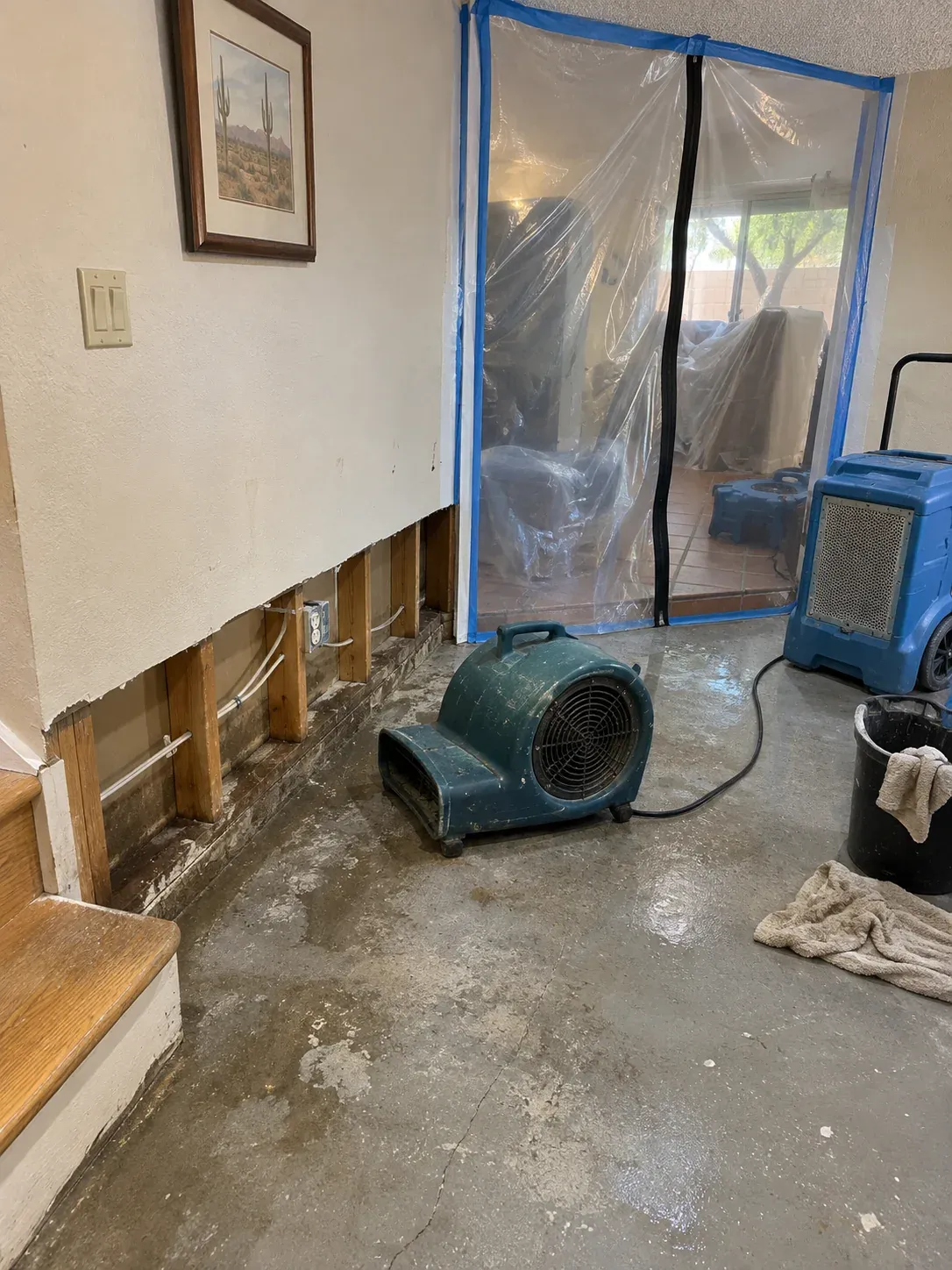
07Good to know
When to ask for mapping
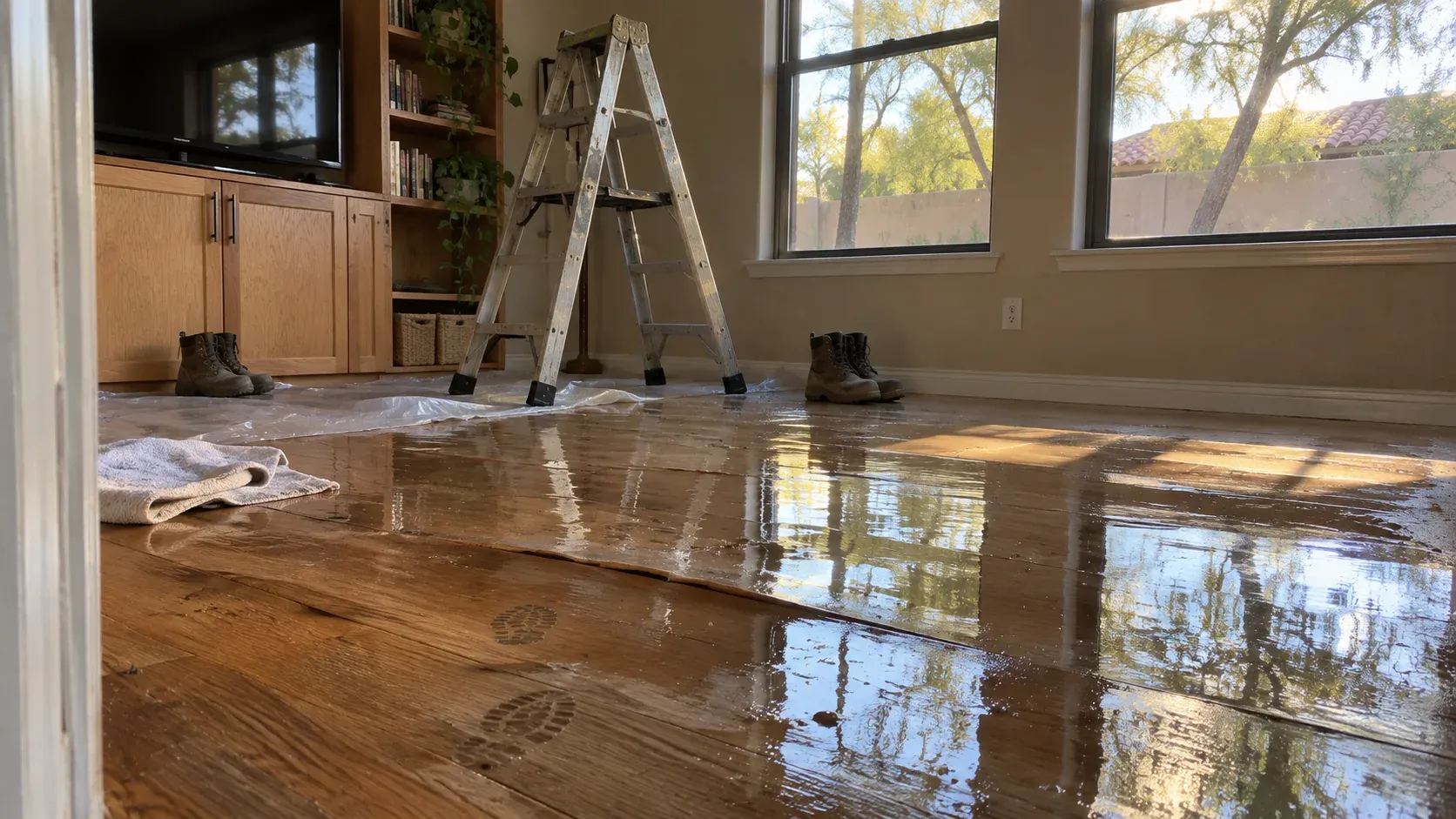
- 01
A stain with no source
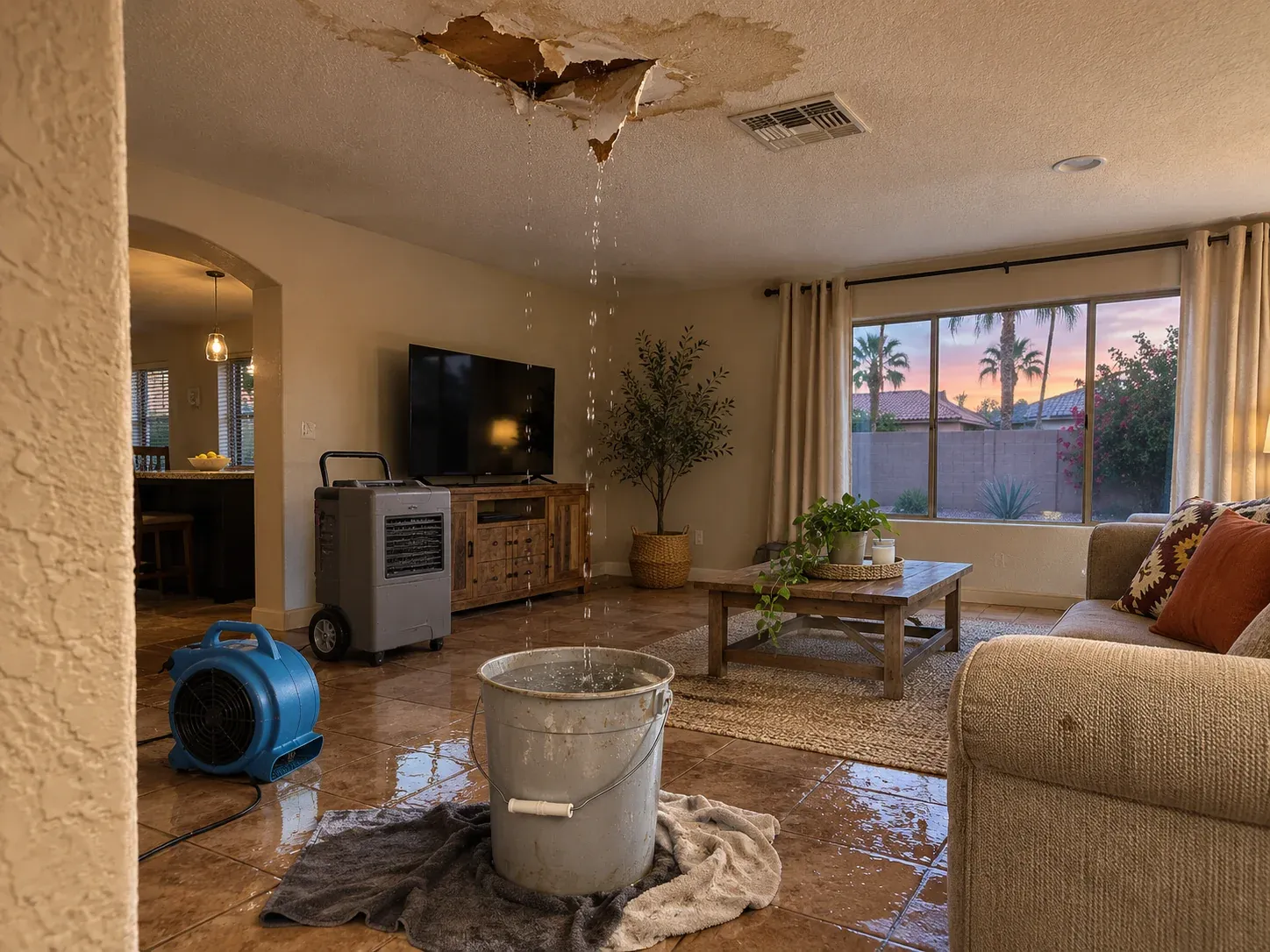
Ceiling ring, wall stain, dark grout line. Mapping finds the extent before the repair is scoped.
- 02
After any leak repair
The plumber fixed the pipe. Nobody has checked what the water did to the wall cavity or the flooring on its way out.
- 03
Before a claim
An adjuster wants the extent documented. Readings with dates do that better than photos alone.
- 04
A smell that keeps coming back
Musty smell in one room often means one wet spot that was never dried, not a whole-house problem.
- 05
After a monsoon event
Water that came in and was mopped up still went under the flooring and into the wall base.
- 06
Before buying a house
A scan of a suspect area beats discovering a wet wall 6 months after closing.
08Local risk
Why this matters more in Tempe than in most places
Slab construction can hide water. There is no crawl space to look into and no basement to smell, so a leak under the floor often shows up only through the flooring. By the time the tile loosens, the water may have been there for weeks.
Hard water adds a second problem. With water as hard as Tempe's, scale can build up inside the pipes and at the fixtures. When a line fails, the leak can sit inside a wall or under a slab rather than in the open.
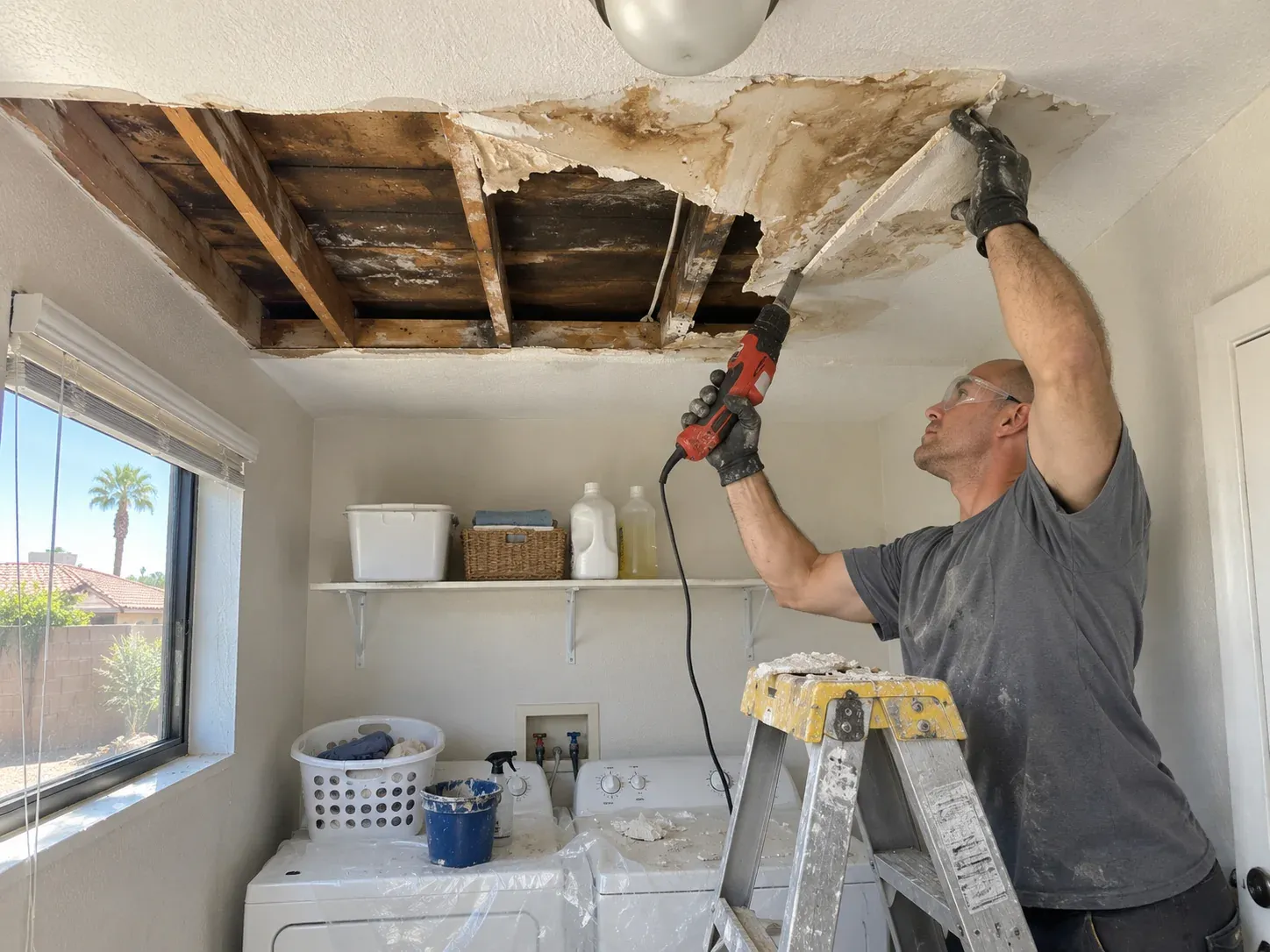
Drying in a desert climate can be fast, and it can also be deceptive. Low humidity can pull water out of the surface of drywall quickly, which makes the wall feel dry while the paper facing and the insulation behind it stay damp. That is where mold can start, and a meter is the reliable way to know the difference.
09Good to know
Where mapping ends
Mapping shows where the moisture is and how far it goes. Mold testing, structural inspection, leak detection and repair quotes are separate services, although the map often narrows a leak search. The map says what is wet, not what it costs to fix.
104 questions
Questions people ask about moisture detection in Tempe
Still have a question?
Send the form and describe what you see. Someone from our team will call you back soon.
Get a call back01Do the pin holes damage anything?
They are tiny and usually in a baseboard, a stud or a subfloor that gets covered. In a finished wall, readings can be taken along the baseboard line or inside a closet, where the marks will not show.
02How long does mapping take?
A single room is quick. A whole house after a monsoon event takes longer, and the thermal scan is usually what takes the time.
03Can I just buy a meter?
You can, and a cheap pin meter is a reasonable tool for a homeowner. What you cannot buy easily is the interpretation: what reading means dry for that material, and what the difference is between a wet surface and a wet cavity.
04Will the report hold up with my insurer?
Readings with dates, materials and locations are what adjusters work from. A PDF report with photos, in the same format for the final readings, is the easiest for an adjuster to use.