Service 02 of 06 · Tempe, AZ
Leak Detection in Tempe, AZ
You have a water bill that jumped, a warm spot on the floor or a stain that keeps growing. Call day or night or send the form, and someone from our team will call you back soon. The leak gets found before walls come out.
Line open now
Get a call back
Tempe · Mesa · Chandler · Gilbert · Ahwatukee · Guadalupe + 13 more towns
01What you get
The leak found before anything gets torn out
Find where the water is coming from before anything gets cut, so the plumber opens one hole in the right place instead of three in the wrong ones.
- Slab leaks and hidden supply line leaks traced with meters and thermal imaging.
- The wet area mapped, so only what is wet gets opened.
- A clear handoff to the plumber when a pipe needs repair.
- Drying planned around what the readings show.
02The signs
5 signs of a hidden leak in a Tempe home
Any one of these is reason enough to call.
- 01The water bill jumped with no new use. Water is going somewhere you cannot see.
- 02A warm spot on the tile floor. A hot water line under the slab can warm the floor above it.
- 03The meter moves with every tap closed. Something is still running.
- 04You hear running water with everything off. The sound often comes from inside a wall or under the floor.
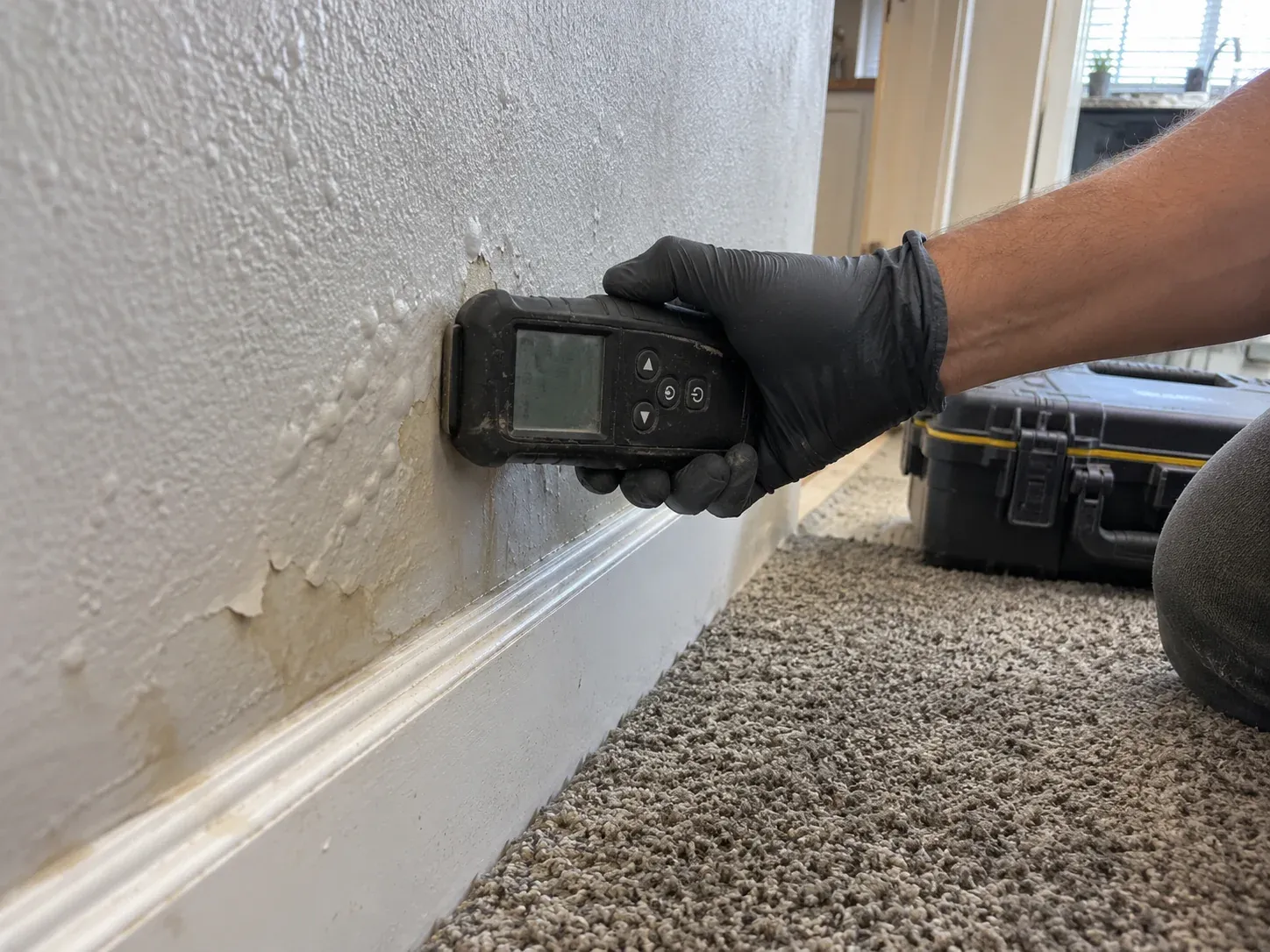
- 05A baseboard swells or a stain keeps growing. The leak is feeding the material from behind.
03How it works
What happens after you call
Your call starts a fixed sequence.
- 1Call or send the form, day or night.Say where the water is, whether it is still running and how long it has been there.
- 2Someone from our team calls you back.We go over what is wet and what has to happen first.
- 3Detection, then the repair plan.The leak gets located, the wet area gets mapped, and the plumbing repair and the drying follow in the right order.

Service sheet
Leak Detection in Tempe
Find where the water is coming from before anything gets cut, so the plumber opens one hole in the right place instead of three in the wrong ones.
04Costs
What leak detection costs
| Job | Published range | Note |
|---|---|---|
| Slab leak repair | $1,000 to $4,000 | National average $2,500. Repair is a plumber's line item. |
| Leak detection | $100 to $400 | Depends on how invasive the detection needs to be |
| Slab leak reroute | $4,000 to $15,000 | Alternative to breaking the slab |
Source: Fixr, 2025. National ranges. Detection can be billed as its own line or folded into the repair.
Detection fees vary with what they include. A fee that only covers finding the leak is not the same as one that includes a written report and thermal photos.
05Good to know
When there is water damage but no water
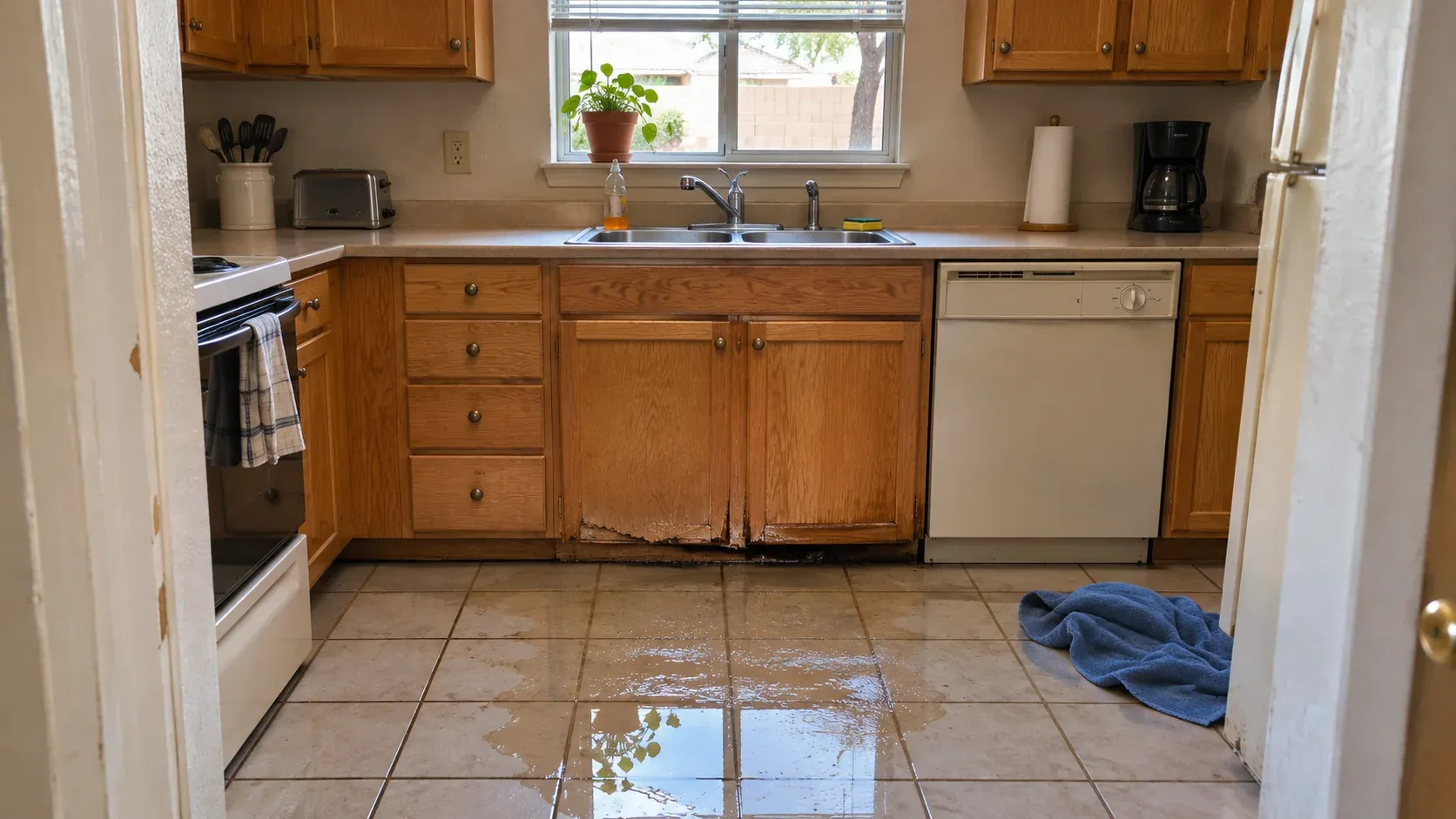
Much of the water damage in Tempe starts as a leak nobody can see. The floor is not wet. Nothing is dripping. What you notice is the water bill, a warm patch of tile in the hallway, a baseboard that has gone soft, or the sound of running water when every fixture in the house is closed.
That is the point where people start cutting. A hole in the drywall here, a piece of tile lifted there, and the leak is still not found. Detection exists to avoid that: find the leak with instruments first, then open the smallest possible area in the right place.
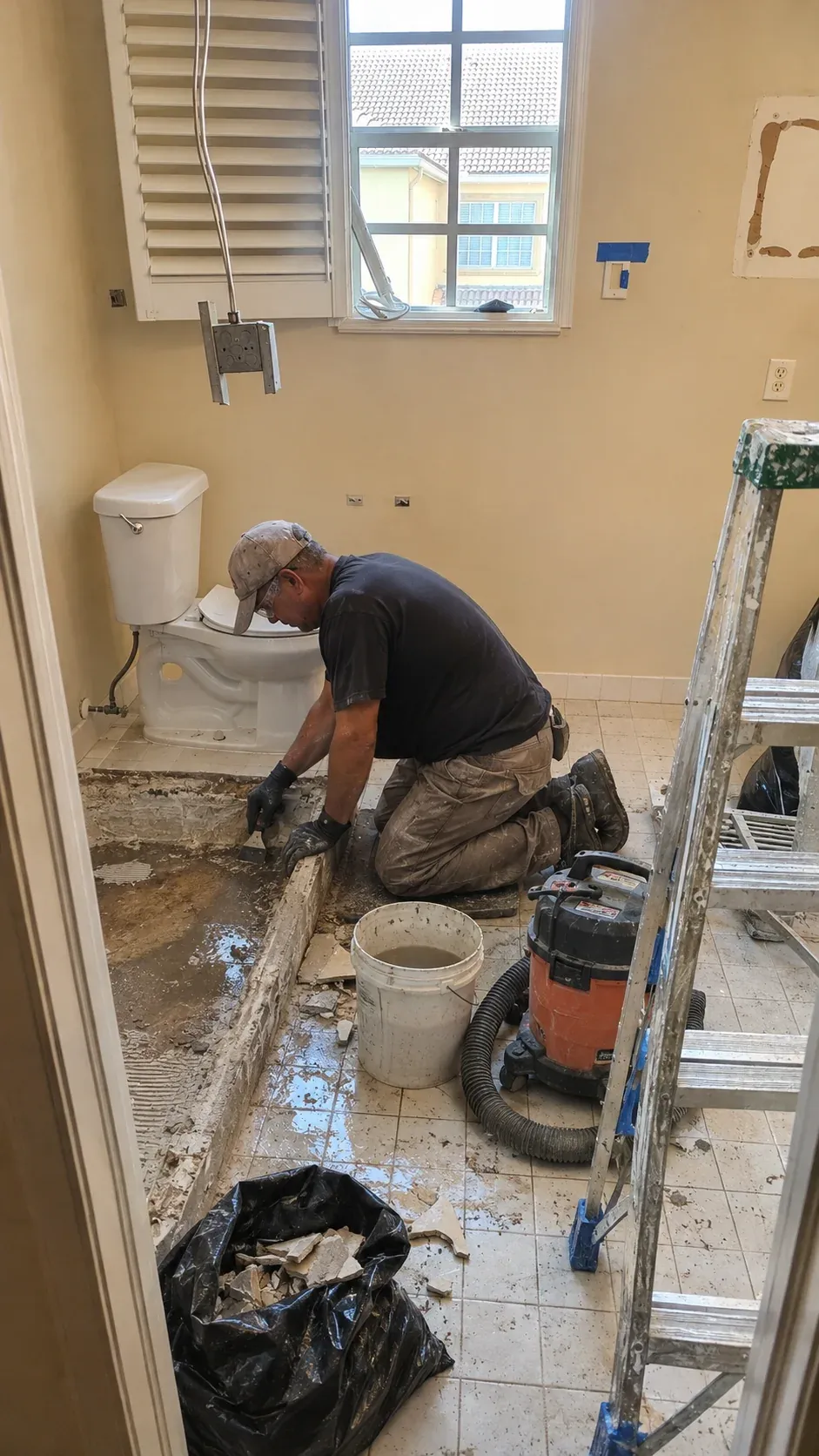
Detection locates the leak and documents it. Plumbing repair is a separate trade, and a plumber does it.
064 steps
The meter test you can do tonight
Ten minutes, no tools, before you call anyone.
Shut every fixture
Faucets, ice maker, irrigation, pool fill, water softener recharge.
Find the meter
Usually in a box at the property line or the alley.
Watch the leak dial
The small triangle or star. If it moves with everything off, water is moving somewhere.
Shut the house valve
If the dial stops, the leak is inside the house. If it keeps moving, it is between the meter and the house.
07Good to know
What detection covers here
4 leak types, 4 different methods. Detection is stronger when at least 2 of them agree before a location is marked.
- 01
Slab leaks
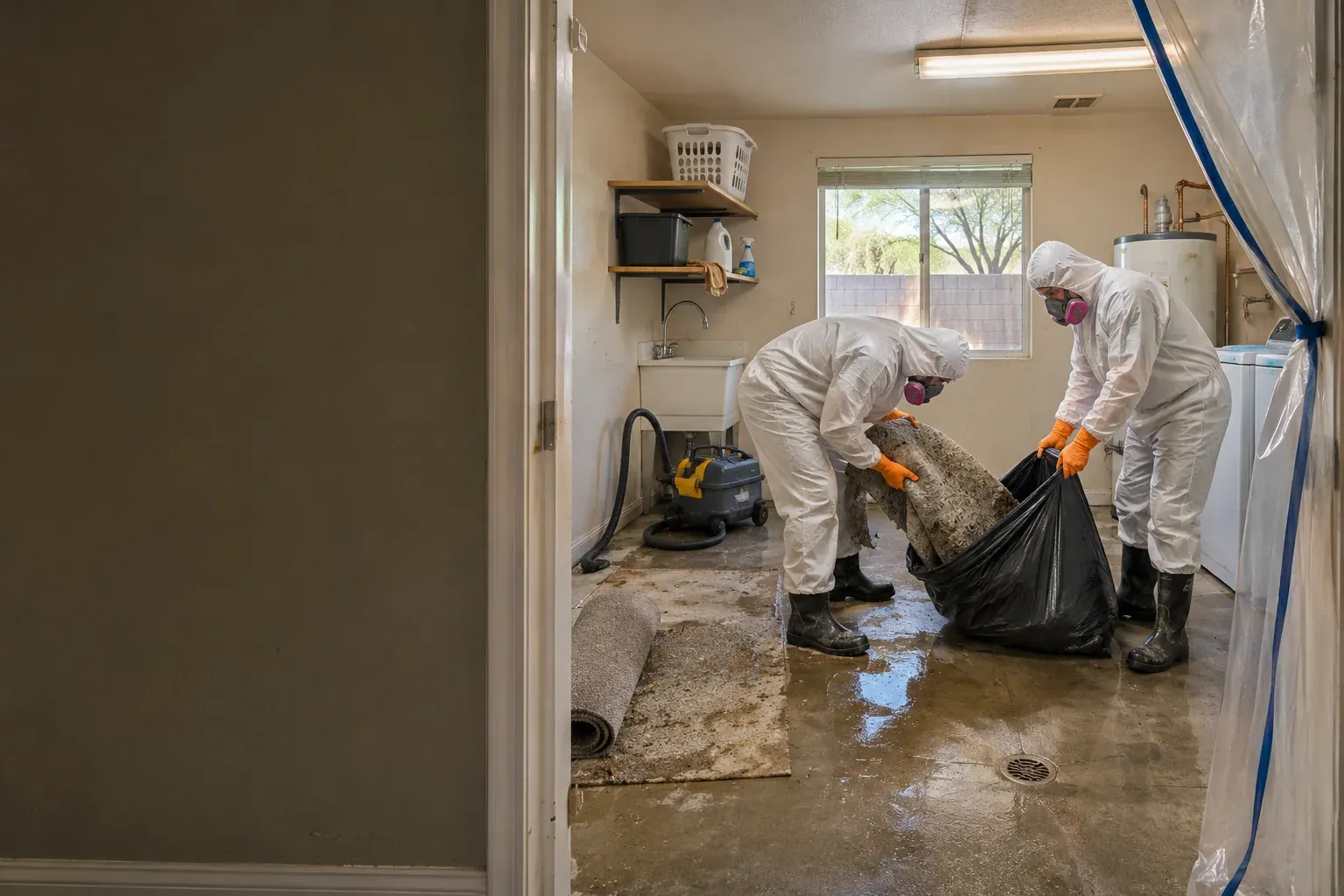
Copper or PEX under a concrete slab. Located by isolating sections, listening with an acoustic sensor, and confirming with thermal imaging where the slab is warm. A common hidden leak in a slab-built Tempe house.
- 02
Supply line leaks in walls
A pinhole in a copper line behind drywall, or a failed fitting under a sink or behind a washing machine. Shows as a stain, a bulge, or a meter that moves with the house valve open.
- 03
Drain and sewer line leaks
Slow leaks under a slab or in a wall that only move water when something drains. Often first noticed as a smell or a soft spot, not a puddle.
- 04
Irrigation, pool and exterior lines
A zone valve that never closes, a line broken by a tree root, a pool autofill running constantly. These show up on the meter and nowhere else.
08Local risk
Why Tempe gets slab leaks
Three things work together here. The first is construction. Many single-family homes in Tempe sit on a slab, often with supply lines running through or under the concrete. With no crawl space and no basement, a leaking line has nowhere to drain, and the water often shows up through the flooring first.
The second is water chemistry. Tempe's water is hard, and the city publishes its hardness every year in its water quality report. The USGS notes that heating hard water can form calcium carbonate deposits, and that scale building up over time can clog pipes and shorten the life of water heaters and other equipment.
The third is heat. NWS Phoenix normals for 1991 to 2020 show an average of 111 days a year at or above 100 F. Years of heating and cooling can add stress to plumbing that is already aging.
None of that means your house is about to fail. It means a water bill that jumps, a warm spot on the floor, or the sound of water with everything off deserves a meter test rather than a wait and see.
09First steps
Signs a leak is happening right now
- The water bill jumped and nobody changed how much water they use.
- The meter's leak dial moves with every fixture closed.
- A patch of tile or concrete is warm or damp when the rest of the floor is not.
- You hear running water, hissing, or a trickle with everything shut off.
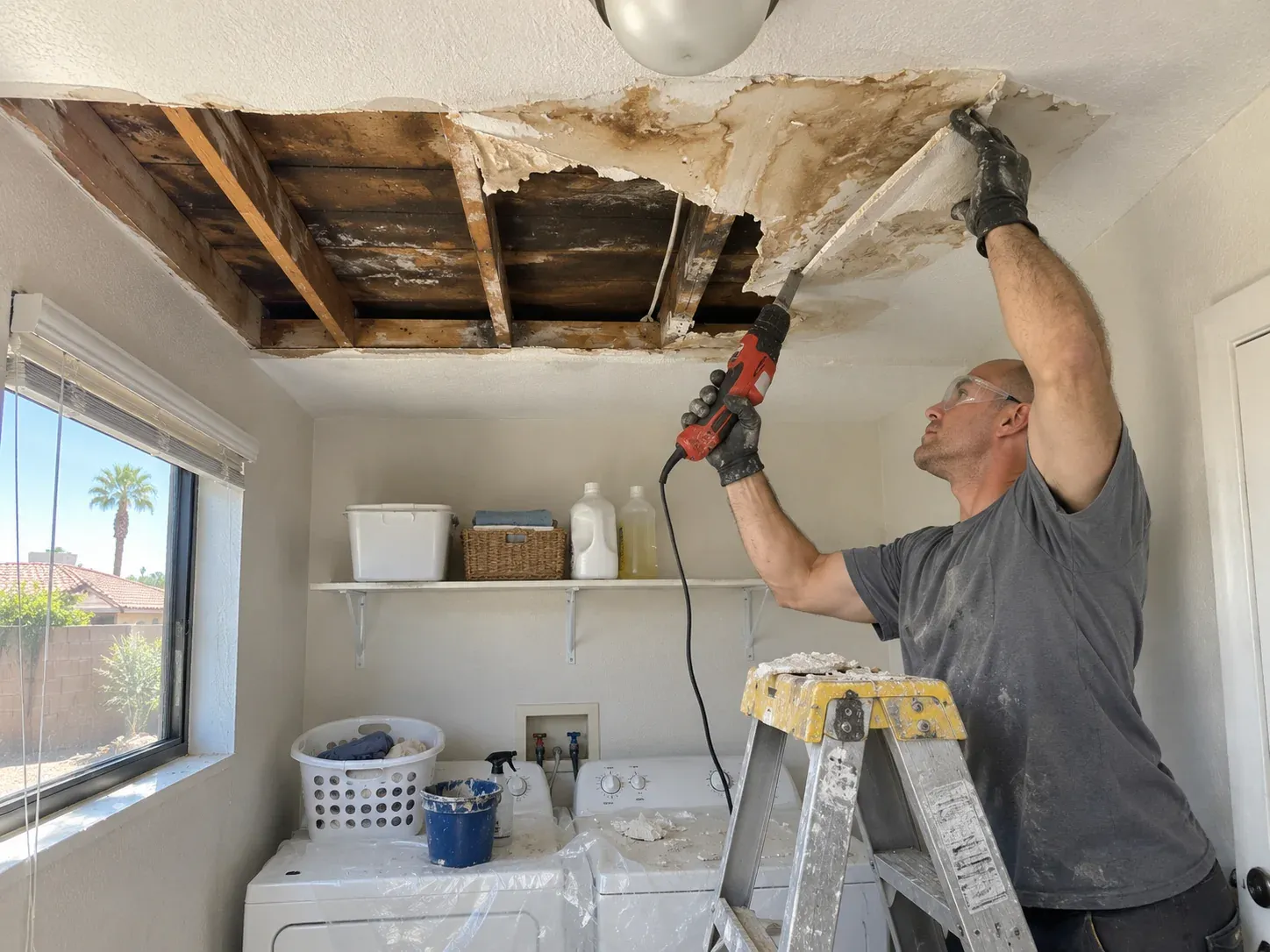
- Baseboards or drywall are soft at the bottom, or paint is blistering just above the floor line.
- A musty smell in one room that comes back after cleaning.
- Grout lines stay dark long after the floor should be dry.
- The water heater runs more than it used to, or the pressure at one fixture dropped.
10Good to know
What happens on a detection visit
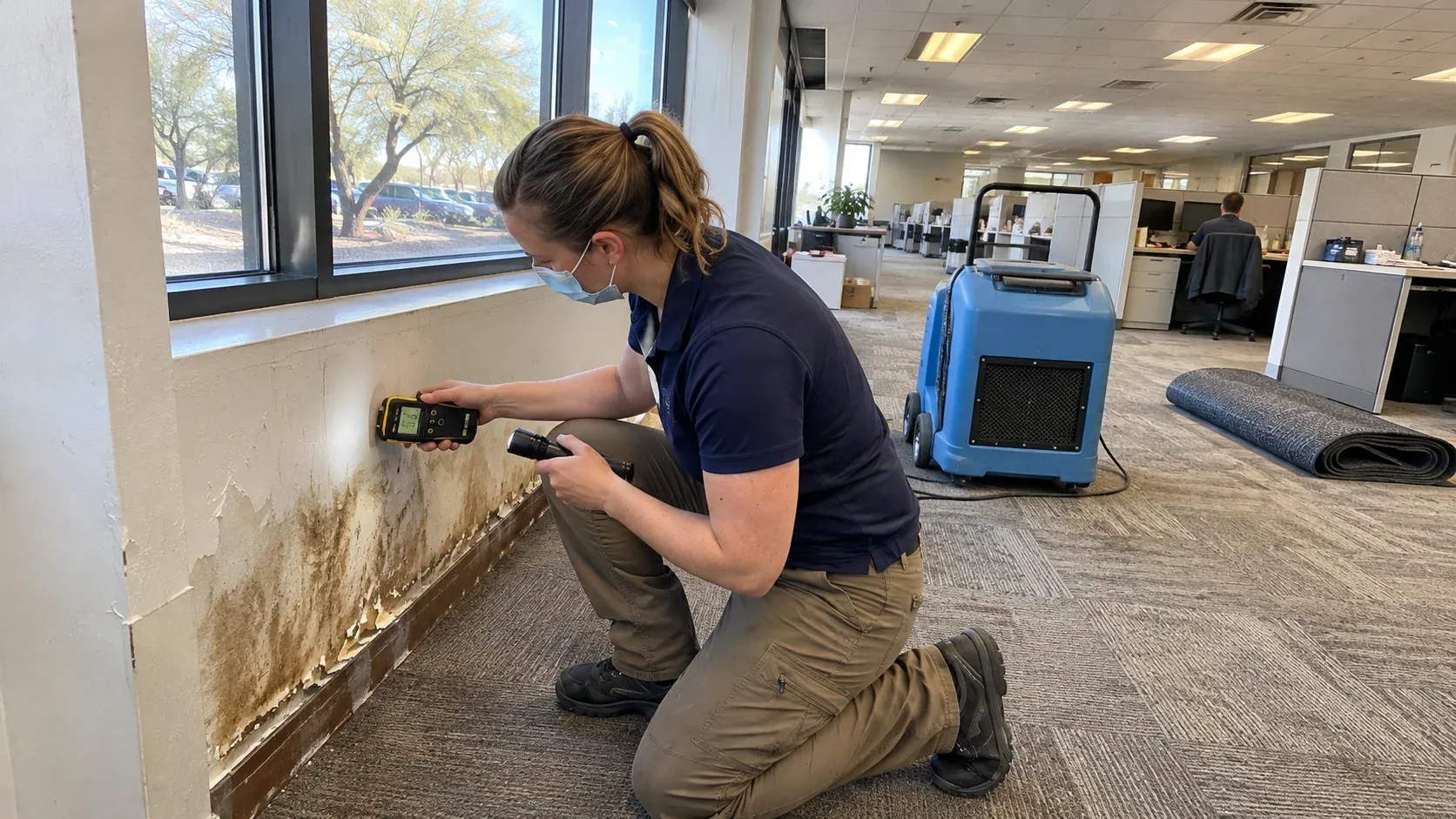
Detection starts at the meter and the main shutoff: the system gets isolated and the leak narrowed to a zone before any locating tool is used. From there it is acoustic listening on the slab, thermal imaging to see the temperature difference the leak creates, and sometimes a pressure isolation test on individual lines.
A useful written result covers what was tested, what was isolated, where the leak is, and how confident the location is, with photos of the thermal readings. A plumber will want them, and so will an adjuster if you are claiming.
Detection is separate from repair, from a plumbing diagnosis of every fixture in the house, and from a scope of the damage the leak caused. Each of those is quoted separately.
11Leaks
Leak detection around Tempe
Older neighborhoods tend to have older copper. Newer builds tend to have more PEX and more fittings.
- Original Tempe: 1950s to 1970s ranch homes, original copper under slab, single bathroom. Small houses with long pipe runs.
- South Tempe: 1980s and 1990s builds. Bigger slabs, more line under concrete.
- Downtown and ASU: Mid-rise and stacked units where a slab leak on one floor becomes a ceiling leak on the floor below.
- Mesa: 85201 to 85215
- Chandler: 85224, 85225, 85226, 85248, 85249, 85286
- Gilbert: 85233, 85234, 85295, 85296, 85297, 85298
- Ahwatukee: 85044, 85045, 85048
- Guadalupe: 85283
- Phoenix: Central and South Phoenix
124 questions
Questions people ask about leak detection in Tempe
Still have a question?
Send the form and describe what you see. Someone from our team will call you back soon.
Get a call back01Can a leak be found without breaking the floor?
Often, yes. Acoustic listening and thermal imaging can locate many slab leaks to within a small area before anything is opened. Some leaks, especially under a cabinet or a shower pan, cannot be narrowed that far and the plumber opens the smallest practical area.
02Does the leak have to be fixed right away?
Not always, but water keeps moving until it is. If the leak is on a supply line, shutting the house valve stops it until the repair. A slab leak that runs for weeks can do more damage than the repair costs.
03Will my insurance pay for the leak?
The pipe repair is usually the homeowner's cost, and the water damage it caused is often covered. That split is common in homeowners policies, but the only answer that counts is the one in your policy. The insurance page covers the process.
04What does leak detection leave me with?
A written location, the method used, photos of the thermal readings, and enough detail for a plumber to open one spot.